
A problem most importers meet early: “Why is my landed cost never what I expected?”
When you import from Iran, the product price is only the beginning. The bigger surprises usually come from where delivery is deemed to happen, who books freight, who carries risk when something goes wrong, and who must arrange insurance and export paperwork. Those details sit inside a single line on your proforma invoice: the Incoterm.
Many buyers choose an Incoterm based on habit (“we always do FOB”) or on a misleading assumption (“CIF means everything is covered”). The result is predictable: unclear responsibility during handoffs, duplicated charges, gaps in insurance, delays in document release, and disputes about demurrage or damage.
This guide compares FOB, CFR, CIF, and DAP with a practical lens: how to choose the term that best matches your shipment type, risk tolerance, and operational control—so your next import from Iran is priced and executed like a process, not a guess.
Why Incoterms matter more than ever in Iran-origin trade
Incoterms don’t replace contracts, but they do define three things that shape your outcome:
1) Cost allocation (what each side pays)
Freight, terminal handling, documentation fees, insurance, and inland transport can sit on either side depending on the term. This affects your true landed cost and how accurately you can quote to your customers.
2) Risk transfer (when responsibility shifts)
The risk transfer point is often misunderstood. A shipment can be “paid by seller” but “risk on buyer” earlier than people think—especially in CFR and CIF.
3) Operational control (who chooses carriers and routing)
If you want control over carrier selection, sailing schedules, consolidation, and cargo cut-offs, the Incoterm you choose either enables that—or takes it away.
(For a broader perspective, many import teams maintain an internal Incoterms selection checklist alongside their logistics SOPs, so procurement and operations don’t interpret terms differently.)
Quick definitions: FOB vs CFR vs CIF vs DAP (in plain English)
FOB (Free On Board) — sea freight only
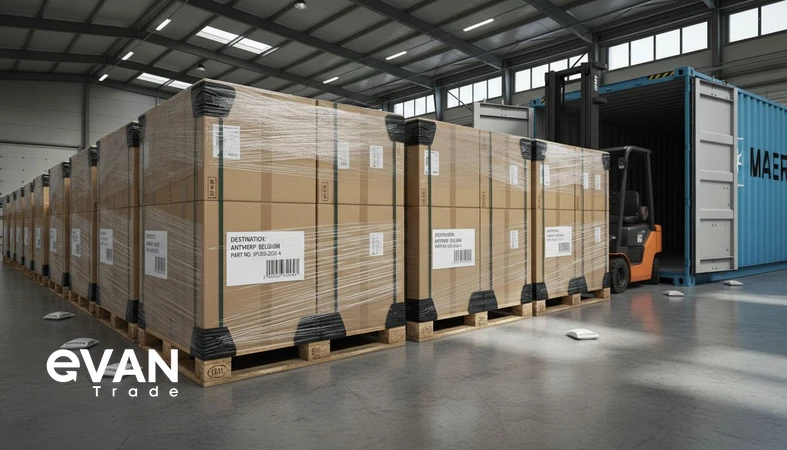
Seller delivers the goods on board the vessel at the named port of shipment. Buyer then handles ocean freight and onward logistics.
CFR (Cost and Freight) — sea freight only
Seller pays the ocean freight to the named destination port, but risk transfers once goods are on board at origin.
CIF (Cost, Insurance and Freight) — sea freight only
Same as CFR, plus seller provides minimum cargo insurance to the destination port. Risk still transfers on board at origin.
DAP (Delivered At Place) — any mode
Seller delivers the goods to an agreed place in the buyer’s country (e.g., buyer’s warehouse or a terminal). Buyer handles import clearance and duties/taxes unless stated otherwise.
Important note: Incoterms define delivery, risk, and cost allocation—not ownership transfer, payment terms, or product quality standards. Those need to be covered in the sales contract and specs.
The core decision: control vs convenience vs exposure
Before comparing terms, answer three questions:
Do you want control over freight and routing?
If yes, FOB often fits. If no, CFR/CIF/DAP can reduce workload—at a cost and with less visibility.
Can you manage origin coordination and export documents?
If you have a solid freight forwarder and clear processes, FOB can be clean. If not, DAP may reduce friction, but you must define the “place” precisely.
How sensitive is your cargo to damage, delays, or insurance gaps?
For sensitive goods, insurance scope matters. CIF insurance is minimum, and may not match your risk profile. You might prefer FOB + your own comprehensive insurance.
Side-by-side comparison table (FOB vs CFR vs CIF vs DAP)
| Item | FOB (Sea only) | CFR (Sea only) | CIF (Sea only) | DAP (All modes) |
| Delivery point | On board vessel at origin port | On board vessel at origin port | On board vessel at origin port | Delivered to named place in buyer country |
| Risk transfers | At origin, once on board | At origin, once on board | At origin, once on board | At delivery to named place (before import clearance) |
| Who books main carriage | Buyer | Seller | Seller | Seller |
| Who pays main freight | Buyer | Seller | Seller | Seller |
| Insurance obligation | Buyer (recommended) | Buyer (recommended) | Seller provides minimum cover | Typically seller (not mandated by term, but common in practice) |
| Export clearance (origin) | Seller | Seller | Seller | Seller |
| Import clearance & duties | Buyer | Buyer | Buyer | Buyer |
| Best for | Buyers who want freight control and pricing transparency | Buyers who want seller to pay freight but can manage risk | Buyers who want a basic insurance baseline included | Buyers who want end-to-end delivery to a defined place |
| Common pitfalls | Origin charges misunderstandings; misaligned cut-offs | Risk misunderstood (“seller pays, so seller is responsible”) | Assuming CIF insurance is “full coverage” | Vague delivery place; hidden last-mile constraints |
FOB: best when you want control and pricing transparency
FOB is often the “operator-friendly” option—if you have the capability to manage the freight leg.
When FOB is a strong choice
- You have a trusted forwarder and want competitive freight rates
- You ship regularly and can consolidate volumes
- You want visibility into carrier choice, ETD/ETA, and documentation flow
- You prefer to set your own cargo insurance policy
What to define clearly under FOB
- Named port of shipment (must match booking reality)
- Cut-off times and who bears costs if the cargo misses the vessel
- Terminal handling charges and origin fees (avoid “surprise” invoices)
- A consistent internal process for import documentation, including packing list, invoice, and shipping instructions
Many importers use FOB as a foundation for a clean Iran export logistics guide inside their procurement playbook, because responsibilities are clearer once cargo crosses the ship’s rail/on-board point.
CFR: seller pays freight, buyer still carries most risk (earlier than you think)
CFR looks attractive because the seller pays freight to your port. The catch: the risk transfers at origin.
When CFR can work well
- You want to simplify booking and don’t need carrier control
- Your cargo is robust and less sensitive to minor handling risks
- You can manage insurance independently and you know what coverage you need
CFR pitfalls to avoid
- Risk misunderstanding: if cargo is damaged at sea, your claims path can be more complex if you assumed the seller was responsible.
- Visibility issues: you may have less leverage on schedules, rollovers, and routing.
- Destination fees: “freight paid” does not mean “all-in.” Port fees and local handling can still sit with the buyer.
A practical rule: if you choose CFR, pair it with buyer-arranged insurance and strict documentation discipline so you can prove condition, packing, and value quickly when needed.
CIF: useful baseline coverage—often misunderstood as “safe”
CIF adds insurance provided by the seller. That sounds like less headache, but you need to know what “insurance” means here.
What CIF insurance typically covers (and what it may not)
Under Incoterms, CIF requires minimum cover. For many importers, minimum cover is not aligned with real exposure—especially for higher-value, fragile, or time-sensitive goods.
When CIF makes sense
- You’re a first-time importer and need a simple structure
- Your internal team is still building insurance capability
- The cargo value is moderate and risk is acceptable under minimum cover
How to make CIF safer
- Ask for the insurance certificate details and confirm: insured value, coverage clauses, claims procedure, and beneficiary.
- Consider “CIF + top-up insurance” where you add your own policy for gaps.
- Ensure the seller’s packing method matches the handling realities of sea transport.
If you are importing products where brand reputation depends on condition (food-grade packaging integrity, for example), CIF can still work—but only if you treat insurance as a spec, not a checkbox.
DAP: closest to “delivered to me,” but only if the delivery place is precise
DAP shifts the delivery point to a named place in the buyer’s country. That can reduce your coordination burden dramatically.
When DAP is the best fit
- You want simplified operations (especially for smaller teams)
- You’re importing into a market where the seller has strong logistics capability
- You need predictable arrival to a specific hub, warehouse, or inland terminal
DAP watch-outs that cause real disputes
- Vague delivery place: “DAP City” is not enough. Define exact terminal/warehouse/address and any access constraints.
- Unclear unloading responsibility: DAP delivers “ready for unloading” at destination—unloading is typically the buyer’s responsibility unless otherwise agreed.
- Import clearance still yours: DAP does not include duties/taxes or import clearance unless you use a different term (and specify it contractually).
Done correctly, DAP can feel like a true landed cost planning tool because your logistics steps shrink. Done vaguely, it becomes a magnet for extra charges and “we thought you meant…” conversations.
Choosing the best Incoterm for your Iran import: a practical framework
Step 1 — Identify shipment type: container vs bulk vs multi-modal
- Containerized sea freight: FOB/CFR/CIF are commonly used.
- Multi-modal (truck + sea + truck): DAP often reduces handoffs.
- Sensitive cargo: lean toward terms that let you control insurance and handling standards.
Step 2 — Decide your control level
- Want full control? FOB
- Want seller to arrange main freight but you can manage risk? CFR
- Want simpler structure with baseline insurance? CIF
- Want delivery to a defined place? DAP
Step 3 — Map your internal capability
Ask honestly:
- Can we book freight and manage cut-offs?
- Can we handle insurance and claims?
- Do we have a reliable forwarder and customs broker?
- Do we have a clear import document flow?
Step 4 — Align with payment and documentary requirements
Incoterms don’t define payment terms, but they affect how documents move. If your payment method requires tight control of bills of lading and originals, choose a term that supports your documentation workflow—especially if the cargo is time-critical.
Document flow and insurance: what changes by term
Export documentation (mostly seller-side across all four terms)
Typically includes commercial invoice, packing list, certificate of origin if required, and transport documents (B/L, etc.). Under all four terms, the seller usually handles export clearance.
Import documentation and clearance (buyer-side across all four terms)
Even under DAP, import clearance is generally the buyer’s role. Plan for:
- product compliance checks (as applicable)
- customs valuation alignment with invoice/contract
- timely release and payments to avoid storage/demurrage
Insurance: don’t confuse “included” with “adequate”
- FOB/CFR: buyer should usually arrange insurance
- CIF: seller provides minimum insurance—often requires review or top-up
- DAP: insurance is not mandated by Incoterms but is commonly arranged by the seller in practice; still, confirm who insures and at what scope
Common scenarios (and the Incoterm that usually fits best)
Scenario 1: You import regularly and want cost control
Often best: FOB
Because you can negotiate freight, standardize carriers, and build repeatable processes.
Scenario 2: You import occasionally and want less operational load
Often best: CIF or DAP
CIF simplifies initial structure; DAP reduces coordination if the delivery place is well-defined.
Scenario 3: You need seller to arrange freight but you manage risk carefully
Often best: CFR (with buyer insurance)
Works when you accept less routing control but want to avoid CIF’s “minimum insurance trap.”
Scenario 4: Your internal team is lean and you need a predictable inbound flow
Often best: DAP
Especially when you can define delivery to your hub and you have a stable customs broker.
FAQ
1) Are FOB, CFR, and CIF valid for air shipments?
No. FOB/CFR/CIF are for sea and inland waterway transport only. For air or multimodal, consider terms like FCA/CPT/CIP/DAP (depending on your situation).
2) Does CIF mean the seller is responsible if the cargo is damaged at sea?
Not necessarily. Under CIF, risk transfers at origin (on board the vessel). The seller provides insurance, but the buyer typically bears the risk after loading.
3) Is DAP the same as “delivered duty paid”?
No. Under DAP, the buyer usually handles import clearance and duties/taxes. “Delivered duty paid” is a different structure and must be stated explicitly (and is not one of the four compared here).
4) Which term gives me the most control over freight costs?
Typically FOB, because you choose the forwarder/carrier and can optimize routing and consolidation.
5) If my supplier insists on CFR or CIF, what should I negotiate?
Clarify destination charges, routing visibility, document timelines, and (for CIF) insurance scope and certificate details. Also request clear allocation of terminal handling and any local fees.
6) What is the biggest reason Incoterms fail in real transactions?
Not the term itself—it’s vague naming and missing operational detail: unclear delivery place, unclear fee allocation, unclear insurance, and unclear document handover timelines.
Conclusion: the “best” Incoterm is the one that matches your control needs and your risk capacity
FOB, CFR, CIF, and DAP can all be the right choice for imports from Iran—if you choose them intentionally:
- Pick FOB when you want transparency and control over freight and insurance.
- Pick CFR when you want the seller to pay freight but you’re prepared to manage risk and insurance properly.
- Pick CIF when you need a simpler baseline—while verifying insurance scope instead of assuming it’s comprehensive.
- Pick DAP when you want delivery to a precise place and fewer coordination steps—while keeping import clearance responsibilities clear.
The goal isn’t to pick the “cheapest” term on paper. It’s to pick the term that produces the most predictable landed cost, the fewest handoff disputes, and the highest execution reliability for your specific shipment.
In that context, teams that import consistently often benefit from working with partners who treat Incoterms as part of a repeatable logistics system—standardized documentation, clear handover points, and practical risk controls. Evan Trade operates with that kind of process discipline—focused on professional export execution and clarity across logistics, documentation, and shipment planning—so importers can make decisions with fewer unknowns and more control over outcomes.