Product Overview
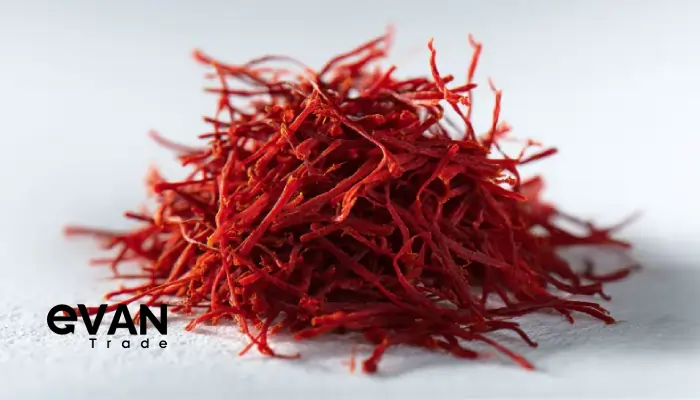
Iran is the world’s most recognized origin for saffron (Crocus sativus L.), supplied mainly as red stigmas in filament/cut form and, for specific buyers, as powder. In B2B trade, saffron is purchased by commercial type (Super Negin, Negin, Sargol, Pushal, Bunch/Dokhtar-Pich) and should be verified by ISO 3632 lab grading based on each lot’s COA (Certificate of Analysis). ISO is the lab-based system; commercial type is the market-facing format buyers see and handle.
Common buyer use cases
- Food manufacturing: sauces, rice mixes, bakery, dairy, confectionery (filaments or cut; powder only with strong authenticity controls).
- Foodservice & retail: premium filaments for visual appeal; cut formats for easier dosing.
- Extracts / beverages: consistent lots for infusion and standardized color/aroma.
- Pharma/cosmetic (where applicable): requires tighter documentation and method alignment (buyer to specify).
Typical MOQ ranges (export-ready, indicative)
- Bulk (B2B): 0.5–5 kg per lot is common; larger programs 10–50 kg+ with lot segmentation.
- Retail packs / private label: often 2,000–10,000 units depending on jar/tin size and destination labeling.
Lead times (typical ranges)
- Stock lots: ~7–14 days to confirm COA, pack, and dispatch.
- Made-to-order packing / private label: ~3–6 weeks (artwork approval, packaging procurement, assembly).
- Peak season (post-harvest): lead times may extend due to lab queues and packaging demand.
Request a lot-based COA proposal + pre-shipment sample set (by type and target ISO category) and confirm packaging + labeling needs for your destination market.
What Makes Iranian Saffron Different
Iran’s saffron trade is shaped by three practical realities that matter to importers:
1) Commercial typing is standardized by market practice, not by ISO.
Buyers commonly order by Super Negin / Negin / Sargol / Pushal / Bunch, which are visual/handling formats tied to stigma length, proportion of yellow style, and presentation. ISO 3632 is separate: it grades saffron by lab-measured coloring and flavor/aroma markers and basic limits such as moisture and extraneous matter. A purchase spec should include both, and the shipment should be validated by lot COA.
2) Iran supplies depth across price tiers.
From premium long filaments (Super Negin) to more economical mixed-style lots (Pushal, Bunch), Iranian supply supports different buyer strategies: flagship SKUs, mid-tier retail, industrial use, or cost-managed blends. The key for buyers is to match format + target lab category to the intended application and to manage variability via lot approval.
3) Saffron is a high-value, low-volume product, so control points matter.
Because saffron’s value is concentrated, risks also concentrate: authenticity (especially for powder), moisture management, and documentation alignment. Strong supplier controls (traceability, lot segregation, sampling protocol, and third-party lab testing) are often the difference between smooth clearance and costly disputes.
Grades, Types & Commercial Specifications
Understand the two systems: commercial type vs ISO 3632
- Commercial type (Iran market): what you see in the product, filament length, uniformity, and how much yellow style is included.
- ISO 3632 (lab-based grading): the measurable classification for saffron quality and conformity, evaluated using standardized methods for key compounds and basic limits. ISO 3632-1:2011 has been replaced by ISO 3632-1:2025; many buyers still reference older thresholds in contracts, so specify the edition and acceptance limits clearly.
Practical differences (what buyers actually get)
- Super Negin: longest, most uniform red filaments; strong visual appeal; typically positioned as premium retail/flagship.
- Negin: long, well-presented filaments with slightly more variability than Super Negin; premium but more available.
- Sargol: “all-red” cut stigma tips; shorter pieces; strong coloring potential; efficient for manufacturing and dosing.
- Pushal: red stigmas with some yellow style present; economical; used where visual purity is less critical.
- Bunch (Dokhtar-Pich): stigmas tied as a bunch including more style; traditional presentation; usually a value tier.
Buyer Checklist (Specs you should lock before negotiating)
- Confirm commercial type + form (filament, cut, powder) and define “allowed style %” in writing.
- Set target ISO category and acceptance limits (include edition reference and test method alignment).
- Require lot-based COA and define sampling: who samples, how sealed, how many grams, and lab name.
Specifications table
Below is a practical buyer-facing table. Values are typical procurement targets; finalize limits per destination, application, and your internal QA.
| Commercial Type (Iran) |
Visual Definition (Buyer-Facing) |
Typical Use Cases |
Price Positioning (Relative) |
ISO 3632 Target (by COA) |
Key Measurable Parameters (COA targets / scope) |
Authenticity Controls (esp. powder) |
| Super Negin |
Very long, thick, uniform red filaments, minimal style, premium appearance |
Premium retail, gifting, top-tier foodservice |
Highest |
Aim Category I where feasible |
Moisture ≤ 12%; Extraneous matter ≤ 0.5%; Crocin (color) high, Picrocrocin high, Safranal within ISO range; micro & residues per market |
If powder: mandatory advanced authenticity panel + lot sealing |
| Negin |
Long red filaments, high uniformity, slightly more variability than Super Negin |
Premium retail & brands, consistent infusion |
High |
Category I or strong Category II |
Moisture/extraneous per ISO; UV-Vis markers per ISO; micro & residues per market |
Same as above for powder; filaments still require adulteration screening |
| Sargol |
All-red cut tips, shorter pieces, minimal/no style |
Manufacturing, blending, standardized dosing |
Mid–High |
Category I–II depending on lot |
Moisture/extraneous per ISO; UV-Vis markers per ISO; micro & residues per market |
Powder risk increases; require chain-of-custody and authenticity tests |
| Pushal |
Red with some yellow style; mixed appearance |
Value retail, industrial use where style is acceptable |
Mid |
Category II–III depending on lot |
Moisture/extraneous per ISO; UV-Vis markers per ISO; micro & residues per market |
Stronger incoming QC needed due to variability |
| Bunch (Dokhtar-Pich) |
Stigmas tied as a bunch; includes more style; traditional format |
Traditional markets, value segment |
Value |
Often Category II–III |
Same ISO base limits; buyers should define max style and minimum coloring power |
Not recommended as powder source unless fully controlled |
Notes for contracts
- ISO commonly references limits for moisture (≤12%) and extraneous matter (≤0.5%), and classifies saffron by UV-Vis measured markers (coloring, bittering, aroma). Many procurement specs use thresholds similar to Category I/II/III for crocin/picrocrocin/safranal, but the enforceable piece is the COA for the shipped lot and the referenced ISO edition.
- For powder, authenticity risk is materially higher. If you buy powder, treat authenticity testing and chain-of-custody as non-negotiable.
Origin in Iran: Key Producing Regions & Seasonality
Iranian saffron production is concentrated in specific provinces and micro-climates, and buyers often reference origin in branding and internal QA segmentation. In practice, the commercial supply chain may consolidate lots across nearby districts, so importers should use lot traceability (harvest window, processor, and batch codes) rather than relying on origin names alone.
Key producing regions (buyer-relevant view)
- Khorasan (Razavi & South Khorasan): the best-known and most export-linked region; large scale and established processing/export infrastructure.
- Adjacent producing areas: smaller volumes exist elsewhere, but most export offers will trace back to Khorasan supply networks.
Seasonality (commercial planning)
- Harvest window: typically autumn (often October–November), with variation by microclimate and yearly conditions.
- Post-harvest processing & lot formation: the weeks after harvest are when drying, sorting, and initial lot consolidation occur.
- Best time for annual programs: many buyers finalize annual contracts and reference samples in the months following harvest, then manage releases as needed.
Buyer Checklist (seasonality planning)
- Align your annual buying cycle to post-harvest lot availability, but don’t skip COA just because it’s “fresh season.”
- If you need consistent year-round flavor/color, plan multiple lots with retained reference samples and periodic re-tests.
- Decide early if you need retail packaging, as packaging lead time often drives the schedule more than product availability.
Processing & Quality Control (QC checkpoints + lab tests + traceability)
A compliance-first saffron program is built on defined checkpoints from raw intake to final packed lot. Your goal is to reduce three main risks: non-conformity (ISO/COA mismatch), contamination (micro/foreign matter/residues), and authenticity issues (adulteration, especially powder).
Core QC checkpoints (end-to-end)
Raw intake & segregation
- Confirm incoming lot identity: commercial type, harvest window, supplier record.
- Separate by lot; prevent cross-mixing across grades/types.
Cleaning & sorting
- Visual sorting for foreign matter (plant debris, threads, dust).
- Control for style content (especially Pushal/Bunch) if your spec limits style %.
Drying control (critical)
- Objective: stable moisture without heat damage.
- Over-drying can reduce aroma; under-drying raises spoilage and compliance risks.
Metal detection / foreign body control
- Particularly important if cutting or milling occurs.
Lot sampling protocol
- Define sampling method (incremental sampling across packed units), sample size, seal and label.
- Keep retained samples (sealed) for dispute resolution and shelf-life monitoring.
Lab testing and COA release
- COA must be lot-based, not generic.
Final packing QA
- Verify net weight, seals, barrier packaging integrity, carton labeling, and traceability codes.
Lab tests importers typically require
ISO 3632 markers (UV-Vis based classification, per ISO method).
Moisture
Extraneous matter / foreign material
Microbiology scope (buyer-defined, often includes total plate count, yeast/mold; pathogens as required by risk plan)
Residues / heavy metals (market- and customer-driven; confirm required analytes)
Authenticity / adulteration screening
- Especially for powder: microscopy + chromatographic/spectroscopic fingerprinting as appropriate, and checks against common adulterants.
- Industry guidance highlights spice authenticity risks and best practices for controls.
Traceability essentials
Lot code that ties to: processor, pack date, commercial type, harvest window, test report IDs, and packing configuration.
- Documented chain-of-custody for any milling/powder conversion.
- Retained reference samples stored under controlled conditions.
Export Packaging Options
Saffron packaging is not cosmetic it is quality control. Your packaging choices control moisture uptake, aroma loss, and contamination risk, and they also determine customs readiness (labeling and traceability).
Bulk export (B2B)
Common formats:
- Vacuum-sealed or nitrogen-flushed inner packs (high barrier)
- Inner pack placed in food-grade secondary bag + rigid outer carton
- Typical unit sizes: 250 g, 500 g, 1 kg (or smaller, depending on buyer security requirements)
Recommended materials (performance-based)
- High-barrier multilayer films (moisture + oxygen barrier)
- Optional: light barrier layer if exposure risk is high
- Use desiccant only if validated and compliant with your packaging system and market rules (avoid contact risk)
Carton requirements (practical)
- Double-wall cartons for air freight handling
- Tamper-evident seals for high-value shipments
- Clear external marking: product name, lot code(s), gross/net weight, origin, and handling notes (“keep dry, away from heat/light”)
Retail packs (import-ready)
Common pack types:
- Glass jar (premium perception; needs breakage protection)
- Metal tin (excellent light barrier; check liner/food contact compliance)
- PET (used in some markets; ensure barrier performance and brand positioning fit)
Typical retail sizes:
- 0.5 g, 1 g, 2 g, 5 g, 10 g (varies by market)
Private label
Final label text and claims (avoid unsupported claims)
- Destination language requirements
- Brand owner details and importer address requirements (market-specific)
- Barcode format and placement rules (retailer-driven)
Buyer Checklist
- Choose packaging based on barrier performance, not only appearance (moisture + oxygen + light).
- Require tamper evidence and lot coding on every consumer unit and carton.
- For glass, specify inner dividers + drop-test-ready cartons to reduce breakage claims.
Shelf Life, Storage & Handling
Saffron is relatively stable compared to high-moisture foods, but it is sensitive to humidity, oxygen, heat, and light. Shelf life is not just a date on a label; it is the result of packaging performance and storage discipline.
Typical shelf-life ranges (practical)
- Bulk, high-barrier packs: commonly positioned around 18–36 months, depending on packaging and storage.
- Retail packs: often 12–24 months depending on pack type and barrier properties.
Storage conditions (importer best practice)
- Store cool, dry, and dark (avoid temperature swings and high humidity).
- Keep cartons off the floor and away from walls (condensation risk).
- Use a first-expiry-first-out (FEFO) system when multiple lots exist.
Shelf-life drivers (what degrades quality)
- Humidity uptake: raises moisture, increases microbial risk, and damages sensory profile.
- Light exposure: impacts color and aroma compounds over time.
- Oxygen exposure: gradual aroma loss; controlled by barrier films and headspace management.
Compliance & Market Access
This section is an importer-focused overview, not legal advice. Final requirements depend on your destination country, product form (filament vs powder), and your customer channel (retail vs industrial).
EU (European Union)
EU imports must comply with general food safety and hygiene rules, and with EU rules on chemical contaminants (maximum levels) and other applicable controls. The European Commission lists contaminant limits under Commission Regulation (EU) 2023/915 as the framework for maximum levels in foods (by contaminant and food category).
Practical importer approach:
- Set a testing plan for heavy metals and relevant residues if required by your customers or risk assessment.
- Confirm whether any specific contaminant controls apply to your saffron category and form.
- Maintain traceability and lot documentation for audits.
UK (Great Britain)
The UK’s Food Standards Agency guidance states imported herbs and spices must meet GB standards of food hygiene and safety; typically, you do not normally need a health certificate for herbs and spices.
Practical importer approach:
- Focus on traceability, accurate labeling, and a defensible due diligence file (COA, supplier approval, and authenticity controls where relevant).
US (United States)
For the US market, importers must align with FDA requirements and FSMA programs. The FDA’s FSMA Preventive Controls framework is a cornerstone for food safety programs and supply-chain controls.
Practical importer approach:
- Ensure facility and supply-chain documentation can support your hazard analysis and supplier verification expectations.
- Spices are treated as a category with known pathogen/filth risks in FDA discussions; maintain sanitation and control documentation appropriate to low-moisture foods.
Asia (broad overview)
Asia is not uniform, requirements vary widely. Importers should:
- Confirm labeling language, shelf-life rules, and permitted additives/processing claims.
- Align testing scope to buyer and regulatory expectations.
Labeling checklist
Minimum labeling elements you should plan for (retail or repack)
- Product name: “Saffron” + form (filaments/cut/powder)
- Net weight
- Country of origin (Iran)
- Lot/batch code
- Best before date / production or packing date (market-specific)
- Storage conditions (keep dry, cool, away from light)
- Importer/distributor details (as required)
- Ingredient statement (typically 100% saffron)
- Nutrition panel (only if required by market/channel)
Logistics & Delivery Planning (air vs sea, humidity/temp risks, Incoterms guidance)
Saffron is high-value and low-volume, so air freight is the default for many programs. Sea freight can be used for large consolidated shipments, but humidity and transit-time risk management becomes more important.
Air vs sea: how buyers choose
Air freight (common for saffron)
- Faster cycle time and lower exposure window
- Lower working capital tied up in transit
- Preferred for retail launches and frequent replenishment
Sea freight (select cases)
- Cost efficiency for large shipments
- Requires robust barrier packaging and moisture control
- Plan for longer lead time and port delays
Risk controls in transit
- Use high-barrier sealed inner packs
- Protect cartons from condensation (pallet wrap + container practices)
- Avoid temperature extremes in storage/handling
- Use tamper-evident and security seals for high-value cargo
Incoterms guidance (importer-practical)
Choose Incoterms based on who controls export clearance, freight, and insurance:
- EXW: buyer controls most steps; higher operational burden and risk if you lack local capability.
- FOB (for sea) / FCA (often cleaner for air): seller handles export clearance; buyer controls main carriage.
- CIP/CIF: seller arranges main carriage (and insurance under CIP); still define responsibility and claims process clearly.
In saffron trade, many professional buyers prefer FCA (airport) or FOB (port) to control freight security and arrival scheduling, while still having the supplier manage export clearance and packing under defined specs.
Documentation & Customs Checklist
Your clearance success is usually determined before shipment, by whether documents match the physical goods and the buyer’s declared requirements.
Standard export documentation
- Commercial Invoice
- Packing List
- Certificate of Origin (as required)
- Lot-based COA (matching the shipped lot codes)
- Bill of Lading / Air Waybill
- Export declaration (seller-side)
Buyer-required documentation
- Product specification sheet (commercial type + ISO targets + acceptance limits)
- Microbiology and contaminants testing scope (as required)
- Residue/heavy metals reports (as required)
- Authenticity/adulteration reports (especially powder)
- Photos of packed goods and lot codes prior to dispatch
- Insurance certificate (if Incoterm requires)
- Any destination-specific certificates upon request if applicable (do not assume)
Practical rule: every document should reference the same identifiers: product form, net weight, lot code(s), pack format, and origin.
Market Demand & Seasonality
Where demand concentrates (B2B view)
Saffron demand typically concentrates in:
- Europe & UK: retail jars/tins and food manufacturing demand; compliance and authenticity documentation is a priority.
- US & Canada: strong retail and foodservice use; supply-chain verification expectations.
- GCC: gifting, retail, and foodservice; Arabic labeling and shelf-life presentation often matter.
- East Asia: demand varies by country and channel; premium presentation can be important.
Peak seasons (buyer planning)
- Retail peak periods: holiday seasons and gifting cycles in destination markets.
- Supply peak: post-harvest availability (autumn) influences sampling and annual contracting.
Main price drivers (practical, non-hype)
- Commercial type (Super Negin vs Pushal/Bunch)
- ISO category results (lot COA drives value)
- Form (filament vs powder) and authenticity risk controls
- Packaging (bulk vs retail/private label adds cost)
- Timing (post-harvest demand surges; lab capacity and packaging availability)
FAQs
1. What’s the difference between Super Negin and Negin?
Both are long filament styles; Super Negin is typically more uniform and visually premium. Always confirm with lot COA because appearance does not guarantee ISO results.
2. Is Sargol always “ISO Category I”?
No. Sargol is a commercial type (all-red cut tips). ISO category must be confirmed by the shipped lot’s COA.
3. What does ISO 3632 actually measure?
It is a standardized approach to classifying saffron by lab methods (commonly UV-Vis markers for coloring and bittering and aroma-related measures) plus basic limits like moisture and extraneous matter; it must be proven per lot via COA.
4. How do I prevent disputes about quality?
Define acceptance limits in writing, agree sampling rules, require lot-based COA, and keep sealed retained samples on both sides.
5. What are the main risks in shipping saffron?
Humidity exposure, aroma loss from poor barrier packaging, and security risks due to high value. Use high-barrier sealed packs and robust cartons.
Final Step: Quote & Samples
A compliant saffron purchase starts with clear specs and lot-based verification. To move forward without ambiguity, proceed in two steps: request a quote based on your target commercial type (Super Negin/Negin/Sargol/Pushal/Bunch) and ISO 3632 category, then request pre-shipment samples that are sealed, labeled, and tied to candidate lots.
For the quote, share your destination, Incoterm, shipment mode, and packaging plan (bulk or retail/private label). Ask for a lot-based COA scope and a draft packing configuration that confirms barrier materials, unit sizes, and carton markings. For samples, require chain-of-custody details and supplier COA for each lot; if you buy powder, include mandatory authenticity testing and traceability requirements.
When ready, submit your RFQ using the template above and specify the exact COA limits you will accept for approval, so every EvanTrade shipment is aligned, auditable, and clearance-ready.