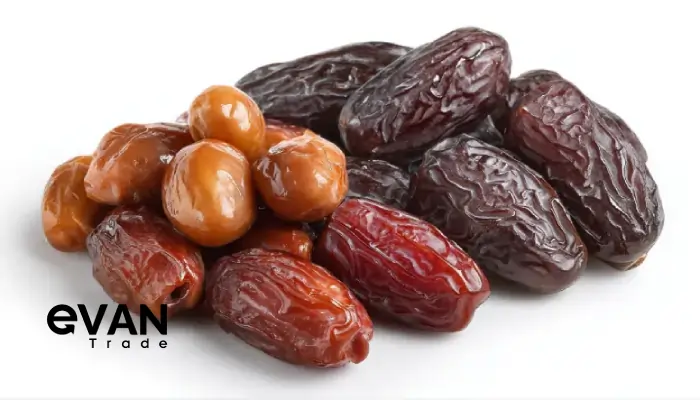
Iran is a multi-variety origin for dates spanning soft, semi-dry, and dry moisture categories. For importers, the sourcing decision is less about “country of origin” and more about aligning variety + moisture + form (whole/pitted/pressed/paste/syrup) with shelf-life targets, labeling rules, and your distribution model.
Common commercial “grades” in date trade typically map to select/premium vs standard vs industrial. In practice, grade is driven by appearance, size uniformity, defects tolerance, and infestation/foreign matter policy, not marketing adjectives.
Typical buyer use cases
- Retail & gifting: visually clean whole dates (often premium varieties), retail packs, private label.
- Foodservice & wholesale: bulk cartons, consistent size and low defect rates.
- Ingredient & industrial: pitted dates, pressed blocks, date paste, date syrup, or diced dates for bakery/cereal.
- Health/snacking brands: clean-label products where traceability, pesticide-residue scope, and packaging integrity matter.
MOQ & lead time (indicative, export-ready ranges)
- MOQ: commonly 1–5 MT per item for bulk; retail/private label can be higher due to packaging procurement and printing.
- Lead time: often 2–6 weeks depending on inventory, conditioning needs (moisture equalization), lab scope, and packaging.
- Samples: usually available as sealed sample sets tied to candidate lots.
Buyer Checklist, Fast alignment before RFQ
- Define your target variety + moisture category (soft vs semi-dry vs dry) and the reason (retail vs ingredient).
- Decide whole vs pitted vs paste/syrup and any processing restrictions (e.g., no preservatives).
- Specify infestation evidence standard, foreign matter policy, and COA scope.
- Confirm your label language(s) and whether importer details must be printed on pack.
If you want a clearance-ready offer, request a lot-based quotation through EvanTrade with your destination, target variety/form, packaging plan, and COA requirements so the shipment is built to your acceptance limits from day one.
What Makes Iranian Dates Different
Variety diversity across moisture categories
Iran supplies exportable varieties that sit across distinct texture profiles: soft (higher moisture), semi-dry (balanced chew), and dry (lower moisture, longer ambient resilience). This diversity lets buyers select for shelf-life strategy and channel fit rather than forcing one “standard date” into every market.
Export forms beyond whole dates
Beyond whole fruit, Iran-origin supply can support pitted dates, pressed blocks, date paste, and date syrup, formats used for bakery, bars, confectionery, dairy inclusions, and natural sweetening. Processed forms introduce different compliance needs (ingredient statements, micro specs, and sometimes stricter facility controls), so the spec must be written accordingly.
Practical implications for importers
Soft varieties can deliver premium eating quality but are more sensitive to heat, humidity, stickiness, and fermentation if storage is not controlled. Semi-dry and dry types often travel better in mixed logistics networks but need attention to sugar crystallization, skin tearing, and infestation prevention.
Grades, Types & Commercial Specifications
Across varieties, buyers typically grade dates using:
- Moisture/texture category (soft / semi-dry / dry) and target moisture range
- Size uniformity (count per kg or size codes where used)
- Defect tolerances (skin tears, cap/stem remnants, bruising, discoloration)
- Foreign matter policy (zero tolerance for hard foreign matter)
- Infestation standard (no live insects; clear evidence rules)
- Processing condition (washed/unwashed, pitted, pressed, paste/syrup)
Major varieties
- Piarom (Maryami): semi-dry, premium whole; risks: skin tearing, dryness variation; strong for retail/gifting.
- Mazafati (Bam): soft, dark, high moisture; risks: stickiness, fermentation if warm, cold-chain dependence; strong for premium retail and some foodservice.
- Zahedi: semi-dry to dry; risks: sugar bloom/crystallization; strong for value retail and ingredient use.
- Kabkab: soft to semi-dry; risks: stickiness, bruising; used in domestic/GCC channels and some processing.
- Sayer (Stamaran): semi-dry; risks: crystallization and skin issues if mishandled; common for bulk, wholesale, and processing.
- Rabbi: semi-dry; risks: skin tearing, size variability; useful for retail and bulk trade.
- Dayri / Deiry (if applicable): generally drier profile; used where longer ambient stability is needed; confirm lot specs.
- Shahani: softer eating profile; manage bruising/stickiness; often retail-oriented.
- Khasoei / Khasui (if applicable): can be premium niche; confirm commercial availability and sizing norms.
- Khudri (comparison note): commonly associated with non-Iran origins; if used in buyer comparisons, define it clearly as a benchmark and confirm actual origin/variety identity in documents.
Commercial Specifications Table
Note: Actual limits should be finalized per destination and buyer program. Use this as an RFQ-ready baseline and replace placeholders with your acceptance thresholds.
| Variety / Type |
Moisture Target (typical) |
Size / Count Guidance |
Defects & Tolerances (examples) |
Foreign Matter Policy |
Infestation Standard |
Suggested COA / Tests |
| Piarom (Maryami), whole |
Semi-dry |
Usually size-graded by buyer spec; uniformity required |
Low skin tears; minimal cap/stem; low discoloration |
Zero hard foreign matter; define soft FM max |
No live insects; no active infestation evidence |
Moisture; visual defect report; infestation evidence; pesticide residues if required |
| Mazafati (Bam), whole/pitted |
Soft (higher) |
Often sold by size grade; consistency important |
Control bruising, fermentation signs, stickiness |
Zero hard FM; tight soft FM limits |
No live insects; strict preventive treatment/controls |
Moisture; (optional) water activity; micro for processed/pitted if required |
| Zahedi, whole/pitted |
Semi-dry–dry |
Count/kg sometimes used |
Manage sugar bloom/crystallization; skin tears |
Zero hard FM |
No live insects |
Moisture; foreign matter inspection; pesticide residues if required |
| Sayer (Stamaran), whole/pressed/paste |
Semi-dry |
Bulk uniformity |
Balanced defect limits; manage crystallization |
Zero hard FM; define soft FM max |
No live insects |
Moisture; (paste) micro panel as agreed; pesticide residues if required |
| Rabbi, whole |
Semi-dry |
Size/grade per buyer |
Limit skin tearing; color uniformity |
Zero hard FM |
No live insects |
Moisture; defect report; residues if required |
| Kabkab, whole/pressed |
Soft–semi-dry |
Bulk grade common |
Control stickiness and bruising |
Zero hard FM |
No live insects |
Moisture; visual; infestation evidence |
| Shahani, whole |
Soft–semi-dry |
Buyer-defined |
Manage bruising, stickiness |
Zero hard FM |
No live insects |
Moisture; defect report |
| Dayri/Deiry, whole |
Drier profile |
Buyer-defined |
Control excessive dryness/skin issues |
Zero hard FM |
No live insects |
Moisture; visual |
| Khasoei/Khasui, whole |
Often semi-dry |
Niche sizing |
Premium appearance; tight defects |
Zero hard FM |
No live insects |
Moisture; defect report; residues if required |
| Date paste / syrup (any variety) |
As specified |
N/A |
As per ingredient spec |
Tight filtration/metal detection plan |
N/A (process-controlled) |
Moisture/solids; micro as agreed; residues if required; traceability/lot linking |
Buyer Checklist, Spec decisions that prevent disputes
- Write a moisture target (and method) and define what happens if results are borderline.
- Define foreign matter in plain language (hard vs soft) and set acceptance thresholds.
- For pitted/paste/syrup, add a micro scope only if your destination/program requires it.
- Tie your acceptance to lot-based documentation (COA + packing list + lot codes).
Origin in Iran: Key Producing Regions & Seasonality
Iran’s date supply is linked to hot southern and southeastern agricultural zones, with commercial centers associated with specific varieties. For buyers, origin matters because it correlates with post-harvest handling norms, availability windows, and how consistently lots can be standardized.
Key producing areas
- Mazafati (Bam): commonly linked to southeastern production zones; often shipped with stronger temperature control expectations due to soft texture.
- Piarom (Maryami): associated with southern production; traded as premium whole dates with strong emphasis on appearance and uniformity.
- Sayer (Stamaran), Kabkab, Zahedi, Rabbi, Shahani: commonly sourced from multiple southern provinces, with commercial availability varying by season and packer.
Seasonality
- Harvest and packing cycles influence freshness, moisture stabilization, and availability of specific grades.
- Many buyers prefer stating crop year / packing date preference, then requesting inventory options that meet those parameters.
- Plan purchases ahead of peak demand periods (see Market Demand section) to reduce last-minute compromises on grade or packaging.
Processing & Quality Control
Quality control for dates is primarily about moisture control, infestation prevention, foreign matter management, and packaging integrity. The right QC plan is designed backward from your destination requirements and channel risks.
QC checkpoints (export-ready flow)
Farm/Receiving
- Lot identification, incoming visual inspection (damage, odor, visible infestation evidence)
- Initial moisture screening where applicable
- Segregation by variety/grade to prevent cross-mixing
Sorting/Grading
- Removal of defective fruit (tears, bruising, excessive dryness, mold-like appearance)
- Size grading and uniformity checks (as per buyer spec)
Cleaning / Washing (if applied)
- Controlled washing and drying to avoid adding surface moisture risk
- Post-wash inspection for skin damage and stickiness
Conditioning / Moisture Equalization
- Stabilization period to reduce internal moisture variance within a lot
- Targeted temperature/humidity control to reduce fermentation risk in soft varieties
Pitting / Processing (if applicable)
- Pit removal controls; pit fragment control where relevant
- For paste/syrup: filtration/metal detection plan, heat/process controls as specified
Packing
- Weight control, seal integrity, label verification, carton strength checks
- Lot coding on inner and outer units
Pre-shipment & Cold Chain Checks
- Final QC report + photo set (if agreed)
- Container inspection: dryness, odors, cleanliness; temperature settings if reefer
Lab tests commonly requested
- Moisture (core spec for texture and shelf-life)
- Water activity (aw) (sometimes requested for soft varieties or processed forms)
- Pesticide residues (destination/program dependent; specify panel and limits)
- Microbiology (more common for paste/syrup or processed packs; define tests and methods)
- Foreign matter verification (process-based evidence; not always a “lab test,” but auditable records)
- Infestation evidence (inspection records; specify “no live insects” and evidence thresholds)
Traceability & lot coding
Importer-ready traceability links:
- Lot code → production/packing date → line/shift → raw material source group → finished goods pallet ID
- Consistent lot coding printed on inner pack + master carton, and referenced in packing list and COA
- Document control so the shipped lot is exactly the lot that was sampled and approved
Export Packaging Options (bulk + retail + private label; materials & carton specs)
Packaging must match moisture category and distribution reality. Soft dates often need better moisture/oxygen management and stronger protection from temperature abuse, while drier dates require measures against sugar bloom, crushing, and infestation exposure.
Bulk formats (trade and ingredient channels)
- Master cartons with inner liners (food-grade) for whole dates
- Pressed blocks for ingredient users (lined cartons; sometimes inner film wrap)
- Industrial packs for paste/syrup (food-grade pails/drums/IBC depending on program)
Retail packs and private label
- Common retail formats: trays, flow-wrap, stand-up pouches, small cartons, gift boxes
- Private label requires alignment on label languages, mandatory statements, and barcode/GS1 rules (buyer to provide)
- Materials should be chosen for moisture barrier needs and shelf-life targets (film specs by buyer program)
Packaging Configuration Table
| Pack Type |
Net Weight Options (examples) |
Inner Packing |
Master Carton Specs (examples) |
Palletization Notes |
Labeling Fields (typical) |
| Bulk whole dates |
5 kg / 10 kg |
Food-grade liner bag; optional inner pads |
5-ply corrugated; strength matched to stacking |
Stretch wrap; corner protection; keep away from heat sources |
Product name, variety (if used), origin, net weight, lot/pack date, storage |
| Bulk pitted dates |
5 kg / 10 kg |
Liner + sealed inner bag preferred |
Reinforced corrugated |
Extra attention to seal integrity |
As above + “pitted” declaration |
| Pressed date blocks |
5 kg / 10 kg |
Wrapped blocks; liner |
Corrugated with tight fit |
Prevent shifting; avoid crushing |
Product, net wt, lot, storage |
| Date paste |
20 kg pail / drum (program-based) |
Food-grade pail/drum with tamper evidence |
If pails: outer carton optional |
Secure lids; temperature management |
Ingredient name, origin, lot, production date, storage |
| Date syrup |
Pail/drum (program-based) |
Food-grade container; tamper seal |
Program-based |
Prevent leaks; upright handling |
Ingredient name, brix/solids if declared, lot, storage |
| Retail tray/flow-wrap |
200g–1kg |
Sealed tray or film |
Printed master carton; drop-test appropriate |
Avoid compression; keep stable temp |
Full consumer label set + barcode if required |
| Retail pouch |
200g–1kg |
Barrier pouch; zip optional |
Printed or plain carton |
Control crushing; stable stacking |
Full consumer label set + barcode if required |
| Private label gift pack |
Program-based |
Insert trays; sealed inner |
High-strength printed carton |
Protect corners; shrink wrap |
Buyer-approved artwork, languages, compliance fields |
Packaging decisions that protect quality
- For soft varieties, specify barrier needs (moisture/oxygen) and whether temperature control is required.
- Define whether inner pack must be sealed and how you want lot codes displayed.
- Request a packing configuration (units/carton, cartons/pallet, pallet height) before you price freight.
Shelf Life, Storage & Handling (conditions + shelf-life drivers)
Shelf life for dates depends on moisture level, temperature exposure, and packaging barrier performance. Your practical shelf-life will be set by the weakest link in your distribution network (port dwell time, ambient trucking, warehouse conditions).
Storage targets (general guidance)
- Store in a cool, dry, odor-free environment with pest control.
- For soft dates, many programs prefer chilled storage to reduce fermentation and texture drift.
- Avoid repeated temperature cycling that can drive condensation and quality loss.
Shelf-life drivers buyers should manage
- Moisture & water activity: higher moisture increases fermentation and microbial spoilage risk.
- Heat exposure: accelerates darkening, stickiness, and off-notes; also increases packaging seal stress.
- Humidity: can cause surface tackiness and encourage spoilage; also impacts carton strength.
- Oxygen exposure: can accelerate quality changes; barrier packaging helps.
- Infestation risk: controlled through hygienic processing, preventive measures, and sealed packaging.
Compliance & Market Access
Compliance is destination-specific and depends on whether you import whole dates (single-ingredient) or processed forms (paste/syrup/blended packs). You should treat compliance as a documentation project: define requirements first, then build the product spec, label, and COA scope to match.
Regional overview
- EU: strong focus on food information/labeling, traceability, and residue limits where applicable; importer responsibility is high.
- UK: similar operational expectations to EU frameworks; confirm current labeling and documentation needs via your broker/authority guidance.
- US: facility/food safety expectations can differ by product form; labeling and prior notice processes should be planned with your customs broker.
- Asia: requirements vary widely; some markets emphasize documentation and inspection on arrival, others focus on labeling language and shelf-life dating norms.
Labeling Checklist
Include (as applicable to your format and destination):
- Product name (e.g., “Dates” / “Pitted Dates” / “Date Paste” / “Date Syrup”)
- Variety (if declared) and form (whole/pitted/pressed)
- Country of origin
- Net weight (and drained weight if relevant, usually not for dates)
- Lot/batch code and packing/production date; best-before date per your program
- Ingredients list (mandatory for processed/blended products; “100% dates” where accurate)
- Storage conditions (ambient/chilled, “keep in a cool dry place,” etc. as appropriate)
- Allergen statement / “may contain” only if substantiated by cross-contact risk assessment
- Importer/distributor details where required
- Language requirements (destination and channel specific)
- Barcode/GTIN if the buyer program requires it
Typical claims to avoid unless substantiated
Avoid “organic,” “non-GMO,” “sugar-free,” “medical” or “functional” claims unless you have the documentation and label approvals to support them. Certifications should be treated as available upon request if applicable, not assumed.
Logistics & Delivery Planning
Dates are resilient compared to many fresh products, but soft dates and retail-ready packs can be highly sensitive to heat/humidity and poor handling. A logistics plan should be built around the warmest leg of the route and the most delay-prone nodes.
Air vs sea (cost/speed/quality risk)
- Air freight: best for urgent replenishment, small high-value orders, or when avoiding extended heat exposure. Higher cost, lower transit time risk.
- Sea freight (LCL/FCL): best for cost efficiency and larger volumes. Requires strong packaging, container planning, and heat-risk mitigation, especially during hot seasons or through warm transshipment ports.
Humidity/temperature risks and container considerations
- Use dry, clean containers; verify no odors or contamination.
- For soft varieties or strict retail programs, consider reefer or controlled conditions where justified by risk.
- Plan shipments to avoid peak heat weeks where possible; build buffers for port dwell times.
- Use pallet protection, proper ventilation strategy (program-based), and avoid over-stacking that crushes retail packs.
Practical Incoterms guidance (non-legal, operational)
- EXW: buyer controls pickup and export chain; higher buyer coordination load in origin.
- FOB: common for sea; supplier delivers cleared goods on board; buyer controls ocean freight.
- CFR/CIF: supplier arranges ocean freight (and insurance for CIF); buyer still manages import clearance.
- DDP: supplier delivers to buyer location with duties paid, operationally complex and often not ideal unless both sides have proven workflows.
Rule of thumb: choose the Incoterm that matches who can best control the risk points (packaging, export clearance, freight booking, cold chain, and destination clearance).
Documentation & Customs Checklist
A clean file set prevents customs delays and label disputes. Align document fields (product name, variety, HS code approach, net/gross weights, lot codes) across every document.
Standard export document set
- Commercial invoice
- Packing list (with lot codes and pallet counts)
- Certificate of Origin (if required by destination/buyer)
- Bill of Lading / Air Waybill
- Insurance certificate (if CIF/CIP or buyer requests)
- COA / QC report (scope agreed in RFQ)
Buyer-required / program documents
- Residue test reports (panel and limits defined by buyer/destination)
- Micro test reports for processed forms (paste/syrup) if required
- Packaging material declarations where needed
- Private label artwork approvals and label compliance proof
- Traceability statement (lot coding explanation) for audit readiness
- Any certifications: available upon request if applicable
Market Demand & Seasonality
Demand patterns depend on cultural consumption cycles, retail promotion calendars, and ingredient sector demand.
Common demand clusters
- EU/UK: steady health/snacking demand; semi-dry/dry types often fit broader ambient distribution; private label is common.
- US: growth in snack and ingredient segments; pitted and paste formats are relevant for bars and bakery.
- Asia: diverse demand; some markets prefer specific textures and packaging formats.
Peak seasons
- Peaks often occur around major holiday and gifting windows and retail promotion cycles. Plan purchase and printing timelines early for private label.
Price drivers buyers should model
- Variety availability and grade tightness
- Moisture targets and conditioning losses
- Packaging type (retail and printed materials can dominate cost)
- Lab/testing scope and inspection requirements
- Freight seasonality and heat-risk mitigation (reefer vs dry)
FAQs
1. Which Iranian date variety is best for ambient retail distribution?
Semi-dry to dry varieties (e.g., Zahedi, Sayer/Stamaran, some Piarom lots) typically tolerate ambient retail better. Decide based on your moisture target, pack barrier, and worst-case heat exposure in your route.
2. Do soft dates require refrigerated shipping?
Not always, but soft varieties (e.g., Mazafati) carry higher heat/fermentation risk. Use chilled storage or reefer when you face hot-season transit, long port dwell times, or you promise longer shelf life.
3. How should I specify moisture in an RFQ?
Write a target moisture range (and method if you require it), plus a clear acceptance rule for borderline results. Tie approval to lot-based COA and define re-test or rejection triggers.
4. What defect limits matter most for retail packs?
Skin tearing, bruising, discoloration, stickiness, and size uniformity drive consumer perception. Set max % thresholds and require lot-based QC evidence (photos/QC report) matching shipped lot codes.
5. How do I reduce infestation risk in transit and storage?
Use preventive QC, sealed inner packaging, clean/odor-free containers, and strict warehouse pest control. Define “no live insects” and specify what counts as infestation evidence and rejection criteria.
6. Which Incoterm is most common for first-time imports?
FOB and CFR/CIF are common starting points. Choose based on who can better control freight booking and risk points; keep responsibilities clear in your RFQ and contract docs.
Iranian Dates Import Reference (B2B): Specs, Compliance, QC, Packaging & Delivery
Iranian dates in global trade are not a single “product.” They are a structured portfolio of exportable varieties and formats, each with its own logic for moisture/texture, quality risks, packaging requirements, labeling needs, and shipping constraints. A defensible import decision is made when the variety (such as Piarom, Mazafati, Zahedi, Sayer/Stamaran, Rabbi, Kabkab, Shahani, and others), the supply form (whole, pitted, pressed, paste, syrup), the moisture target, defect limits, infestation policy, and COA scope are defined clearly from the start, and then controlled and documented lot-by-lot through shipment.
To clear smoothly at destination with fewer disputes, import planning should manage three elements in parallel. First, use measurable commercial specifications: moisture limits, defect tolerances, foreign matter rules, infestation standards, and a clear acceptance/rejection decision rule. Second, align packaging and labeling with the destination market: languages, mandatory label fields, lot coding, storage instructions, and carton/pallet configuration. Third, build logistics around temperature and humidity risk: air vs sea selection, hot-season exposure planning, container readiness, and clear responsibility boundaries through practical Incoterms.
If you want an import-ready and audit-friendly offer, the most reliable approach is two-step: send an RFQ with precise fields so offers are truly comparable, then evaluate sealed, lot-coded samples using a decision-rule workflow, so only approved lots enter production and shipment. EvanTrade can structure this end-to-end flow, from RFQ to sampling, QC evidence, documentation, packaging configuration, and delivery planning, so each shipment matches your acceptance limits, remains traceable, and arrives clearance-ready.