

Iranian pistachios are a staple ingredient and snack product in many international markets,but “pistachio” is not a single, uniform commodity. For bulk buyers, the gap between a smooth import and a costly dispute usually comes down to details: how the lot is graded, which size/count is supplied, what “open” actually means, how defects are measured, and whether QC is aligned with the destination market’s limits.
This guide is built for importers, procurement managers, brand owners, and distributors who already know their category,but want a clear, practical framework for evaluating Iranian pistachios in bulk: from common grades and sizes to a QC checklist you can use before you wire a deposit, load a container, or release final payment.
Why Iranian pistachios behave differently in bulk trade
Iran is one of the best-known origins for pistachios due to its cultivars, flavor profile, and long export history. But bulk trade realities can surprise even experienced buyers:
- Seasonality and lot variability: harvest timing, orchard conditions, and processing throughput can change defect rates.
- Definition gaps: “Grade A,” “hand-picked,” “open,” or “jumbo” may mean different things across suppliers unless you specify measurable criteria.
- Food safety expectations: in many markets, aflatoxin compliance and traceability are non-negotiable,so sampling and lab strategy matters as much as price.
- Shelf-life risk: moisture and packaging choices can convert a “good” lot into a claims case months later, especially if your route includes humidity or long dwell times.
If your purchasing team is building an origin playbook, you’ll want product knowledge (the Iranian Products lens) connected to execution knowledge—such as practical QA routines and documentation workflows often discussed under topics like Quality in Practice and Documentation & Customs.
Iranian pistachio types and common commercial forms
Before grading and sizing, align on what you are buying. The major commercial formats include:
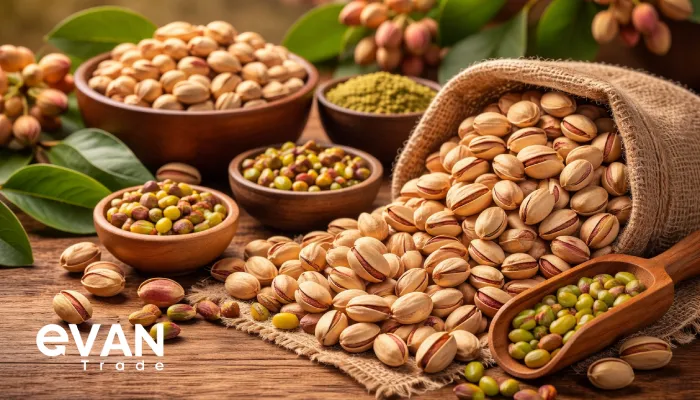
In-shell pistachios (most common in snack channels)
- Natural open (naturally split): typically preferred by many snack markets.
- Mechanical open: closed shells mechanically opened; acceptable in some markets if disclosed and spec’d.
- Closed shell: usually discounted, or routed for processing.
Kernels (for confectionery, bakery, industrial use)
- Whole kernels, halves, pieces
- Color range and staining tolerance become more important than shell characteristics.
Processing finish
- Raw (natural)
- Roasted / salted (in-shell or kernel)
- Flavored (market-specific)
Bulk importers often treat in-shell and kernel procurement as two different products with different defect economics, packaging needs, and shelf-life risk. If you’re planning multi-market distribution, map those differences early,especially the packaging decisions that influence stability (a theme you can also cover within Packaging & Shelf Life content planning).
Grades in Iranian pistachios: what matters (and what’s vague)
There is no single universal grading standard used consistently in all contracts. In practice, a “grade” is the sum of measurable attributes you set in the specification.
Core grading dimensions buyers usually specify
1) Open-shell percentage (for in-shell)
- Naturally open %
- Closed %
- Blind/smiling defects (appearance issues even if open)
Tip: If your market differentiates natural vs mechanical opening, specify it explicitly.
2) Size / count (in-shell)
In-shell sizing is commonly expressed as a count range per ounce (or sometimes per 100g). Lower count = larger nuts (e.g., 18/20 is larger than 28/30).
3) Defect limits (in-shell and kernels)
Typical defect categories include:
- Stained shells (external appearance)
- Moldy
- Insect damaged
- Immature/empty
- Broken shell / chipped
- Foreign matter (stones, stems, hull fragments)
- Odor/off-flavor (rancid notes)
4) Moisture
Moisture affects texture, shelf life, and mold risk. Your target level should match your product form and packaging method.
5) Food safety: aflatoxin and microbiological expectations
Aflatoxin limits vary by destination. Your contract should define:
- Which toxins are tested (e.g., B1 and total)
- Test method and lab standard
- Sampling plan (how samples are drawn and combined)
- Acceptance/rejection criteria
Because this is one of the most dispute-prone areas, many buyers integrate aflatoxin strategy into their Pricing, Payments & Contracts structure (e.g., conditional acceptance, holdbacks, or staged payments tied to lab results).
Pistachio size counts explained (and how to buy the right one)
Size is not just a marketing term; it impacts yield perception, pack appearance, and cost.
Common in-shell size ranges (count per ounce)
Below is a practical overview used in many snack and retail programs. Exact ranges can vary by supplier and crop year,so treat this as a buying guide, not a legal spec.
| In-shell Size (Count/Oz) | Market Label (Common) | Typical Use Case | Notes for Buyers |
| 18/20 | Extra Jumbo | Premium snack / gifting | High visual impact; higher price sensitivity |
| 20/22 | Jumbo | Premium snack | Good balance of appearance and availability |
| 22/24 | Large | Mainstream snack | Often best for volume programs |
| 24/26 | Medium-Large | Mainstream snack / mixed channels | Flexible, usually good supply depth |
| 26/28 | Medium | Value snack / foodservice | Watch defect tolerance vs price |
| 28/30 | Small-Medium | Value channels | Can be fine if open% and defects are controlled |
| 30/32 | Small | Processing / price-driven snack | Often higher closed% risk; spec carefully |
How to choose size strategically
- Retail premium positioning: prioritize 18/20 to 22/24, but tighten open% and appearance tolerances.
- High-throughput snack packing: 22/24 to 26/28 often improves availability and cost predictability.
- Price-driven tenders: smaller sizes can work—if you protect yourself with a strict QC protocol and clear defect caps.
If you import for multiple destinations, keep size decisions aligned with your route and packaging plan,because long dwell times in humid corridors can amplify moisture and staining issues even when the lot passes at origin (again: packaging and stability planning are not “afterthoughts”).
Iranian pistachio cultivars: what buyers should know
Many bulk contracts reference cultivar names. Common commercial varieties include Akbari, Ahmad Aghaei, Kaleh Ghouchi, and Fandoghi (Round). In practice, cultivar matters for:
- shape and appearance
- kernel-to-shell ratio tendencies
- market preferences (some markets value longer, more elongated shells)
However, cultivar alone does not guarantee grade. Buyers get better outcomes by treating cultivar as a descriptor, then controlling the measurable QC attributes that actually drive acceptance.
QC checklist for bulk imports (pre-shipment to arrival)
Below is a field-ready checklist you can adapt into your procurement SOP. It is designed to reduce misunderstandings before a container is sealed.
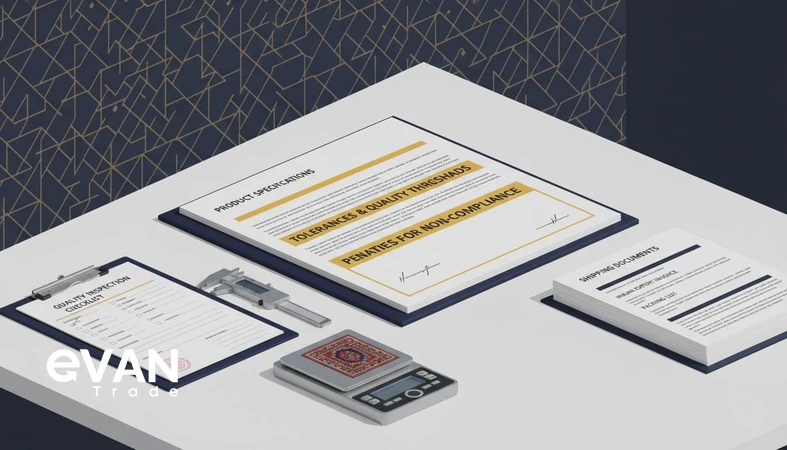
Step 1: Lock the specification (before price is “final”)
Include these in your purchase spec sheet:
- Product form: in-shell natural open / mechanical open / kernels
- Size/count range (e.g., 22/24)
- Minimum open% and maximum closed%
- Defect limits by category (stained, mold, insect, foreign matter, broken shells, etc.)
- Moisture target and method of measurement
- Aflatoxin limits for destination market + test method
- Packaging format and labeling (bags, cartons, liners, vacuum/nitrogen if required)
- Incoterms, loading plan, and temperature/humidity considerations (coordinate with Logistics & Incoterms policies internally)
Step 2: Sampling plan (make it explicit)
Sampling ambiguity is one of the biggest sources of conflict. Specify:
- where samples are taken (warehouse, during stuffing, pre-stuffing)
- sample size and number of increments
- who draws samples (third-party inspector vs supplier)
- how composite samples are created and sealed
- retention samples (how long kept, where stored)
Step 3: Visual and physical checks (pre-shipment)
At minimum:
- size verification (count testing)
- open/closed ratio
- defect classification count (agreed categories)
- foreign matter screening
- odor check (rancidity/mustiness)
- moisture spot checks
Step 4: Lab testing strategy (food safety and quality)
Depending on market:
- aflatoxin (B1 and total)
- microbiological parameters (as required)
- peroxide value / rancidity indicators (more relevant for kernels and long shelf-life programs)
Practical contract tip: Tie final acceptance to arrival testing or pre-shipment lab results, with clear timelines for claims. This reduces “he said / she said” scenarios once product is in your warehouse.
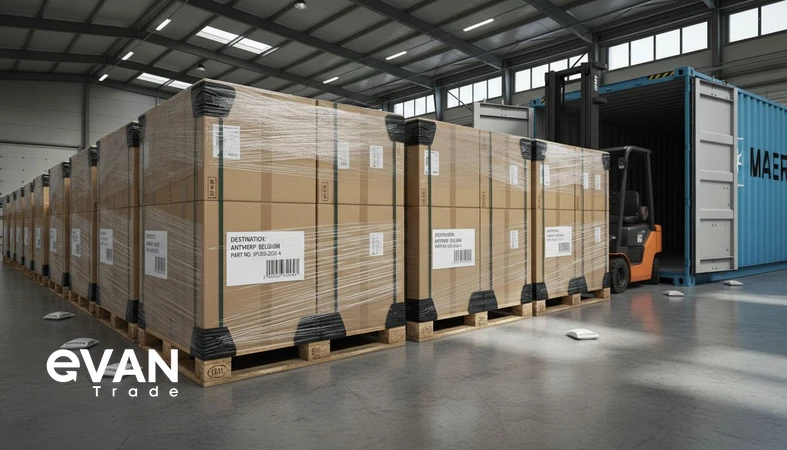
Step 5: Packaging and container readiness
Ensure alignment on:
- inner liners (food-grade)
- carton strength and palletization
- container cleanliness and dryness
- desiccants (if needed)
- stuffing conditions (avoid rain/humidity exposure)
- sealing and documentation of seal numbers
This is where operational experience matters. Many importers build a single, repeatable QA routine—and then reuse it across origins and SKUs, which is exactly the “execution layer” discussed in hands-on sourcing playbooks like Quality in Practice.
A practical “buyer spec” table you can start from
Use the table below as a template. You should tailor values to your market, application, and risk tolerance.
| Parameter | Why it Matters | What to Specify in Contract |
| Size / count | Controls appearance and cost | Count range (e.g., 22/24) + test method |
| Open % / closed % | Impacts consumer experience | Minimum open%, maximum closed%, define natural vs mechanical |
| Defects (stained/mold/insect/etc.) | Drives claims and brand risk | Defect categories + max % for each |
| Moisture | Shelf life, mold risk | Target max moisture + measurement method |
| Foreign matter | Food safety and compliance | Max foreign matter + screening method |
| Aflatoxin | Market access | Limit values + lab method + sampling plan |
| Packaging | Stability + presentation | Bag size, liners, carton specs, pallet pattern |
| Labeling | Traceability | Lot code, origin, crop year, production/packing date |
| Acceptance terms | Reduces disputes | Inspection points + claim windows + dispute mechanism |
Pricing signals and contract structure (without turning it into a legal lecture)
Bulk pistachio pricing is typically driven by:
- size/count (larger generally higher)
- open percentage and defect tolerance
- form (kernels vs in-shell)
- packaging complexity
- food safety assurances (testing frequency, third-party inspections)
- crop year availability and market demand
To reduce risk, buyers often use:
- staged payments linked to inspection or lab milestones
- conditional acceptance language (acceptance pending arrival results)
- sealed reference samples for dispute resolution
These are operational tools, not “legal complexity for its own sake.” A well-structured purchasing workflow protects both sides and supports repeatable supply—especially if you plan to scale a branded snack line or private label program.
Documentation basics buyers should align early
Even when product quality is excellent, shipment friction can occur if documentation is unclear or inconsistent. Align on:
- commercial invoice and packing list consistency
- certificate of origin (if required)
- phytosanitary or health documentation (as applicable)
- lot codes and traceability data matching cartons/pallets
- labeling language requirements for destination market
Many teams keep a standard “document pack checklist” per destination, updated by the compliance function. If your organization is formalizing this, it’s the same ecosystem of considerations covered under Compliance & Market Access and Documentation & Customs planning.
Common pitfalls (and how to avoid them)
Pitfall 1: Buying “Grade A” without measurable defect caps
Fix: Convert grade language into measurable specs.
Pitfall 2: Not defining natural open vs mechanical open
Fix: Specify, and decide whether mechanical open is acceptable.
Pitfall 3: Aflatoxin strategy left to “trust”
Fix: Define sampling plan + lab method + acceptance procedure.
Pitfall 4: Assuming packaging is standard
Fix: Write packaging and pallet specs into the contract.
Pitfall 5: Claim windows not defined
Fix: Set inspection points and time limits clearly.
FAQ: Bulk importing Iranian pistachios
1) What does pistachio “size 22/24” mean?
It usually indicates 22 to 24 nuts per ounce (in-shell). Lower numbers mean larger nuts. Always confirm the supplier’s sizing method and sampling approach.
2) Are natural open pistachios always better than mechanical open?
Not automatically. Many markets prefer natural open for perception, but mechanical open can be acceptable if quality is good and it is clearly declared and spec’d.
3) What QC checks should I insist on before shipment?
At minimum: size verification, open/closed ratio, defect counting by agreed categories, moisture checks, foreign matter screening, and a food safety plan aligned with your destination (often including aflatoxin testing).
4) How do I reduce aflatoxin risk in procurement?
Use a defined sampling plan, test at recognized labs, and structure the contract so acceptance is tied to pre-agreed results. Also ensure good handling and storage conditions from processing to stuffing.
5) Should I buy kernels or in-shell for private label snacks?
In-shell is common for snack retail and gifting; kernels are often better for confectionery and industrial use. The right choice depends on your product positioning, shelf-life targets, and packaging strategy.
6) What’s the biggest source of disputes in bulk pistachio trade?
Ambiguity: unclear defect definitions, unclear sampling, unclear acceptance terms, and mismatched expectations about “grade.” Clear specs and documented QC reduce most disputes.
7) How do I choose the best size for my market?
Start from your channel economics: premium retail often prefers larger sizes; volume programs prioritize availability and consistent QC. Then test the lot performance under your packaging and route conditions.
8) What should be on the carton label for traceability?
At minimum: lot code, origin, crop year (if used), packing date, product form, and carton count/weight,matching your documentation pack.
Conclusion: Buying pistachios like a product, not a guess
Bulk importing Iranian pistachios becomes predictable when you treat it as an engineering-style purchase: define the product in measurable terms, verify with a repeatable QC routine, and align packaging + documentation with the market you’re selling into. Grades and sizes are useful,but only when they translate into clear acceptance criteria.
Evan Trade is a B2B export platform focused on presenting Iranian products with the level of structure global buyers expect,connecting product knowledge (origin, cultivar, form factors) with execution realities (QC routines, packaging choices, documentation readiness, and shipment coordination). For procurement teams building long-term sourcing programs, that combination,clarity, process, and risk control,usually matters more than any single “best price.”