

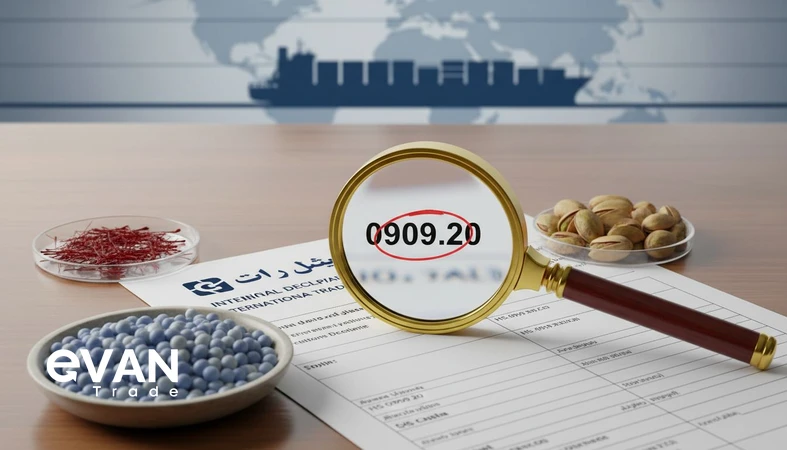
HS code mistakes on Iranian products are rarely “small”
For B2B buyers evaluating Iranian-origin goods, HS code accuracy is not an admin detail—it is a cost driver and a compliance risk multiplier. A one- or two-digit mistake can change duty rates, VAT treatment, import licensing requirements, inspection rules, and even whether the shipment is admissible. In practice, HS code errors often surface late: during customs entry, document checks, or a post-clearance audit. By then, the buyer is exposed to storage/demurrage, missed delivery windows, chargebacks from downstream customers, and disputes with the supplier about who caused the problem.
Iran-sourced categories such as food ingredients (pistachios, saffron, dates), petrochemicals and polymers, minerals/stone, and industrial intermediates frequently have close-lookalike HS headings that require precise specs. The core challenge is not “finding a code online,” but building a defensible classification rationale that matches the product’s objective characteristics and the importing country’s tariff schedule. This article gives importers, distributors, sourcing managers, and compliance/logistics teams a practical workflow to validate HS codes for Iranian products before contracting—reducing delays, penalties, and avoidable total landed cost surprises.
What HS codes are (and why national tariff lines matter)
HS at 6 digits vs national extensions
The Harmonized System (HS) is a globally standardized product classification system administered by the World Customs Organization. The first 6 digits are harmonized across participating countries and generally describe the product category with increasing specificity:
- Chapter (2 digits): broad sector (e.g., edible fruit/nuts, chemicals).
- Heading (4 digits): narrower product group.
- Subheading (6 digits): internationally harmonized level used as the foundation worldwide.
However, most importing countries extend HS beyond 6 digits (often 8, 10, or more) to create national tariff lines used for duty rates, statistical reporting, and regulatory controls. Two buyers importing the “same” Iranian product into two different countries can face different national codes and compliance triggers—even if the 6-digit HS is consistent.
Why small classification errors become expensive
Misclassification can create costs through multiple channels:
- Incorrect duty/VAT: underpayment can trigger penalties and interest; overpayment harms margin and may be hard to recover.
- Regulatory mismatch: wrong code may bypass required permits—or falsely trigger controlled goods procedures.
- Customs delays: mismatched codes across documents often lead to holds, extra queries, or inspections.
- Seizure or rejection: if the code implies a different product nature than what’s shipped, authorities may treat it as false declaration.
- Contract disputes: ambiguous HS responsibility makes it difficult to allocate liability for extra costs.
Key point for buyers: final classification is decided by the importing country’s customs authority. Your supplier’s code is a data point—not a decision.
Typical failure modes when classifying Iranian-origin goods
Iranian products are not “harder” by default, but common sourcing patterns create predictable classification traps. Below are the failure modes buyers should assume and actively test.
1) Ambiguous commercial descriptions
Descriptions like “industrial chemical,” “polymer,” “natural stone,” or “dried fruit” are not classification-grade. HS classification depends on objective characteristics (composition, form, function, processing stage), not marketing labels. When the description is vague, brokers and customs systems default to broad headings that may carry different duty rates or controls.
2) Incorrect product form or spec (the “same product, different HS” problem)
Many goods change HS based on physical form: whole vs ground, raw vs roasted, crude vs refined, pellet vs sheet, blocks vs slabs, bulk vs retail-ready, etc. For example, a food ingredient in powder form may fall under a different heading than the same ingredient as whole pieces—especially when additives or processing steps are involved.
3) Missing composition percentages
For blends and formulations (e.g., resins, mixtures, processed foods), the classification may hinge on the percentage of a key ingredient or whether the product is “put up for retail sale.” Without a clear composition breakdown, you cannot reliably choose between similar subheadings.
4) Misread processing stage
Customs classification often distinguishes between raw materials, semi-finished inputs, and finished products. A supplier may describe the product based on its end-use (“for food,” “for cosmetics,” “for construction”), while customs may classify it based on processing stage and physical characteristics at importation.
5) Brand/marketing names used as if they were HS descriptors
Trade names and marketing terms (e.g., “premium grade,” “super kernel,” “industrial grade,” “export quality”) rarely map to HS legal language. If the invoice uses brand terms instead of specification terms, customs queries become more likely.
6) Confusion between similar headings and exclusions
The HS includes legal notes and explanatory notes with inclusions/exclusions. Two headings may look similar to a non-specialist, but legal notes can push the product into a different chapter entirely. This is common in chemicals (by functional group), food preparations (by added sugar/flavoring), and stone/mineral products (by processing and finishing).
A buyer workflow to validate HS classification before contracting
The most reliable way to avoid HS mistakes is to treat classification like a controlled workflow, not a last-minute broker task. Below is a practical buyer-side process that reduces uncertainty before you issue a PO or open a shipment file.
Step 1: Create a “classification-grade” product description
Ask the supplier to provide a standardized description that includes:
- Common name + technical name (if applicable)
- Function and intended use (as secondary info)
- Physical form (whole/ground/powder/flakes/pellets/slabs)
- Processing stage (raw, roasted, refined, concentrated, etc.)
- Packaging form (bulk sacks, drums, retail packs)
- Any additives, coatings, preservatives, carriers
Step 2: Lock down composition and key specs
Request a spec sheet and, where relevant, a COA (Certificate of Analysis) for the actual batch or representative batches. Composition percentage, purity, moisture, grade parameters, and whether the product is a blend are often decisive. If your category is food or ingredients, align early with COA requirements in your internal quality process so classification and QC evidence support each other.
Step 3: Confirm the processing stage and “as imported” condition
Classification is based on the condition at importation—not what you will do after arrival. Confirm whether the goods are:
- Heat-treated or not
- Roasted/fried or raw
- Refined/bleached/deodorized (for oils and chemical intermediates)
- Cut/polished/calibrated (for stone)
Step 4: Use official tariff resources for your importing country
Start from the 6-digit HS logic, but validate against your country’s national tariff database at the 8–10 digit level. Read chapter notes and subheading notes. Do not rely solely on search-engine results or a supplier’s prior shipments to different destinations.
Step 5: Align supplier, customs broker, and internal compliance early
Send your classification-grade description and specs to your local customs broker and ask for a written recommendation (including assumptions). If the supplier’s HS differs from the broker’s, treat it as a red flag that requires reconciliation—not a debate. Where the stakes are high, consider a structured pre-shipment inspection scope that verifies product form, labeling, and packing against the classification assumptions.
Step 6: Document a classification rationale (audit-ready)
Maintain a short internal memo (one page is enough) that records:
- Chosen national tariff line (and 6-digit HS)
- Why it applies (objective product characteristics)
- Why close alternatives were rejected
- Documents supporting the decision (spec sheet, COA, photos, labels)
- Version/date and who approved
This discipline pays off during customs queries, internal audits, supplier disputes, and when your product specs evolve.
Step 7: Update the HS decision when specs change
Any change in composition, processing, packaging, or intended retail presentation can trigger a new classification. Build a “change-control” trigger into your procurement workflow so the HS decision is revisited before the next shipment.
Documentation alignment: where HS codes silently create contradictions
Even when the HS code is correct, inconsistent use across documents can still create customs friction. Importers should treat HS as a cross-document data field that must remain consistent—especially when multiple parties prepare paperwork.
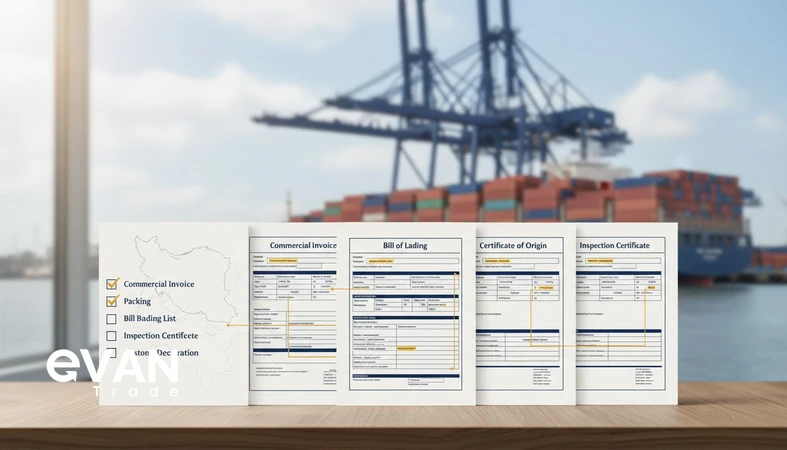
Documents impacted by HS classification
- Commercial invoice: product description, HS code, unit price, currency, Incoterms, and country of origin should be coherent.
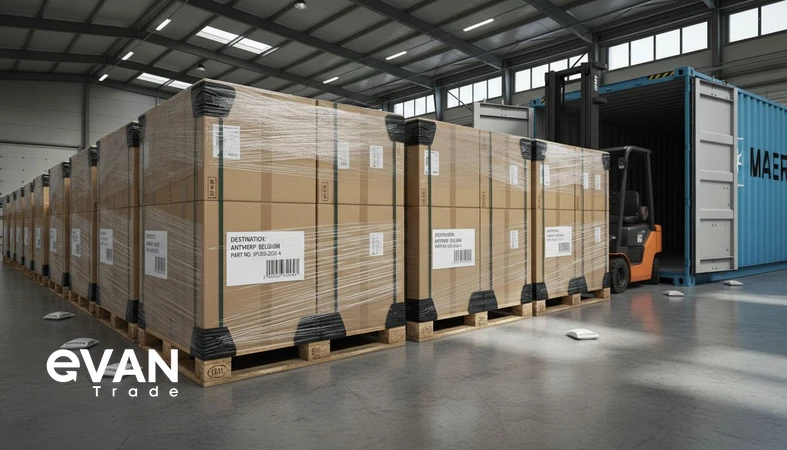
- Packing list: packaging form, net/gross weight, number of packages—must match “as imported” assumptions used in classification.
- Certificate of Origin (COO): origin statement and product description should not conflict with invoice HS narrative.
- COA/spec sheet: supports purity/composition and can justify subheading choice in sensitive categories.
- Product labels: naming, ingredients, and net content can influence how customs interprets retail vs industrial presentation.
- Shipping documents: descriptions on the bill of lading/air waybill should remain compatible with invoice and packing list.
For Iranian-origin shipments, document packages are often reviewed with extra care due to routing, banking, and compliance scrutiny. Building a consistent documentation set reduces delays. Many buyers formalize a checklist specifically for Documentation for Iran shipments so HS-related fields do not drift across drafts and revisions.
Two practical alignment rules
- One master description: maintain a single “master goods description” used across invoice, packing list, COO, and shipping instructions.
- Evidence follows the code: if the HS depends on purity, moisture, or processing, ensure the COA/spec sheet explicitly states it and references the lot/batch.
Common HS mistakes: root causes, consequences, prevention checks
| Common HS Mistake | Root Cause | Consequence | Prevention Check |
|---|---|---|---|
| Using a supplier’s HS from a different destination | National tariff lines differ by country | Wrong duty/VAT, missing permits | Validate against importing-country tariff database at 8–10 digits |
| Classifying by marketing name (not technical description) | Invoice description is non-technical | Customs queries, reclassification | Use a classification-grade description with form, composition, processing stage |
| Ignoring “as imported” condition | Focus on end-use after import | Wrong heading/subheading | Confirm processing stage and physical condition at shipment |
| Missing composition percentages for blends | No spec sheet or incomplete COA | Higher duty line, penalties in audit | Request composition breakdown and keep COA/spec on file |
| Confusing raw vs processed food forms | Unclear roasting, cutting, sweetening, flavoring | Unexpected duties, food controls | Document processing steps; verify labels/ingredients list |
| Misclassifying chemicals by generic name | Overlooking CAS/functional group/purity | Controlled goods flags, holds | Collect CAS (if applicable), purity, SDS, and technical name |
| Using a “similar” code to speed up booking | Time pressure close to ETD/ETA | Entry rejection, demurrage/storage | Freeze HS before PO; do not ship until broker confirms |
| Mismatch of HS across invoice, packing list, COO | Multiple document authors, version drift | Document discrepancy, clearance delay | Single master description + final document reconciliation step |
| Not updating HS when specs/packaging change | No change-control in procurement | Repeat errors across shipments | Trigger re-review when composition, form, or retail presentation changes |
| Skipping advance ruling for high-risk items | Assuming broker opinion is final | Post-clearance reassessment | Use Binding Tariff Information/advance ruling where available |
Contract and PO language: practical clauses buyers use (non-legal advice)
Many HS problems become costly because contracts and POs are silent about classification responsibilities and document standards. The goal is not to “push risk” to the supplier, but to create clarity, evidence requirements, and dispute mechanics before shipment.
PO/contract elements tied to HS discipline
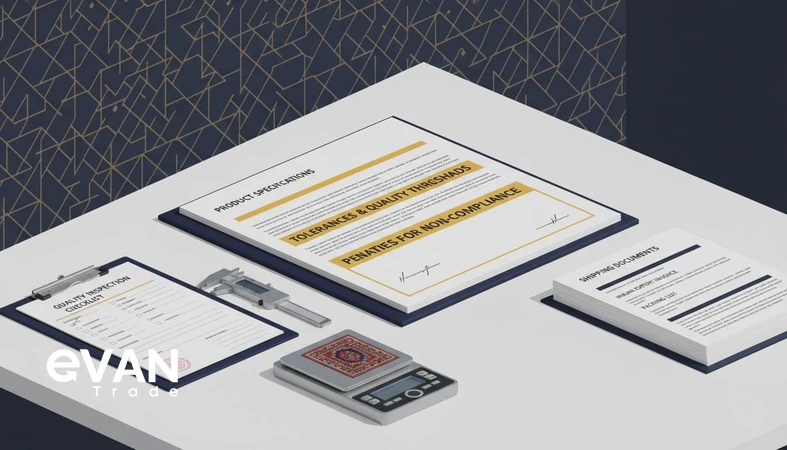
- Product definition annex: attach the classification-grade description, packaging form, and key specs as controlled documents.
- Document list and acceptance criteria: specify required documents (invoice, packing list, COO, COA/spec where applicable) and state that descriptions and HS fields must be consistent.
- HS code as “indicative” vs “binding”: some buyers state the HS is indicative for logistics, while final code is per importing customs; others require supplier cooperation if reclassification occurs.
- Change notification: require written notice and buyer approval for any change in composition, processing, or packaging that may affect classification.
- Dispute handling: define a process if supplier HS differs from broker/customs view (e.g., pause shipment, share evidence, escalate to advance ruling if needed).
Two wording patterns buyers often adopt
Document consistency clause (example): “Seller shall provide commercial documents with consistent product description, origin statement, and packaging details across invoice, packing list, and certificate of origin. Any discrepancy that causes customs delay shall be corrected within an agreed timeframe at seller’s cooperation.”
Spec change control (example): “Seller must notify Buyer in writing of any change to composition, processing, form, or packaging before production/shipment. Buyer may require re-validation of HS classification and regulatory requirements based on the revised specifications.”
Because HS issues can cascade into cash-flow strain (e.g., delayed release, unexpected duties), buyers also align contractual safeguards with operational choices like Safer payment terms—especially for first-time Iranian sourcing.
Country-specific reality: customs decides, so use local expertise and advance rulings
Regardless of what a supplier, freight forwarder, or even a non-local consultant says, the importing country’s customs authority has the final say on classification. That is why your strongest risk reducer is a local broker who routinely classifies goods in your destination market and understands local precedent.
When to seek an advance ruling / Binding Tariff Information
Many jurisdictions offer an “advance ruling” (or Binding Tariff Information in some regions) that provides an official classification decision for a product, usually valid for a period if the product remains unchanged. Consider it when:
- Duties differ materially between two plausible headings
- The product is chemically complex, a blend, or a borderline “preparation”
- You expect repeat shipments and want stable landed cost planning
- Past imports faced queries, holds, or reclassification
Logistics and shelf-life factors that interact with HS readiness
Classification delays are not only a compliance issue—they can become a product-quality issue for time-sensitive goods. Importers of food and ingredients should plan clearance buffers and confirm Shelf life validation so a customs hold does not turn into a commercial loss. Similarly, routing decisions such as Sea vs air freight affect your tolerance for document queries: air shipments move faster but can be less forgiving when paperwork is incomplete, while sea shipments can accumulate demurrage quickly if the entry is stopped.
FAQ: HS code classification for Iranian products
Who is responsible for HS code accuracy: the buyer, supplier, or broker?
Operationally, the importer of record is typically accountable to the importing country’s customs for the declaration, including HS code. Suppliers can provide suggested codes and supporting specs, and brokers can advise, but customs will look to the importer’s entry. That is why buyers should treat supplier HS codes as inputs and require evidence (specs/COA/labels) that supports the final broker-led classification.
What if the supplier’s HS code differs from my customs broker’s code?
Assume the difference is meaningful and investigate the assumptions behind each code: product form, processing stage, composition percentages, and retail vs industrial presentation. Ask the broker to cite the relevant tariff notes and explain why alternative headings are excluded. If the cost impact or compliance risk is high, consider an advance ruling. Do not ship “and see what happens.”
Should the HS code appear on the contract or PO?
Many buyers include HS codes on POs for operational clarity, but they also add language acknowledging that final classification is determined by the importing country’s customs. The best practice is to attach a controlled product description/spec annex and require document consistency. This keeps the HS discussion anchored to objective characteristics rather than a single number that may change with national tariff updates.
How often do HS codes change?
The international HS is revised periodically, while national tariff lines and duty rates can change more frequently through local updates. Even without a structural HS change, authorities may alter national subheadings, impose new controls, or adjust interpretive guidance. Buyers should schedule periodic reviews for high-volume SKUs and always re-check classification when product specs, packaging, or labeling changes.
Can one product have multiple HS codes?
A single “product family” can legitimately map to different HS codes if specifications differ (e.g., raw vs processed, blended vs single-ingredient, industrial bulk vs retail packs). However, one physical item imported in one condition should generally have one best-fit code in a given country. If you see multiple codes used for identical specs, that is a warning sign that classification discipline is missing.
What is an advance ruling (Binding Tariff Information) and when is it worth it?
An advance ruling is a formal decision issued by customs on how a product should be classified, based on submitted descriptions and evidence. It is worth considering when you have recurring imports, high duty sensitivity, or borderline classification. It can reduce disputes at the border and improve landed cost forecasting, provided the imported goods remain consistent with what was submitted.
Does Iranian origin itself change the HS code?
Origin does not change the HS classification logic (which is based on product characteristics), but origin can affect admissibility, documentary scrutiny, licensing, sanctions-related compliance, and how carefully authorities review inconsistencies. For Iranian shipments, buyers benefit from stronger documentation discipline and consistent product descriptions across all documents to prevent avoidable holds.
Conclusion: reduce HS risk by turning classification into a controlled process
HS code accuracy for Iranian-origin goods is best managed as a buyer-controlled workflow: define the product in classification-grade terms, secure composition and processing evidence, validate against the importing country’s national tariff lines, and align early with a local customs broker. Most costly mistakes come from predictable gaps—vague descriptions, missing percentages, misread processing stage, and document inconsistencies across invoice, packing list, COO, and supporting specs. When the financial and compliance stakes are high, advance rulings can convert uncertainty into a documented position that stabilizes landed cost planning.
For teams sourcing from Iran, disciplined documentation and risk-aware procurement practices matter as much as price and lead time. Evan Trade (https://evantrade.co/en/) shares practical guidance on Iranian sourcing, documentation discipline, and operational risk reduction so import teams can make better-informed decisions and avoid preventable clearance and cost surprises.