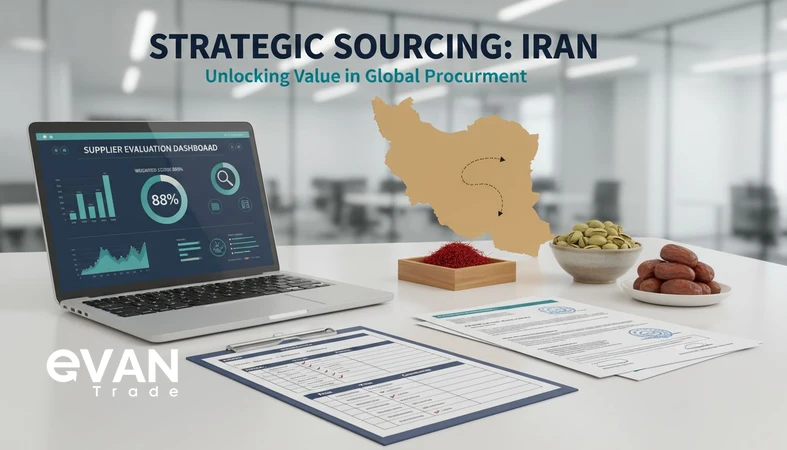


Bulk purchasing from any market can deliver strong margins—or expensive lessons. In Iran, the opportunity can be real, but so can the risk: importers often receive bulk offers that look unusually cheap, come with thin paperwork, or describe product quality in vague, unverifiable language. These red flags in Iran bulk offers matter because they rarely stay “commercial issues.” They can quickly become logistics disruptions, compliance failures at destination, quality disputes after arrival, and cash-flow problems when a shipment is delayed or rejected.
This article breaks down the most common warning signs buyers encounter: unreal prices, weak docs, and vague quality—plus the hidden red flag that connects them: inconsistent or implausible supply stories. You’ll also get practical checks, decision criteria, and a table you can use to evaluate offers before you send money, issue a PO, or book freight.
Why red flags cluster in bulk offers (and why Iran is not unique)
Red flags tend to show up more in bulk deals because large volumes amplify incentives on both sides: sellers want commitment fast; buyers want a price advantage that justifies the risk. The result is a negotiation environment where shortcuts are tempting—especially when communication is cross-border and the buyer is under time pressure.
Iran adds a few market-specific dynamics that can make offer evaluation harder for foreign buyers:
- Fast-changing input costs (energy, packaging, transport) that can legitimately move pricing—but also create room for “too-good-to-be-true” quotes.
- Mixed producer and trader ecosystems, where a single offer may involve multiple parties in the supply chain.
- Documentation expectations differ by product category (especially food vs. non-food), and some sellers under-document because they sell domestically.
- Quality language is not standardized across markets, so terms like “premium” or “A grade” may be used without measurable criteria.
None of these are reasons to avoid the market. They are reasons to apply a consistent verification framework. The goal is simple: separate legitimate competitiveness from avoidable risk.
Red flag #1: Unrealistic pricing that can’t be explained
Unreal pricing is the most common trigger for buyer mistakes. Sometimes the price is low because of a genuine advantage (seasonality, proximity to raw material, or a producer trying to enter a new market). But when the quote sits far below plausible cost structure, it often signals at least one of the following: hidden downgrades, missing compliance costs, non-binding pricing, or a seller who cannot execute at scale.
How to sanity-check an Iran bulk price
- Ask for a cost structure narrative: not proprietary details, but a reasoned explanation (raw material source, processing, packaging spec, loading terms). A legitimate supplier can explain the logic without evasion.
- Confirm Incoterms and inclusions: many “cheap” prices quietly exclude packaging grade, palletization, inspection, or inland transport to port.
- Benchmark within your own history: compare to similar origins and seasons, and adjust for specification differences (moisture, size grade, oil content, purity, etc.).
- Test for price stability: request a proforma invoice validity period and a clear clause for what triggers a price change.
Decision criteria: when low price becomes a deal risk
- The seller cannot tie price to a measurable spec (only marketing language).
- The seller avoids committing to packaging and labeling, or treats them as “to be discussed later.”
- The price is conditional on fast payment without offering a verification path (inspection, samples, or document review).
Practical takeaway: don’t reject low pricing automatically; reject unexplained low pricing. A credible offer can be interrogated and still hold together.
Red flag #2: Weak documentation and unclear exporter identity
Weak docs are not just a paperwork inconvenience; they are a risk multiplier. In bulk trade, documentation is how you prove what was sold, who sold it, and whether it meets import requirements. When documents are vague, inconsistent, or delayed, buyers lose leverage—especially if a dispute occurs after shipment.
Common weak-doc patterns buyers should notice
- Exporter-of-record is unclear or changes during negotiation.
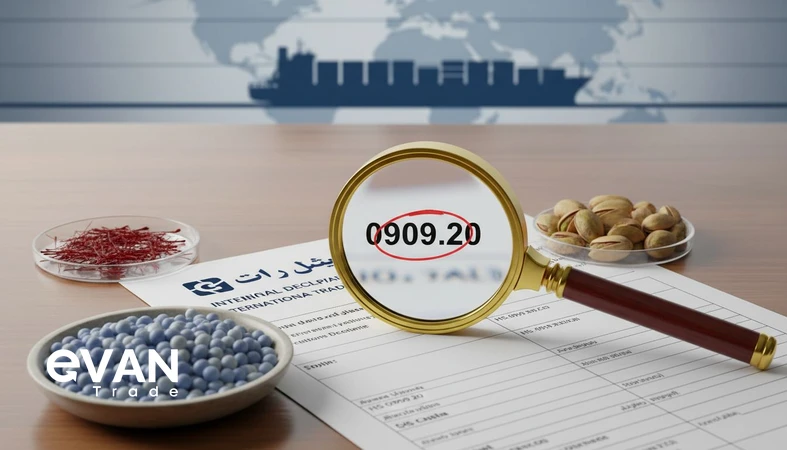
- Proforma invoice lacks detail (no HS code guidance, no packing spec, no stated tolerances, no delivery timeline).
- Certificates are promised “after loading” without a clear list of what will be issued and by whom.
- Inconsistent company names/addresses across email signature, invoice header, bank details, and certificates.
What to request (and what “good” looks like)
Documentation will vary by product and destination country, but most bulk deals benefit from a disciplined baseline:
- Proforma invoice (PI) with: product description tied to measurable specs, Incoterms, packing details, net/gross weights, origin statement, lead time, and validity.
- Packing list template showing how lots/batches are identified.
- Certificate roadmap: a simple list of which documents will be provided (e.g., Certificate of Origin, health/sanitary documents for food where applicable, inspection certificate if agreed).
- Traceability elements for sensitive categories: batch/lot code logic, production date format, and labeling language plan.
Buyer tip: treat early document quality as a proxy for operational maturity. A seller that cannot produce consistent templates before payment is unlikely to become “organized” after you commit.
Red flag #3: Vague quality claims and undefined grade language
“Top quality,” “export grade,” and “premium” are not specifications. They are sales adjectives. In Iran bulk offers—especially for commodities and food ingredients—quality must be defined in a way that survives disputes: measurable parameters, tolerances, test methods, sampling rules, and acceptance criteria.
Typical vague-quality signals
- No spec sheet, or a spec sheet that lists only broad ranges without test methods.
- Photos instead of parameters (images are helpful, but not contractual).
- “Same as last shipment” claims when there was no formally agreed spec previously.
- Reluctance to discuss tolerances (e.g., moisture, foreign matter, size distribution, breakage).
Actionable quality verification steps
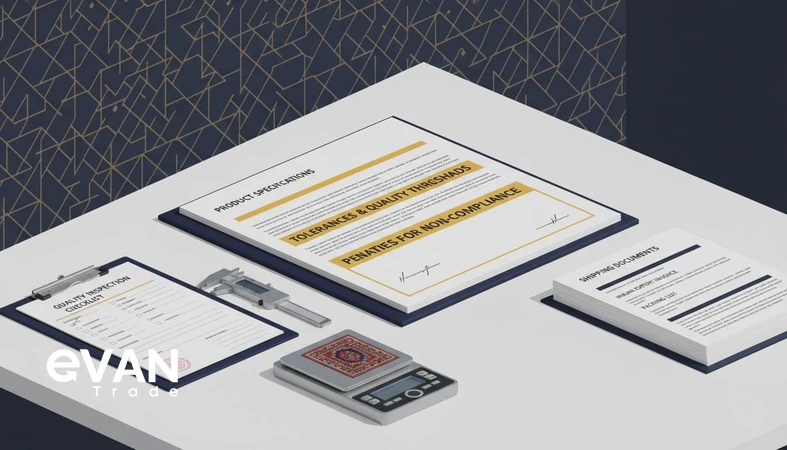
- Convert claims into a written specification: define 5–10 key parameters for your category (and your destination compliance needs).
- Agree on sampling and testing: who samples, where, when, and which laboratory/test method is used.
- Request a pre-shipment sample protocol: not just “a sample,” but how the sample represents the lot (random from production vs. “golden sample”).
- Set acceptance criteria and remedies: what happens if results are outside tolerance—price adjustment, replacement, or rejection procedure.
In bulk trade, the dispute is rarely about whether the product is “good.” It is about whether the product matches the agreed specification and how variance is measured.
The hidden red flag: inconsistent supply stories and capacity gaps
Even when price and quality sound plausible, a bulk offer can fail if the supply story doesn’t add up. Capacity gaps are a frequent root cause of delays, last-minute substitutions, and inconsistent lots—issues that buyers often discover only after payment or during loading.
What an inconsistent supply story looks like
- Unclear role: the seller alternates between “manufacturer” and “trader” depending on the question.
- Shifting availability: today “ready stock,” tomorrow “needs two months,” with no explanation.
- Lot mixing: inability to explain whether the shipment is single-origin, single-season, or consolidated from multiple sources.
- Overly broad product coverage: one seller offering too many unrelated categories at unusually low prices.
Verification checks that reduce execution risk
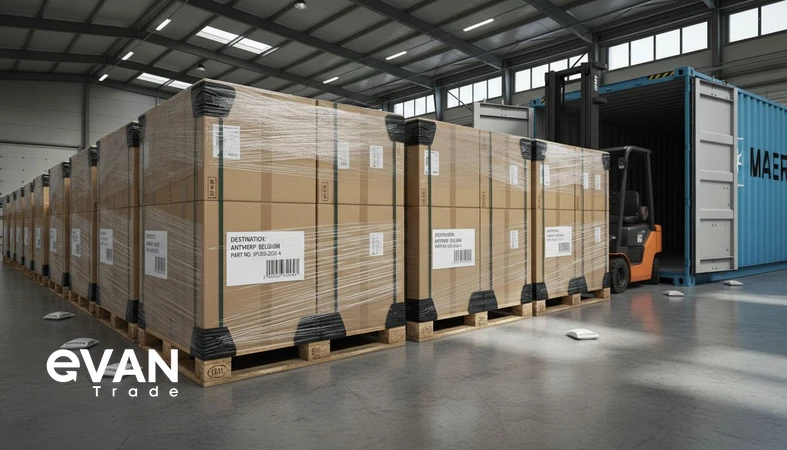
- Ask for a lot plan: how many tons per batch, production schedule, and how batches will be segregated and labeled.
- Request past shipment evidence: anonymized B/L snippets, loading photos with date/lot codes, or references (within privacy limits).
- Confirm packing capacity: daily packing output and packaging material lead times, especially during peak season.
- Align payment milestones with controls: partial payment after document verification or inspection milestones, where feasible.
This is also where buyers should align internal stakeholders: procurement wants cost; QA wants spec clarity; logistics wants accurate weights, packaging, and lead times. A supplier who can handle cross-functional questions calmly is usually less risky.
Red-flag evaluation table: what it may indicate, how to verify, what to do next
Use the table below as a quick decision-support tool when reviewing Iran bulk offers. The goal is not to “catch” suppliers; it’s to identify which offers deserve deeper due diligence and which should be paused.
| Red flag | What it may indicate | How to verify | Recommended buyer action |
|---|---|---|---|
| Price far below market with no explanation | Hidden spec downgrade, non-binding quote, missing cost elements | Request spec-linked pricing, packaging inclusions, Incoterms clarity, validity window | Pause; compare like-for-like specs; proceed only with written spec + PI detail |
| PI missing packing, tolerances, or lead time | Low operational maturity; room for later changes | Ask for revised PI + packing list template; confirm batch/lot coding | Do not pay until document set is complete and consistent |
| Exporter name/bank details inconsistent | Intermediary confusion, compliance and payment risk | Cross-check company registration details; request consistent headers and stamps | Escalate due diligence; require clear exporter-of-record before contracting |
| Quality described as “premium/export grade” only | Undefined quality; high dispute probability | Insist on measurable parameters + test methods + tolerances | Convert claims into a contract spec; add inspection/sampling rules |
| Samples don’t represent production lot | “Golden sample” risk; mismatch at shipment | Define sampling protocol; request pre-shipment sample from actual batch | Proceed only with representative sampling + acceptance criteria |
| Supply story changes (stock vs. production vs. sourcing) | Capacity gap; substitution risk; delays | Ask for lot plan, production schedule, packaging capacity, past shipment evidence | Reduce exposure: smaller trial lot or staged shipments with controls |
A practical decision framework for buyers (before you commit)
When an offer passes “first impressions,” buyers still need a repeatable way to decide whether to proceed, renegotiate, or walk away. The framework below is designed for B2B teams evaluating bulk offers quickly without skipping essentials.
Step 1: Lock the commercial truth (what exactly is being sold)
- Product name + measurable spec parameters
- Grade definition tied to metrics (not adjectives)
- Packaging and labeling requirements
- Incoterms, destination, and delivery window
Step 2: Lock the documentation truth (who is responsible and what will be issued)
- Exporter-of-record identity
- PI, packing list, and certificate roadmap consistency
- Agreed inspection or testing documents (if applicable)
Step 3: Lock the execution truth (can this supplier deliver this volume reliably)
- Lot plan and capacity narrative
- Traceability: batch/lot coding and segregation
- Risk controls: sampling, inspection, staged payments where feasible
If any step fails, don’t “solve it later.” In bulk trade, the buyer pays for uncertainty—either in price, time, or disputes. The best deals are the ones that can be explained, documented, and executed with minimal improvisation.
FAQ: Buyer questions about Iran bulk offers and common red flags
How do I know if an Iran bulk price is genuinely competitive or a trap?
Start by making sure you are comparing like-for-like specs and Incoterms. Then ask the supplier to link the price to measurable parameters, packaging grade, and delivery terms. If the offer remains materially cheaper but cannot be explained without vague claims, treat it as high-risk. Competitive pricing that is real can usually survive structured questioning and a detailed PI.
Which documents should I request early to screen weak documentation?
At minimum, request a detailed proforma invoice and a packing list template. Ask for a simple list of certificates that will be provided and who issues them. You are screening for consistency: the same exporter name, address, and commercial terms across documents. If the supplier cannot produce coherent templates before payment, you should expect delays and ambiguity later.
What’s the best way to handle vague “premium quality” claims?
Translate marketing language into a written specification: define key parameters, tolerances, test methods, and sampling rules. Request a representative pre-shipment sample and align acceptance criteria with your QA team. If the supplier resists tolerances or refuses to specify test methods, you risk receiving a product that is defensible as “good” but fails your requirements or customer expectations.
Should I always use third-party inspection for Iranian shipments?
Not always, but it is often useful when the product is quality-sensitive, the value is high, or the documentation is unclear. Inspection adds cost, so align it with risk: first-time suppliers, large volumes, or tight customer specs justify stronger controls. If inspection is used, define scope (sampling, tests, packing verification) and connect it to acceptance criteria in the contract.
How can I reduce risk if I need to move fast on a bulk offer?
Speed doesn’t have to mean blind trust. Use a staged approach: confirm specs and packing in writing, request a representative sample, and ask for a clear document roadmap. If feasible, reduce exposure with a smaller trial lot or staggered shipments. The fastest way to lose time is to ship first and resolve definitions later—especially when quality or compliance issues emerge at destination.
Conclusion: A buyer-ready way to interpret red flags without losing good opportunities
Red flags in Iran bulk offers typically show up as a pattern: an unusually low price paired with weak documentation and quality claims that can’t be measured. The solution is not suspicion—it is structure. Evaluate each offer through three truths: the commercial truth (clear specs, packing, Incoterms), the documentation truth (consistent exporter identity and document roadmap), and the execution truth (credible capacity, lot plan, and traceability). When a supplier can answer these points with clarity, the deal becomes easier to price, easier to control, and less likely to turn into a dispute.
For buyers who want a neutral, process-driven resource to navigate Iranian sourcing and export formalities, Evan Trade publishes trade-oriented insights and works as an export partner focused on documentation discipline and buyer-aligned communication.