

Safer Payment Terms for Iran Trade: why payment risk is the real bottleneck
In cross-border sourcing from Iran, most buyer concerns are framed as “Can the supplier deliver?” or “Will the quality match the sample?” In practice, the hardest part to control is often payment risk: paying too early, paying the wrong party, or paying under terms that make recovery impossible if something goes wrong. This risk becomes more pronounced when the trade route involves multiple intermediaries, split shipments, or documentation constraints. The result is a familiar pattern: buyers either demand overly strict terms that stall negotiations, or accept loose terms that expose them to loss.
This article breaks payment terms into a practical risk model and shows how to structure safer B2B purchases for Iranian products without slowing down trade. The goal is not to “pick one perfect term,” but to match payment structure to transaction maturity (first order vs repeat), product risk (commodity vs sensitive specs), and document control (who holds shipping documents, inspection reports, and certificates).
Because Iran-related trade may involve additional compliance checks and routing considerations, safer payment terms should also include clear documentation triggers, verification steps, and dispute pathways. You will find decision frameworks, a comparison table, negotiation guidance, and a buyer checklist to implement immediately.
Map the risk: what can go wrong in Iran-related B2B payments
Payment risk is not a single problem. It is a set of failure modes that should be addressed through contract structure and operational controls. Before choosing a term, map your exposure across five common categories:
- Counterparty risk: the seller is not the actual exporter, lacks authority, or cannot perform.
- Performance risk: non-delivery, late delivery, or partial shipment.
- Quality/spec risk: product differs from agreed grade, specs, packaging, or labeling.
- Document risk: missing or incorrect documents prevent customs clearance, banking release, or insurance claim.
- Compliance and routing risk: transaction is delayed or blocked due to sanctions screening, restricted parties, or shipment routing constraints.
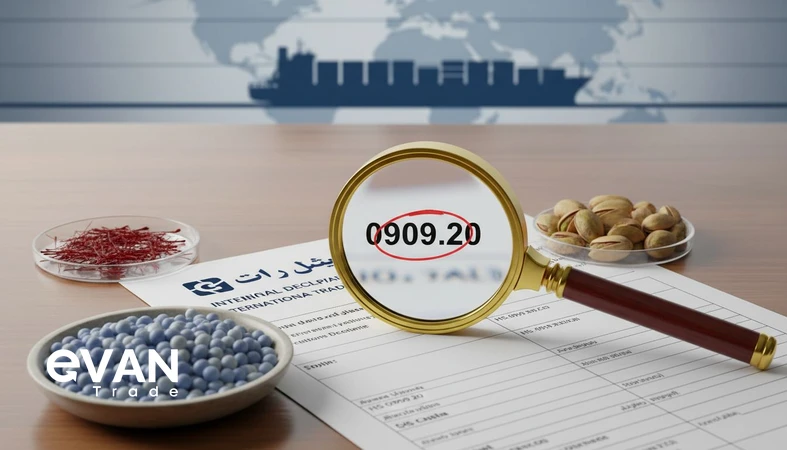
For Iranian sourcing, buyers often underestimate document and routing risk. Even when the goods are compliant, weak coordination around certificates, HS codes, and consignee details can delay clearance and create storage costs. Therefore, payment terms should be tied to objective milestones that can be verified independently (inspection, document set completeness, bill of lading issuance, etc.).
Separate “commercial trust” from “transaction controls”
A common mistake is relying on relationship signals (responsiveness, social proof, a polished website) instead of controls. Safer terms do not require distrust; they require mechanisms that make both sides predictable. The buyer’s job is to reduce “unknowns” in the first order and gradually relax controls as performance history builds.
Payment terms explained: how each one shifts risk between buyer and seller
Different payment terms change who carries risk at each stage of the trade. Below is a practical comparison that focuses on risk allocation rather than theory.
| Payment term | Typical structure | Buyer risk level | Seller risk level | Best use cases | Key safeguards to add |
|---|---|---|---|---|---|
| 100% Advance (T/T) | Full payment before production/shipment | High | Low | Very small orders, highly trusted repeat suppliers | Verified exporter identity, proforma invoice controls, pre-shipment inspection, refund clause with timeline |
| Deposit + Balance before shipment | e.g., 30% deposit, 70% after inspection and before BL release | Medium-High | Medium | Standard for first-time deals where seller needs working capital | Milestone-based triggers, third-party inspection, photo/video evidence, document checklist |
| Deposit + Balance against documents | Balance paid upon receipt/verification of document set | Medium | Medium | Containerized shipments where documents control release | Define exact docs, require scans before originals, discrepancy window, penalties for doc errors |
| CAD (Cash Against Documents) | Bank releases documents upon payment/acceptance | Medium | Medium | When L/C is not practical but document discipline is needed | Bank document handling rules, clear documentary requirements, inspection aligned to docs |
| Irrevocable L/C at sight | Bank pays upon compliant document presentation | Low-Medium | Low-Medium | Higher values, complex specs, new relationships | Careful drafting of L/C conditions, avoid “soft clauses,” align to Incoterms and shipment timeline |
| Usance/Deferred L/C | Payment at a future date after documents | Low | Medium-High | When buyer needs credit term and supplier can finance | Discounting options, performance bonds, late shipment remedies |
| Escrow / Third-party holding | Funds held until agreed release conditions are met | Low-Medium | Low-Medium | First orders, digital-friendly counterparties, when trust is low | Clear release triggers, dispute rules, inspection documentation, identity verification |
| Open Account (Net terms) | Buyer pays after delivery (e.g., Net 30/60) | Low | High | Long-term partners, strong buyer credit, stable lanes | Credit insurance, retention clauses, offset rights, quality claim protocol |
Notice that “safe” is not only about reducing buyer risk. Terms must also remain workable for the supplier’s cash flow; otherwise, the supplier may cut corners or delay. A safer deal is one where both sides can perform under the agreed structure.
Choose terms by deal stage: a practical framework for first order vs repeat orders
Instead of debating payment terms as a fixed preference, treat them as a progression. The buyer can reduce risk over time by increasing verification and decreasing upfront exposure as the relationship matures.
Stage 1: First order (prove identity, capability, and document discipline)
- Keep order value small enough that a failure does not damage your supply plan.
- Prefer deposit + milestone balance with inspection, or a structured documentary approach (CAD or L/C when feasible).
- Define a tight document set and a discrepancy process before any payment release.
Stage 2: Second to fourth orders (prove repeatability)
- Negotiate better balance timing (e.g., balance against documents instead of before shipment).
- Introduce quality KPIs (acceptable tolerance, AQL where applicable, packaging specs, labeling).
- Use partial shipments carefully: each shipment should have its own inspection and document milestone.
Stage 3: Mature relationship (optimize cash flow and speed)
- Consider short open-account terms only after a performance history exists.
- Add credit risk tools (trade credit insurance where possible, caps per month, or rolling limits).
- Move from “heavy controls” to “light controls” but keep auditability (traceable payments, consistent exporter identity, documented specs).
This staged approach is especially helpful when dealing with Iran-related routing and documentation complexity: you can learn the lane, documents, and timing on a smaller first order and then scale with more relaxed terms.
Build safer terms with milestones: inspection, documents, and release triggers
The core idea for reducing payment risk is to convert vague promises into objective release conditions. Milestone-based payment terms are usually easier to negotiate than extreme positions like “100% after delivery.”
Recommended milestone menu (choose what fits your product)
- Contract signing: supplier provides corporate documents, bank details on letterhead, and authorized signatory proof.
- Pre-production confirmation: final specs approved (grade, size, moisture, purity, packaging, labeling, palletization).
- In-process checks (optional): for sensitive products, verify raw materials or batch controls.
- Pre-shipment inspection: third-party report + photos/video + sampling record.
- Document verification: scans of commercial invoice, packing list, certificate(s), and transport document draft for name/HS/incoterms consistency.
- Shipment milestone: bill of lading / airway bill issued, container number confirmed.
- Post-arrival claim window: defined timeframe for concealed damage or lab results (when relevant).
A simple, negotiable structure buyers can start with
- 10–30% deposit after identity and spec confirmation.
- 40–60% after passing pre-shipment inspection (or after inspection + document scan set).
- Remaining balance against documents, with a short discrepancy window (e.g., 48–72 hours) defined in the contract.
For Iranian trade, document verification matters as much as inspection. If names, consignee details, or product descriptions are inconsistent across documents, you may face delays or additional scrutiny. Your contract should define what counts as a “document discrepancy” and what remedy applies (correction at seller cost, penalty, or delayed payment until fixed).
Contract clauses that reduce payment disputes (without turning the deal into a legal battle)
Many payment disputes happen because the contract is thin: it states price and quantity but fails to define acceptance criteria, remedies, and timelines. Stronger clauses can reduce ambiguity and make payment release predictable.
High-impact clauses to include
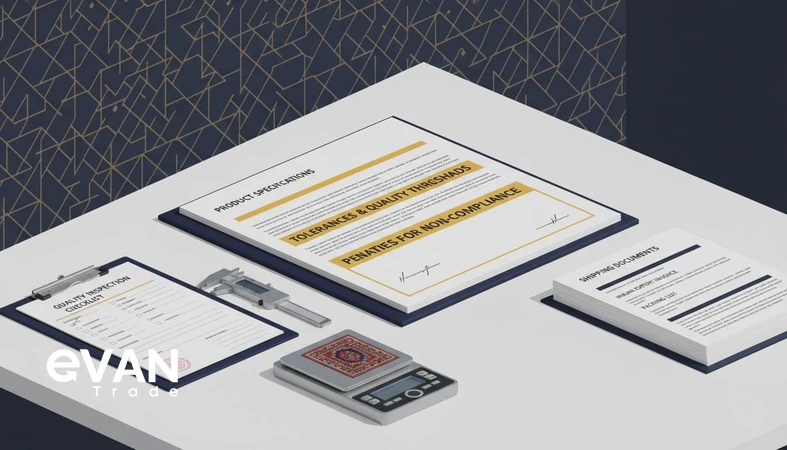
- Specification annex: measurable specs, tolerances, packaging and labeling requirements, and an approval method (signed spec sheet).
- Inspection and sampling protocol: who inspects, where, when, and what happens if results fail.
- Document list and format: exact names, required fields, language, and consistency rules across documents.
- Title and risk transfer: aligned with Incoterms; avoid confusion about who bears which risk at each stage.
- Discrepancy and cure period: a defined window for correcting documents or replacing non-conforming goods.
- Non-conformance remedies: price reduction, replacement, rework, or return logistics allocation.
- Force majeure and delay handling: clear communication timelines and documentary evidence requirements.
One clause buyers often miss: “no payment = no waiver”
If you release a payment to keep the shipment moving, the seller may later argue you accepted the goods. A simple “payment does not constitute acceptance” clause helps preserve your claim rights while keeping operations moving.
Well-structured payment terms do not eliminate problems; they define how problems are handled so they do not become losses.
Negotiation playbook: how to ask for safer terms without losing the supplier
Suppliers often resist safer terms because they hear “we don’t trust you” or because the terms shift working-capital burden onto them. A practical negotiation approach frames safer terms as operational clarity and shared risk management.
Use “risk-based justification,” not blunt demands
- Explain that first orders require stronger controls because you lack shared history.
- Offer a staged path: better terms after successful delivery and document accuracy.
- Propose smaller initial volume in exchange for better payment timing.
Trade concessions thoughtfully
- If the supplier insists on a higher deposit, ask for stronger inspection rights or tighter document obligations.
- If you accept balance-before-shipment, request a verified inspection report and an explicit refund timeline if shipment is not handed to the carrier.
- If you want balance-against-documents, commit to a fast verification window to reduce supplier uncertainty.
Red flags that should change your payment structure
- Unwillingness to provide exporter identity documents or inconsistent company names.
- Pressure to pay to personal accounts or unrelated third parties.
- Reluctance to allow third-party inspection or refusal to define acceptance criteria.
- Vague answers about documents, HS code, or labeling requirements.
When these red flags appear, the safest move is not to “negotiate harder,” but to change the structure: smaller trial order, escrow, documentary payment, or walking away.
Buyer checklist: implement safer payment terms in Iran trade
Use this checklist as a pre-flight process before releasing any funds. It is designed for buyers who need an actionable sequence, not legal theory.
Before contract and deposit
- Confirm legal entity name, address, and authorized signatory.
- Verify bank details match the contracting entity (not an unrelated recipient).
- Agree on Incoterms, shipment window, and who provides which documents.
- Lock a measurable specification annex (grade, packaging, tolerance).
Before the main balance payment
- Receive and review pre-shipment inspection results (or alternative agreed QC evidence).
- Check photo/video evidence against packaging and labeling specs.
- Review document scans for name/consignee/product description consistency.
- Confirm shipment booking details and expected document issuance timing.
After shipment (to protect claims)
- Maintain a discrepancy log (documents, quality, quantities).
- Keep a defined claim window and evidence requirements in your internal SOP.
- Store all communications and approvals in one auditable folder.
If you want a single principle to guide your approach: pay for verified milestones, not for intentions.
FAQ: safer payment terms for Iran trade
What is the safest payment term for a first-time purchase from Iran?
There is rarely one “safest” option in absolute terms. For many first orders, a deposit plus milestone-based balance (tied to inspection and document verification) is more practical than extreme positions. When feasible, documentary structures such as CAD or an irrevocable L/C at sight can reduce exposure, but they require careful drafting and document discipline.
Is 100% advance payment ever reasonable in Iran trade?
It can be reasonable for small-value trial orders or when buying from a supplier with verified performance history and strong documentation practices. The safer way to use advance payment is to limit the amount, verify exporter identity, define refund timelines for non-shipment, and require objective proof such as inspection results or shipment booking evidence before final release.
How do I reduce risk if the supplier insists on a large deposit?
Try to convert the deposit into a staged structure: part as deposit, part after inspection, and the remainder against documents. If the supplier needs working capital, negotiate operational safeguards in return: third-party inspection access, stricter document obligations, and clear remedies for delays or non-conformance. You can also reduce your exposure by starting with smaller volumes.
What documents should trigger payment release in documentary-based terms?
At minimum, define a consistent set: commercial invoice, packing list, transport document (B/L or AWB), and any required certificates tied to your product and destination. The key is consistency of names, consignee, product description, HS code logic, and quantities across all documents. Your contract should define what counts as a discrepancy and how quickly it must be cured.
How can I handle quality disputes without freezing the entire payment?
Use a contract mechanism that separates “document compliance” from “quality acceptance.” For example, release payment against compliant documents but keep a small retention (or a claim window with agreed remedies) for quality issues proven by inspection, sampling records, or lab results. This approach avoids operational deadlock while preserving your ability to claim for non-conformance.
Conclusion: safer payment terms are structured, not guessed
Safer payment terms for Iran trade come from aligning money flow with verified milestones: identity checks, measurable specifications, third-party inspection, and disciplined document verification. The most resilient approach is staged: tighten controls for first orders, then relax terms as performance history accumulates. Use payment structures that are realistic for supplier cash flow, but never release funds without objective triggers and a defined discrepancy process. In practice, the difference between a smooth deal and a costly dispute is often a few pages of clarity: specs, documents, timelines, and remedies.
For buyers who want a structured way to manage sourcing, documentation coordination, and risk controls across transactions, Evan Trade can serve as a practical resource and trade partner—helping buyers navigate supplier workflows, shipment documentation, and commercially sound payment structures without relying on guesswork.