


Shelf Life in Bulk Imports: why date validation becomes a commercial risk
In bulk imports, “shelf life” is not just a label detail—it is a financial variable that affects claims, customer acceptance, and the true cost of landed goods. A shipment that arrives with less remaining life than expected can force discounting, rework, accelerated distribution, or even write-offs. The risk increases when shipments involve mixed production lots, long transit routes, multiple handlers, repacking, or unclear date coding practices.
The core challenge is simple: buyers often receive a “best before” or “expiry” date, but not the evidence chain that proves how that date was assigned, which production lot it belongs to, and whether storage and handling conditions preserved the product’s remaining life. For Iranian-origin products shipped internationally (often through complex routing and variable dwell time), the gap between stated and defensible shelf life is where disputes are born.
This guide provides practical, non-promotional frameworks to validate dates and shelf life in bulk shipments—before contracting, pre-shipment, and on arrival. You’ll learn how to interpret date codes, request a documentation pack that stands up in a dispute, design sampling logic, and control the storage variables that degrade shelf life (temperature, humidity, oxygen/light exposure, contamination, palletization, and container conditions). The goal is informed purchase intent: reduce risk, increase predictability, and protect your downstream customers.
Understand shelf life terms and date coding systems (and where mistakes happen)
Key definitions buyers should align on
- Production/Manufacturing date (MFD): when the batch was produced or packed (clarify which).
- Best before (BB): quality-focused; product may remain safe after the date, but sensory/functional quality can decline.
- Use by/Expiry (EXP): safety-focused; selling/consuming after date can be non-compliant in many markets.
- Retest date: common in ingredients and some chemicals; requires testing before extending use.
- Remaining shelf life at delivery: what you actually receive at your dock (often the real contractual concern).
Common date coding patterns in bulk trade
Bulk shipments may carry dates on primary packaging (bags, jars) and/or secondary packaging (cartons, pallets). Codes can be:
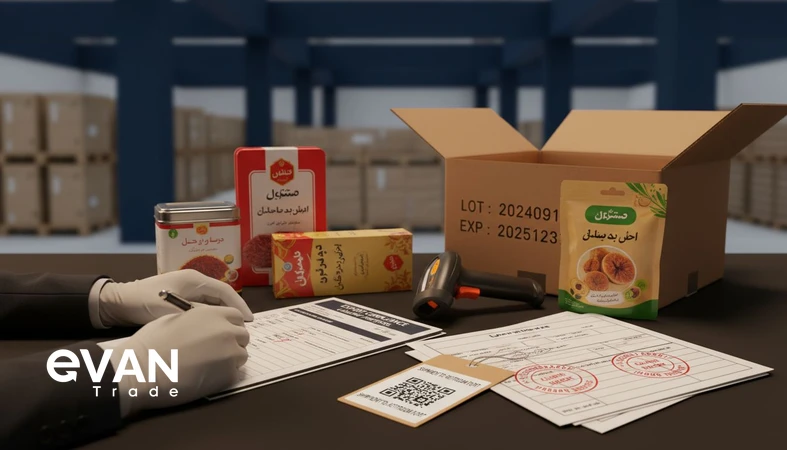
- Printed explicit dates: e.g., YYYY-MM-DD or DD/MM/YYYY (format confusion is a frequent pitfall).
- Julian/ordinal formats: e.g., “24135” meaning year 2024, day 135.
- Lot/batch only: where date is traceable only via production records or a lot map.
- Stamped/inkjet/laser codes: quality varies; smudging can create ambiguity and claims exposure.
Pitfalls that trigger claims
- Mixed lots in one container without a pallet-level lot map.
- Repacked goods where outer cartons show one date but inner units show another.
- Relabeling risk (new stickers covering original codes, inconsistent fonts, missing batch references).
- Translation ambiguity (e.g., “Pack date” presented as “MFG”).
- Country-specific compliance issues (some markets require explicit “best before” phrasing, minimum remaining life, or language rules).
Before you negotiate price, align on one rule: a date is only as strong as the traceability evidence behind it.
The documentation pack to request (and how to check it for consistency)
For bulk imports, documentation should do more than “look complete.” It should connect the commercial invoice, packing list, and physical goods through batch/lot traceability. A practical documentation pack to request includes:
- COA (Certificate of Analysis) referencing the exact lot/batch numbers shipped, with test dates and specs.
- Production or packing record evidence (batch record excerpt, packing report, or production log showing dates and lot IDs).
- Lot/batch mapping to pallet/container (pallet IDs → carton counts → lot numbers → manufacturing/pack dates).
- Packaging specification (materials, barrier properties if relevant, sealing method).
- Storage condition statement from manufacturer (temperature/humidity/light requirements and transport tolerances).
- Photos or video of coding taken at packing (clear close-ups showing date and lot on representative units).
- Inspection report (internal QC or third-party) with sampling method and coding verification.
Consistency checks buyers can do quickly
- Invoice and packing list alignment: do they list lot numbers and quantities per lot, or only totals?
- COA alignment: does the COA explicitly reference the same lot IDs as the packing list?
- Timeline logic: can the stated manufacturing/pack date realistically match lead times and shipping dates?
- Code format match: do the codes in photos match the format described in documents?
If a supplier cannot provide lot-level mapping for a mixed-lot container, the default outcome is a harder receiving process and weaker claim position.
A practical validation matrix (pre-shipment + on-arrival) to reduce disputes
Use a two-stage approach: verify “paper truth” (documents) before shipment, then verify “physical truth” (codes, condition, and monitoring data) on arrival. The table below can be adapted as a purchase checklist.
| Validation item | What to request or measure | Red flags | Practical acceptance rule (example) |
|---|---|---|---|
| Date coding clarity | Declared format + photos of codes on units/cartons/pallet labels | Smudged codes, inconsistent formats, stickers covering originals | Codes must be legible on ≥95% of sampled units |
| Lot/batch traceability | Pallet/lot map + packing list with quantities per lot | Totals only; mixed lots without mapping | Every pallet ID maps to a defined lot list and quantity |
| COA linkage | COA per lot with test date, methods, and specs | Generic COA without lot reference | COA must reference shipped lot IDs; test date within agreed window |
| Remaining shelf life at delivery | Contract definition + expected remaining life by arrival date | Only “best before” provided; no minimum remaining life | Minimum remaining life: e.g., ≥70% of total at delivery |
| Transport condition evidence | Temperature/humidity loggers (if needed), container pre-trip checks | No monitoring for sensitive goods; reefer set-point unclear | Logger data must show compliance with agreed range and excursions limits |
| Packaging integrity | Seal checks, moisture indicators, carton condition, pallet wrap | Oil stains, wet cartons, loose wraps, broken seals | No critical damage; minor damage within defined tolerance |
| Arrival inspection protocol | Sampling plan, photos, code capture, nonconformance report template | Ad hoc checks; missing evidence chain | Inspection completed within 24–48 hours of unloading |
Document your checks like an auditor would: timestamped photos, clear sampling notes, and a tight link between each observation and the lot/pallet identifier.
Sampling and inspection logic on arrival (what “good enough” looks like)
Bulk receiving is often where shelf-life disputes are won or lost. Your goal is to detect issues early while evidence is fresh (container condition, seals, temperature history, and coding visibility). A practical inspection logic includes:
1) Start with container-level evidence
- Seal number match vs documents; photograph seal before opening.
- Container interior check: odors, condensation, visible mold, wet flooring, damaged liners.
- For temperature-sensitive goods: download logger data immediately and back it up.
2) Use a structured sampling plan tied to risk
Sampling should be stratified by pallet position (door-end vs far-end), vertical layers (top/middle/bottom), and lot. If you have mixed lots, treat each lot as its own population.
- Low risk (ambient-stable, short transit): fewer samples, focus on coding legibility and packaging.
- Medium risk (humidity-sensitive, long dwell): add moisture/odor checks; more door-end samples.
- High risk (cold chain, oils, confectionery, sensitive ingredients): add temperature data review, sensory checks where relevant, and hold-and-test if specs are tight.
3) Define what triggers escalation
- Date code mismatch between carton and unit.
- Unexpectedly low remaining life vs contract threshold.
- Evidence of repacking (mixed packaging styles, inconsistent coding placement, re-taped cartons).
- Moisture damage patterns (suggesting container rain or poor palletization).
When escalation triggers, quarantine affected pallets, notify stakeholders, and preserve evidence. Avoid reworking or relabeling before you have a documented claim position.
Storage and handling variables that silently reduce shelf life
Even when dates are correct, shelf life can be shortened by real-world handling. In bulk trade, the most common degradation drivers are:
Temperature and time (including dwell time)
Temperature excursions are not only a cold-chain issue. Many ambient foods and ingredients degrade faster at higher temperatures. Long dwell at ports, border crossings, and yards can add “hidden aging.” Build dwell time into your remaining-life calculations and avoid optimistic assumptions.
Humidity and moisture exposure
- Hygroscopic goods (powders, spices, some snacks) clump or lose flow.
- Carton moisture weakens stacking strength and increases contamination risk.
- Container condensation can create localized damage even if average humidity seems acceptable.
Oxygen and light exposure
Oils, nuts, and many flavor-sensitive products are vulnerable to oxidation. If packaging barrier properties are weak or seals are compromised, the “best before” date may become meaningless in practice. Light exposure can also accelerate quality loss in certain products (e.g., oils and some botanicals).
Contamination and odor transfer
Cross-odor is a frequent bulk problem: a container previously used for strong-smelling goods, or co-loaded products with volatile aromas, can taint sensitive items. Require a container cleanliness standard and avoid co-loading incompatible goods where possible.
Palletization and compression damage
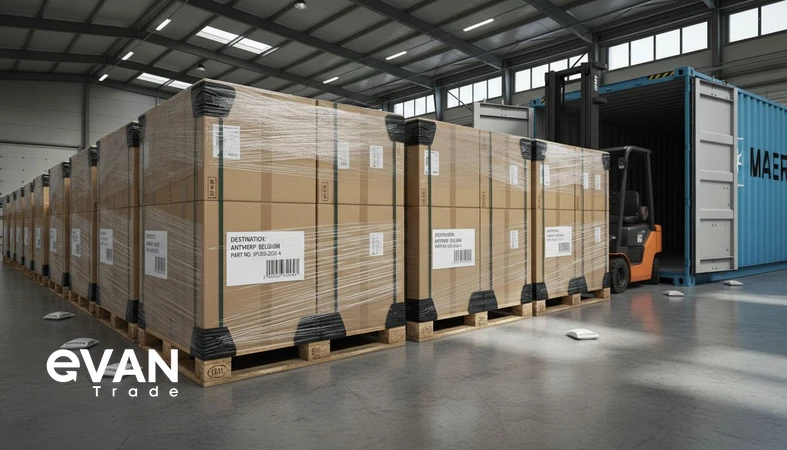
Poor pallet patterns, insufficient corner protection, or over-tight stretch wrap can cause seal failures and micro-leaks. Pallet-level labeling (pallet ID, lot, date) is not “nice to have”—it’s the anchor for traceability when damage is localized.
Cold chain vs ambient: decision points and warehouse controls that work
Not every product needs refrigerated transport, but every product needs a defined stability profile. The decision should be based on product sensitivity, seasonality, route risk, and acceptable remaining life at delivery.
Decision points for choosing cold chain
- Product sensitivity: risk of melting, oil separation, microbial growth, or texture collapse.
- Route and season: summer transit, high-heat inland legs, or long border dwell time.
- Packaging limits: low barrier packaging may require stricter temperature control.
- Market rules: minimum remaining life and retailer requirements may make cold chain economically rational.
Warehouse controls: simple disciplines with outsized impact
- FEFO, not FIFO: First-Expired, First-Out reduces dead stock when lots are mixed.
- Continuous monitoring: temperature/humidity sensors with alert thresholds (even for ambient).
- Zoning: separate odor-sensitive goods; keep chemicals and fragranced items away from food.
- Quarantine and release: hold suspect pallets until inspection and documentation are complete.
- Cleanliness and pest control: contamination events can nullify remaining shelf life instantly.
If your warehouse cannot prove storage conditions, you may end up carrying responsibility for shelf-life loss that started after arrival—even when the supplier is at fault.
Contract clauses that reduce shelf-life disputes in bulk shipments
Many disputes happen because the contract defines shelf life vaguely. Strong clauses convert “arguments” into measurable pass/fail criteria. Consider including:
1) Define “remaining shelf life at delivery” explicitly
- Set a minimum percentage (e.g., 70–80% remaining) or a fixed minimum months/days on arrival.
- Specify the delivery point for measurement (port, warehouse, or final destination).
2) Require lot integrity and mapping
- No mixed lots without a pallet/lot map and packing list breakdown.
- Right to reject or re-grade lots that cannot be traced.
3) Coding and labeling requirements
- Approved date format (avoid ambiguous day/month confusion).
- Placement and durability requirements (must remain legible through transit).
- Rules on relabeling: prohibited without written approval and documented reason.
4) Inspection, claim windows, and evidence standards
- Inspection timeframe (e.g., within 48 hours of unloading).
- Evidence list: photos, logger files, seal photos, sampling notes.
- Dispute resolution path: joint inspection, third-party lab, or arbitration venue.
5) Transit delays and partial shipments
- Define what happens if transit is delayed beyond an agreed threshold.
- Specify responsibilities for demurrage, storage, and condition monitoring.
- For partial shipments, require lot-level documentation per partial delivery.
These clauses do not need to be aggressive; they need to be clear. Clarity reduces post-arrival conflict and improves supplier discipline over time.
FAQ: Shelf life validation in bulk imports
How can I detect relabeling risk without accusing the supplier?
Ask for coding photos and a lot map as a standard requirement, not as a suspicion-driven request. On arrival, look for stickers covering original print, inconsistent ink/laser marks, mismatched carton vs unit dates, or multiple label layers. If you find anomalies, quarantine affected pallets and request traceability evidence (batch records and packing reports) before any rework.
What’s the minimum documentation I should request for shelf-life claims?
At minimum: a packing list with lot numbers and quantities per lot, a COA referencing those same lots, and evidence of manufacturing/pack dates (production log excerpt or packing report). Add pallet IDs and coding photos for mixed-lot shipments. Without lot linkage, it’s difficult to prove which part of the shipment is nonconforming.
How should I handle mixed lots in one container?
Mixed lots are manageable if traceability is strong. Require pallet-level labeling and a pallet/lot mapping document. On arrival, sample each lot separately and prioritize checks at the door-end and top layers where handling damage is more likely. Operationally, store and distribute by FEFO so the shortest remaining life moves first.
Do I always need temperature data loggers?
No. Use loggers when product sensitivity, route risk, or claim exposure is high—such as chocolate/confectionery, oils prone to oxidation, certain ingredients, or any cold-chain product. For stable ambient goods with predictable routes, a structured visual inspection plus warehouse monitoring may be sufficient. The decision should match the risk and the value of the load.
What if transit delays reduce remaining shelf life below the contract threshold?
This is why contracts should define remaining shelf life at a specific delivery point and include delay clauses. If delays occur, preserve objective evidence: shipping milestones, container logs (if used), and arrival inspection records. Then apply the agreed remedy—price adjustment, partial acceptance by lot, or rejection—based on measurable remaining life.
How can I reduce disputes when the product is repacked after arrival?
Repacking changes the evidence chain. If repacking is necessary, quarantine first, document the condition with photos and lot IDs, and obtain written agreement on the repacking scope and responsibilities. Maintain lot integrity during repacking and keep a repacking log (input lots, output quantities, new packaging codes) to protect traceability.
Conclusion: turning shelf life from a guess into a controlled variable
Shelf life in bulk imports is validated—not assumed. The most resilient buyers treat dates, lots, and storage conditions as one system: clear date coding rules, a documentation pack that links COA and production evidence to pallet-level lots, risk-based sampling on arrival, and disciplined warehouse controls (especially FEFO and monitoring). When you add contract clauses that define remaining shelf life at delivery and set evidence-based claim rules, shelf life stops being a source of recurring conflict and becomes a manageable quality parameter.
For buyers sourcing Iranian-origin products through multi-step logistics, a partner that prioritizes documentation discipline, supplier validation, and practical coordination can materially reduce uncertainty. EvanTrade supports this risk-reduction approach by helping align traceability, paperwork, and shipment handling expectations across the export process. Evan Trade