

Export Iranian Food to Germany
Market Snapshot
Germany is one of the “smoothest” EU entry points when the importer locks HS/CN classification, product specifications, labeling scope, and lot-based evidence before the shipment is booked. It becomes “hard” when any field differs across TARIC/HS, invoice, packing list, pallet labels, dates, or COA scope, because Germany’s broker processing and food-control questions are driven by consistency and auditability, not marketing claims.
Clearance friction for Iranian agri-food into Germany typically concentrates in four places: (1) HS/CN/TARIC alignment and duty/VAT setup, (2) category-dependent border routing and pre-notification via TRACES NT (IMSOC) where CHED applies, (3) COA scope vs buyer expectations (especially powders/blends), and (4) German-language retail label accuracy and version control. Customs processing is handled through Germany’s ATLAS environment and related filings, while EU security data requirements (ENS via ICS2) can apply depending on route and business model.
If you want a Germany-ready, repeatable import file for Iranian pistachios, saffron threads, dates, raisins/dried fruits, or spices EvanTrade structures the offer around locked HS/CN + locked specs + locked packing configuration + lot-based COA scope + label version control, so your broker and buyer see one consistent dataset end-to-end.
What Sells in Germany
Germany demand is broad and segmented: premium retail and private label expect disciplined labeling and stable sensory/technical specs; industrial ingredient buyers expect repeatability and documentation; HoReCa values format practicality; and ethnic channels prioritize origin authenticity and familiar pack sizes. Iranian agri-food can perform well when the importer positions it with export-grade consistency rather than “one-off” opportunistic shipments.
Demand map by channel
- Retail: Pistachios (in-shell and kernels), dates, raisins/dried fruits, saffron threads, and selected spices/herbs. Winning drivers are clean labeling in German, reliable grade definitions, and stable packaging presentation (barcodes/lot/date discipline).
- HoReCa: Dates and dried fruits in foodservice formats; pistachio kernels for pastry and kitchens; spices/herbs in larger packs with clear allergen and traceability handling.
- Industrial: Pistachio kernels, raisins/dried fruits, date paste/processed forms (where applicable), and spices/herbs as ingredients, where buyers require clear technical specs, lot-based COA, and consistent moisture/foreign matter tolerances.
- Ethnic: Dates, saffron, and traditional spice sets; origin story does not replace compliance, German distributor onboarding still depends on labeling and auditable documentation.
Buyer use cases that win
German buyers respond to structured offers: grade + tolerances + COA scope + packing configuration + traceability. For powders/blends, buyers often require an enhanced authenticity and contamination control plan (sample strategy + retain samples + tighter supplier QC gates) rather than broad claims.
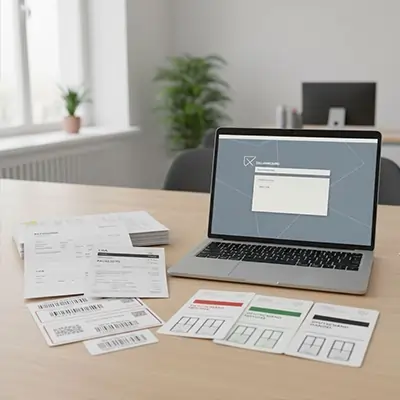
Seasonality & Demand Triggers in Germany (operational calendar)
Seasonality in Germany is less about harvest dates alone and more about retail programming, gifting cycles, and industrial production schedules. Import success comes from aligning procurement lead times, lab turnaround, and packaging print windows with the buyer’s calendar.
Operational calendar (practical triggers)
- Q1: Retail resets and private label planning; buyers often review new suppliers and documentation quality. Good period for trials and onboarding because teams are planning forward.
- Q2: Summer promotions and ingredient ramp for bakery/ice-cream/confectionery segments; focus on stable kernels, dried fruits, and foodservice packs.
- Q3: Peak operational window for locking Q4 supply, this is where delays happen if label approvals and COA scope were not agreed early.
- Q4: Strong demand for gifting, baking, confectionery, and seasonal cooking; the risk is last-minute spec or artwork changes that break document reconciliation.
Weather/logistics seasonality
Humidity and temperature swings matter for dried fruit, spices, and saffron. Plan desiccants, inner liners, and moisture control, and define “arrival acceptance checks” (pack integrity, odor, caking, moisture indicators) so claims are evidence-based.
Best-Fit Iran-Origin Products for Germany
Iran-origin products fit Germany best when the offer is built like an EU-ready ingredient dossier: a stable commercial spec, controlled packing configuration, and a COA scope that matches the risk profile of the category. Whole/cut spices and single-ingredient items generally onboard more smoothly than blends/powders, which often require extra authenticity and contamination controls.
Best-fit Iran-origin products for Germany
Product category | Best-fit Iranian varieties/grades/forms | Demand channels | Winning pack formats + typical net weights (ranges only) | Key compliance/QC risks + Germany controls (category-dependent) | Where buyers get stuck + EvanTrade prevention |
Pistachio in-shell | Export-grade in-shell; calibrated size/grade; roasted/salted only with locked recipe | Retail, Ethnic, HoReCa | Retail 200–500 g; foodservice 1–5 kg; bulk 10–25 kg | Aflatoxin risk management; shell integrity; foreign matter control; moisture stability; lot-based COA scope | HS/spec mismatch and grade ambiguity → lock grade definitions + tolerances + lot list tied to COA |
Pistachio kernels | Kernels by color/size grade; blanching/roasting only if fully specified | Industrial, Retail, HoReCa | Retail 100–500 g; foodservice 1–5 kg; bulk 10–25 kg | Aflatoxin scope; breakage %; moisture; oxidation/rancidity prevention; packaging barrier control | Buyers reject “generic kernels” → deliver spec table + sample approval tied to lot and packing configuration |
Saffron threads | Threads (not powder); grade positioning only if auditable | Retail, Ethnic, HoReCa | Retail 0.5–5 g; foodservice 5–50 g; bulk 0.25–1 kg | Adulteration risk; moisture; aroma/color strength consistency; tamper-evident retail packs | Claim language without evidence → provide testable parameters + retain sample plan + version-controlled label |
Dates | Commercial grades by variety; pitted/unpitted; industrial paste only if controlled | Retail, HoReCa, Industrial, Ethnic | Retail 200–1,000 g; foodservice 1–5 kg; bulk 5–10 kg | Sugar bloom/moisture; infestation control; pits/foreign matter; shelf-life validation | Lot/date format inconsistencies → define lot rules + date format + pallet label discipline |
Raisins/dried fruits | Raisins and selected dried fruits; graded, cleaned, sorted | Retail, Industrial, HoReCa | Retail 200–1,000 g; foodservice 1–5 kg; bulk 10–25 kg | Residues (category-dependent); moisture; foreign matter; sulfite declaration where applicable | COA scope too light for buyer → align COA to buyer channel and “pass/fail” rules pre-quote |
Spices/herbs (whole/cut) | Single-ingredient whole/cut herbs/spices | Retail, HoReCa, Industrial, Ethnic | Retail 30–200 g; foodservice 0.5–2 kg; bulk 10–25 kg | Micro risk (category-dependent); pesticide residues (category-dependent); foreign matter; odor stability | “Spec drift” after sampling → lock spec + tolerances + supplier QC checkpoints + re-sampling rules |
Spice powders (higher risk) | Single-ingredient powders; blends only with full formula control | Industrial, Retail (select), Ethnic | Retail 50–250 g; foodservice 0.5–2 kg; bulk 10–25 kg | Authenticity/adulteration risk; cross-contact allergens (category-dependent); micro; residues; caking | Buyers stall due to risk → enhanced COA scope + supplier screening + retain samples + strict change control |
Market Access & Import Rules
Germany functions as an EU entry point with German enforcement overlays. Practically, the Importer of Record (EU importer) controls customs identity (EORI), broker instruction, product placement on the EU market, and the completeness of the compliance file while the supplier must provide controlled production, packing discipline, and testable evidence.
Germany enforcement involves EU food-law frameworks applied through German structures: BVL provides federal-level coordination and functions in food safety context, while day-to-day controls can involve competent authorities at the importer’s location (state/local food control). Customs is handled by German Customs (Zoll / Generalzolldirektion), with electronic processing in ATLAS.
Jurisdiction split (Germany / EU):
- EU-first: Core food-law obligations, traceability, and many import control routes are EU-defined.
- Germany overlay: Practical enforcement and inspections occur through German authorities; retail expectations include robust German-language labeling and clean documentation.
“Requirements are shipment- and category-specific; confirm the applicable route with your customs broker and competent authority guidance in Germany.”
HS Classification & Tariff Readiness
Germany imports succeed when HS/CN classification is treated as a pre-quote deliverable, not a last-minute broker task. For each product form (in-shell vs kernel; threads vs powder; whole vs ground; retail vs bulk), lock the HS/CN basis, then align the offer language, invoice lines, packing list structure, and product specs to that classification.
Use TARIC as the reference for EU integrated tariff logic and document the reasoning (product form, processing state, ingredients, packaging presentation). Germany customs practice will still evaluate whether the declared product matches the description and evidence so avoid “mixed” invoice descriptions that do not map cleanly to a single code.
Pre-Quote Lock Checklist (Germany)
- HS/CN + TARIC mapping documented (product form-specific)
- Product spec sheet finalized (grade, tolerances, defect limits, moisture where relevant)
- Packing configuration locked (net weight ranges, inner/outer, pallet pattern)
- Label scope locked (German retail vs bulk)
- COA scope agreed (category-dependent) + pass/fail rules defined
- Incoterm selected + responsibility split written (importer vs supplier)
- Timeline locked (production window, lab lead time, shipping mode, arrival buffer)
Food Safety & Compliance Expectations
Build a control plan around category risk, not generic assurances. For nuts and many dried commodities, buyers often require residue/contaminant attention and lot-based COA; for spices and powders, authenticity and contamination risks frequently drive deeper COA scopes and tighter supplier QC.
COA scope design (category-dependent)
Define COA scope as a buyer-facing checklist tied to a lot, not a “marketing certificate.” Scope should match the channel: industrial buyers typically require more technical clarity; retail requires clean label alignment and traceability discipline.
Lot definition (EU-style discipline)
A “lot” should be a controlled unit that is consistent across: production/packing record, pallet labels, COA, invoice line, and packing list. If you split a lot across multiple packing configurations, document how the lot ID maps to each configuration and carton count.
QC gates (checklist)
- Supplier pre-screen (process capability, hygiene discipline, traceability readiness)
- Incoming raw material check (category-dependent)
- In-process sorting/cleaning and foreign matter controls
- Packing-line controls (net weights, seals, label correctness, carton marking)
- Lot list issued before shipment (lot IDs + carton counts + pallet mapping)
- COA issued for shipped lot(s) with defined pass/fail rules
- Retain sample strategy for dispute resolution (especially powders/blends)
Pre-Shipment Release Gate (Germany)
- COA meets agreed scope and pass/fail rule (lot-tied)
- German retail label version signed off (if retail)
- Packing reconciliation complete (cartons/pallets/weights match)
- Invoice/packing list/lot list/labels match exactly (names, dates, IDs)
- Seal numbers and stuffing evidence captured (where applicable)
- Any change request logged and approved (spec/label/pack change control)
Labeling & Claims
For Germany, retail success depends on German-language label completeness and conservative, evidence-based claims. Treat labels as controlled documents with versioning and approvals; do not allow “minor” artwork edits after samples are approved without a change-control step.
German-language label essentials (retail)
Retail packs typically require: product name, ingredient list, allergen emphasis (category-dependent), net quantity, best-before date and/or date coding as applicable, storage conditions, business operator details, origin where required/used, lot/batch identification, and clear handling instructions where relevant. Keep terminology consistent across label, spec sheet, and invoice description.
Claims: evidence-first, category-dependent
Avoid broad health claims or superiority claims unless the importer can document evidence and the claim is appropriate for the category. Practical claims should be “low risk” and measurable (e.g., form, processing statements, usage notes) rather than performance promises.
7-step artwork approval workflow (version control)
- Lock label scope (retail vs bulk; languages; mandatory fields)
- Draft artwork created from the locked product spec (not the other way around)
- Compliance review: ingredient/allergen/nutrition/origin/lot/date fields checked
- Commercial review: barcode, net weight, pack count, case markings aligned
- Buyer sign-off recorded (version number + date)
- Print proof approval (final PDF stored, version locked)
- Release to production with “no changes without change control”
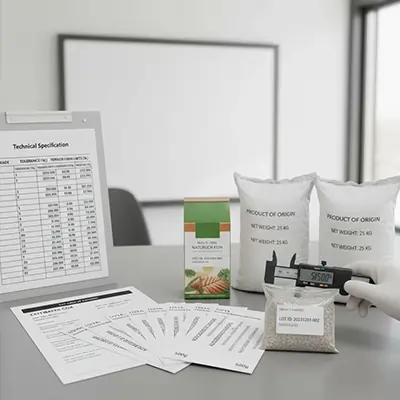
Packaging Standards for Germany (retail vs bulk vs private label)
Germany buyers expect packaging that protects quality, supports traceability, and matches warehouse handling realities. Define packaging as part of the compliance file: materials, barrier properties where relevant, carton marking rules, and pallet labeling consistent with the lot list.
Packaging approach (Germany)
Use case | Typical packaging direction | Controls that prevent disputes |
Retail packs | Consumer-ready inner packs + master cartons; barcode discipline | Label version lock; net weight control; carton marking mirrors invoice line |
Bulk | Foodservice/bulk bags/boxes in master cartons | Inner liner and moisture control; pallet labels with lot IDs; stable pallet pattern |
Private label | Buyer artwork + controlled packaging specs | Artwork approval record; change control log; pre-production sample sign-off |
Logistics & Delivery Planning to Germany (air vs sea; humidity/temp risk; Incoterms guidance; claims evidence pack)
Germany gateways commonly include Hamburg/Bremerhaven/Wilhelmshaven for sea and FRA/LEJ for air cargo. Choose mode based on product sensitivity, buyer urgency, and the importer’s ability to manage pre-arrival data and documentation discipline. Route-dependent security filings (ENS via ICS2) may apply, so align responsibilities early with the forwarder/broker.
Humidity/temperature risk plan
For saffron, spices, and dried fruit, define: barrier packaging, desiccant use, container ventilation strategy, and arrival inspection checks. For nuts, add oxidation and odor transfer prevention controls.
Incoterms guidance (dispute prevention)
Use Incoterms to separate control points: who books freight, who controls export docs, who manages insurance, and who files import entries. For first shipments, many importers reduce risk by keeping broker and main carriage under importer control, while requiring supplier to deliver evidence packs and stable packing discipline.
Arrival Evidence Pack
- Seal numbers + seal photos (where applicable)
- Stuffing photos + pallet condition photos
- Pallet labels clearly showing lot IDs
- Temperature/humidity notes (route-dependent, when available)
- Damage notes at receipt with time-stamped photos
- Sampling record (who sampled, when, which lot/cartons)
Documentation & Customs Checklist
Germany imports succeed when documents are designed to reconcile cleanly in ATLAS workflows and buyer audit checks. ATLAS is Germany’s electronic customs environment; ensure the broker receives stable, consistent data and evidence early, not as scattered PDFs at departure.
Documentation and process readiness (Germany)
Requirement/document | When needed | Who issues | What process it supports | Typical lead-time risk + mitigation |
Importer identifier (EORI) | Before any import entry | Importer | Importer-of-record identity for customs | Late onboarding → confirm EORI and broker access in RFQ stage |
Customs declaration system (ATLAS) readiness | Before arrival | Importer/broker | Electronic import declaration and clearance | Broker lacks data early → send draft invoice/packing/HS evidence pre-departure |
HS/TARIC evidence pack | Pre-quote and pre-shipment | Importer (with broker) | Classification defensibility | HS uncertainty → lock product form/spec and keep consistent invoice descriptions |
Commercial invoice | Pre-shipment | Supplier/exporter | Customs valuation + accounting | Edits after issue → freeze invoice template and change-control any revisions |
Packing list | Pre-shipment | Supplier/exporter | Quantity/weights/cartons/pallet mapping | Mismatch vs actual load → require final reconciliation + photos + pallet labels |
COA (category-dependent) | Pre-shipment release | Lab/supplier (as agreed) | Food safety evidence for shipped lot(s) | Lab delays → book lab slot early; define scope and sampling plan in RFQ |
Health/official certificates (category-dependent) | Route-dependent | Competent authority (where applicable) | Official assurance when required | Last-minute discovery → confirm route early with broker/authority guidance |
Pre-notification in TRACES NT (category-dependent) | Before arrival where CHED applies | Importer/broker | Border control workflow for applicable categories | Missing CHED data → prepare Part I early; use consistent lot/pack data |
Phytosanitary (category-dependent) | When applicable | Competent authority | Plant product controls where required | Unclear applicability → classify product form and route, then confirm early |
Label artwork approval record | Before production/packing | Importer/buyer | Proof of label governance | “Old artwork used” → version numbering + print proof sign-off |
Lot list / packing configuration | Pre-shipment release | Supplier/exporter | Traceability and reconciliation | Lot IDs not on cartons → enforce carton/pallet marking rules before packing |
Non-negotiable document quality rules (Germany)
- One product name format across: spec sheet, invoice, packing list, label, and COA.
- Lot IDs must appear consistently on carton/pallet labels and map to the lot list and COA.
- Net weights, carton counts, and pallet counts must reconcile; avoid rounded numbers that do not match physical packing.
- Label version must be recorded and match the packed goods no “nearly the same” artwork.
Pricing, Payments & Contract Terms (dispute prevention; staged payments; change control)
Pricing for Germany should be built on locked variables: HS/CN basis, spec tolerances, packing configuration, COA scope, and Incoterm. If any of those are “TBD,” the quote is not clearance-ready and will likely convert into disputes.
Use staged payments and change control to prevent rework-driven conflict. Typical safeguards include: deposit tied to approved spec + artwork, a production release tied to pre-shipment QC gates, and a final payment tied to document completeness and loading evidence structured to reflect who controls each risk.
RFQ Template + Sample Workflow for Germany
RFQ template (copy/paste)
- Target product category + form (e.g., pistachio kernels, saffron threads)
- Intended channel: Retail / HoReCa / Industrial / Ethnic
- Destination: Germany (and whether EU redistribution is planned)
- Incoterm + named place
- Target quantity + preferred shipment mode (air/sea)
- Packaging plan: retail net weight range, master carton count, pallet pattern (if known)
- Label scope: German retail label needed? private label?
- Required COA scope + pass/fail rules (category-dependent)
- Lot definition expectation (how lots should be split)
- Documentation requirements (invoice/packing/lot list/label approval record)
- Timeline constraints (desired ship and arrival windows)
Sample workflow (evaluation + retain strategy)
- Supplier provides pre-sample spec sheet + proposed COA scope.
- Samples are lot-tied (or pilot-lot-tied) and sealed; pack configuration mirrors intended shipment.
- Buyer evaluates against spec and intended use; importer records acceptance criteria.
- If powders/blends: add authenticity-focused testing strategy and retain samples for dispute resolution.
- Approval triggers “no change without change control” for spec, pack, label, and COA scope.
Common Failure Points
- HS/CN not locked before quote → lock classification by product form and keep invoice descriptions consistent.
- Spec drift after sampling → enforce spec tolerances and change control for any process/grade change.
- COA scope too light for channel → align COA scope and pass/fail rules to buyer use case pre-quote.
- Lot IDs missing on cartons/pallets → mandate carton/pallet labeling that mirrors lot list and COA.
- Packing list doesn’t reconcile with load → require final reconciliation plus pallet photos.
- German retail label errors → run a version-controlled artwork workflow with recorded approvals.
- Dates/lot formats inconsistent → standardize date/lot conventions across all documents and labels.
- Powder authenticity risk ignored → add supplier screening, enhanced testing scope, and retain samples.
- Incoterm responsibilities unclear → write a responsibility matrix (who files what, who controls carriage).
- Late TRACES NT/CHED preparation (when applicable) → prepare pre-notification data early with stable lot/pack fields.
- Security filing blind spot (route-dependent ICS2/ENS) → confirm forwarder/broker filing roles early.
- Label vs invoice naming mismatch → enforce a single naming convention and ban ad-hoc translations.
FAQs
1.Should we lock HS/CN before requesting a quote?
Yes—HS/CN drives duty logic and document structure; changing it late often creates invoice/packing mismatches and delays.
2.What does “Importer of Record” mean in Germany for food imports?
The EU importer is responsible for EORI/customs coordination, placing compliant food on the EU market, and ensuring labeling and traceability are correct and auditable.
3.What causes “data mismatch” failures at clearance?
Differences across HS, weights, carton counts, dates, lot IDs, and label versions—prevent with strict reconciliation and version control.
4.How should we define a “lot” for EU-style traceability?
A lot should map consistently across packing records, pallet/carton labels, COA, invoice lines, and the lot list with no ambiguity.
5.Are German-language labels required for all products?
Retail packs generally require German-language labeling; bulk packs may be handled differently depending on buyer use and local practice—confirm with your buyer and competent authority guidance.
Understand global markets, choose the right Iranian agri-food products, and learn step-by-step how to source reliably from Iran.
EvanTrade Germany-Ready Import Pack
Request a Germany-Ready Quote:
Send target products (form + grade), channel (Retail/HoReCa/Industrial/Ethnic), Germany entry + any EU redistribution plan, Incoterm, packaging plan (net weight ranges + case config), and required COA scope with pass/fail rules. EvanTrade will build a clearance-aligned offer with locked HS/CN/TARIC, locked specs, locked packing configuration, lot-based evidence, and label version control.
Request Samples:
Ask for sealed, lot-tied samples that match the intended packing configuration, supported by a draft COA scope aligned to your acceptance criteria, so sample approval matches what will actually ship.
- Related content
- Article category