

When buyers request bulk pricing for Iranian foods, the first number that lands in the inbox is usually a unit price— “$X per kg” or “$Y per carton.” It feels like progress. But in practice, that number is often the smallest part of the decision.
The real challenge isn’t getting a quote. It’s making sure you’re comparing like-for-like, protecting margin, and avoiding surprises between proforma invoice and arrival. In wholesale food trade, the “best price” frequently becomes the most expensive shipment once your account for packaging, freight behavior, documentation, quality risk, payment friction, and timeline costs.
This article breaks down the cost drivers’ international buyers commonly miss—especially when sourcing Iranian foods at scale—and offers a practical framework to build apples-to-apples comparisons that hold up in purchasing committees, contract reviews, and landed-cost calculations.
Why “Cheap per KG” Can Be the Wrong Benchmark
The unit price is not the landed cost
Bulk pricing is meaningful only when it’s tied to the same specification, Incoterm, pack format, lead time, quality proofs, and payment terms. A low unit price can hide higher costs in:
- freight and port charges,
- packaging mismatch (or weak packaging),
- compliance paperwork gaps,
- yield loss (breakage, moisture change, leakage),
- delays and demurrage,
- financing and bank fees.
Iranian foods are diverse—and price is sensitive to context
“Iranian foods” includes shelf-stable (dates, nuts, saffron, tomato paste), semi-processed (concentrates, purees), and sometimes temperature-sensitive items. Each behaves differently across:
- seasonality,
- grade variation,
- storage conditions,
- lab-testing needs,
- container utilization,
- shelf-life risk.
If your RFQ doesn’t pin down these variables, you’re not negotiating price—you’re negotiating ambiguity.
The 9 Cost Drivers Buyers Commonly Miss
1) Specification drift: grade, tolerances, and “equivalent” products
Hidden cost: paying for the wrong quality (or rejecting the right one)
Two quotes can look identical while representing different realities:
- Grade definitions (export grade vs industrial grade)
- Size/Count (nuts per ounce, date size categories)
- Moisture range (critical for shelf life and weight)
- Brix / concentration (for pastes, concentrates)
- Defect tolerance (broken, foreign matter, discoloration)
- Additives (salt, preservatives, acidity regulators)
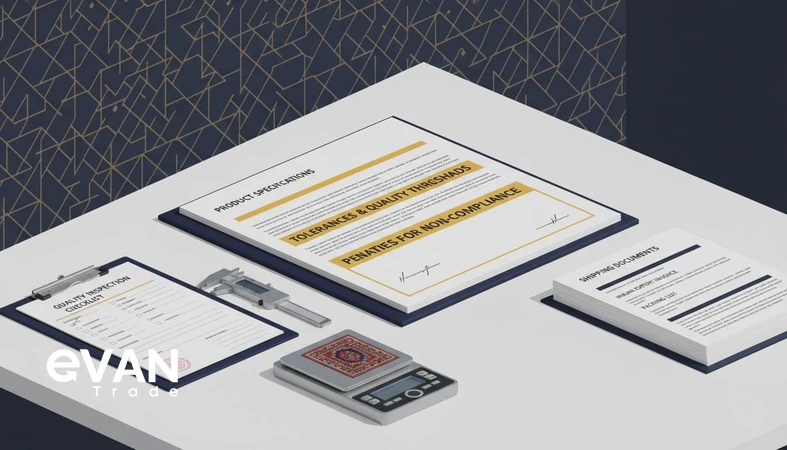
Buyer move: Put a one-page spec sheet behind your RFQ and ask suppliers to confirm compliance line by line. This is where a “quality documentation checklist” becomes a pricing tool, not just a QC form.
2) Pack format and packaging integrity (not just “carton included”)
Hidden cost: damage, claims, and unsellable inventory
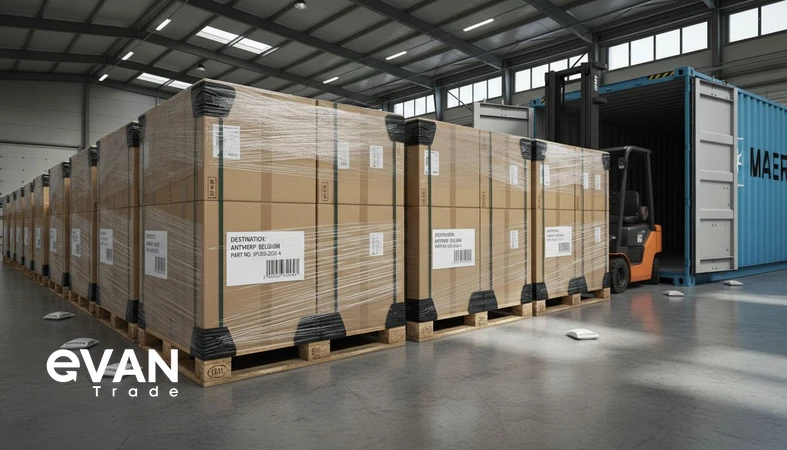
Packaging isn’t a cosmetic detail in bulk trade. It’s a cost driver that affects:
- container loading efficiency,
- breakage rate,
- moisture ingress,
- pallet stability,
- warehouse handling time,
- customer acceptance (especially for retail-ready cartons).
Key packaging variables that change total cost:
- net vs gross weight definitions (and tolerances),
- inner bag thickness and sealing method,
- carton strength and stacking test performance,
- pallet type (treated vs untreated) and wrap method,
- labeling placement and durability.
3) Incoterms: “FOB vs CIF” is not a small difference
Hidden cost: comparing prices built on different responsibility models
Many buyers unintentionally compare:
- EXW price (factory gate) vs FOB (port loaded),
- FOB vs CFR/CIF (freight included),
- CIF vs DAP/DDP assumptions (destination handling differences).
Even inside one Incoterm, cost allocation varies:
- terminal handling,
- documentation fees,
- inland trucking to port,
- export clearance,
- insurance scope.
Buyer move: Ask every quote to be issued in two formats:
- FOB (named port)
- CFR (named destination port)
Then compute your own landed cost model consistently.
4) Freight behavior: container utilization and “density economics”
Hidden cost: paying freight on air
Freight isn’t just “rate × distance.” It’s also:
- how much product fits in a container (by weight and volume),
- whether cartons crush before you hit full payload,
- whether the product requires desiccants, liners, or special stowage,
- how stable the lane is (rate volatility).
For dense products, you may hit weight limits early. For bulky cartons, you may cube out before weight capacity. Either way, your effective freight per kg changes dramatically.
Buyer move: Request a container loading plan:
- cartons per pallet,
- pallets per container,
- net weight per container,
- estimated saleable weight on arrival.
5) Destination charges, port risk, and demurrage exposure
Hidden cost: costs you don’t see on the proforma
Even if suppliers quote CFR/CIF, you still face:
- terminal handling charges (destination),
- customs exam fees,
- warehouse or inspection holds,
- demurrage/detention (if clearance slows),
- local forwarding fees.
These can dwarf small unit-price differences—especially in high-volume contracts.
Buyer move: Add a standard line in your model called “Destination friction allowance” and size it realistically based on your clearance pattern. If you don’t, you’ll overpay for “cheap” offers.
6) Compliance and proofs: certificates are a pricing variable
Hidden cost: delayed clearance or relabeling
Documentation is not bureaucracy—it’s operational risk. Missing or inconsistent docs can cause:
- delays,
- extra inspections,
- relabeling,
- rework,
- rejection.
Typical “proof” cost drivers:
- Certificate of Origin,
- Health Certificate (where required),
- phytosanitary documentation (product-dependent),
- lab test reports (micro, aflatoxin, pesticide residues, heavy metals),
- halal documentation (market-dependent),
- packaging and labeling declarations,
- batch traceability statements.
7) Payment friction: bank fees, confirmation, and timeline cost
Hidden cost: financing cost disguised as “price”
In international trade, price and payment are inseparable:
- bank fees and intermediary charges,
- LC issuance/confirmation costs,
- TT fees,
- FX conversion spreads,
- prepayment risk buffers,
- supplier pricing uplift for extended terms.
Even if the unit price is lower, a risky payment structure can force you to over-insure the transaction through expensive safeguards.
Buyer move: Compare offers on a “cash-to-cash” basis:
- deposit %,
- balance timing,
- shipment lead time,
- document release rules,
- penalties and remedies.
8) Quality loss allowance: breakage, moisture shift, and shelf-life shrink
Hidden cost: your “saleable kg” is lower than your “invoice kg”
This is where many landed-cost models fail. Your true cost is:
Total landed cost ÷ saleable quantity
Saleable quantity can drop due to:
- carton damage,
- broken product,
- moisture loss or gain,
- contamination risk,
- short remaining shelf life at arrival,
- customer rejection due to labeling or appearance.
Buyer move: Add a quality loss allowance (%) in your model. The more fragile the packaging or longer the transit, the higher that allowance should be.
9) Supplier reliability: lead time variability is a cost driver
Hidden cost: stockouts, expedited freight, and lost customers
If one supplier is “cheaper” but misses ETD windows, you may pay later through:
- emergency sourcing at higher market prices,
- expedited shipping,
- lost shelf space,
- contractual penalties.
Reliability has a measurable value. Treat it as one.
Buyer move: Score suppliers on:
- on-time performance,
- documentation accuracy,
- claim responsiveness,
- batch consistency.
A Practical Framework: How to Compare Quotes Without Getting Tricked
Step 1: Standardize your RFQ (or you’ll buy confusion)
Include:
- product spec sheet (grade, tolerances),
- packaging spec (materials, palletization),
- required documents and tests,
- target Incoterm(s),
- target shipment window,
- payment preference and alternatives,
- claim/inspection expectations.
Step 2: Build a landed cost model (one template for all suppliers)
At minimum, model:
- product unit price,
- packaging and pallet costs,
- inland logistics to port,
- export docs,
- freight and insurance,
- destination charges and clearance fees,
- duties/taxes (market-specific),
- financing and bank fees,
- quality loss allowance.
Step 3: Stress-test the offer
Ask “what breaks first?”:
- What if freight rises 15%?
- What if customs holds 7 days?
- What if the batch fails one parameter?
- What if cartons compress in humid transit?
A quote that survives stress-testing is usually the real “best price.”
Table: Real Cost Drivers vs What to Ask Before You Sign
| Cost driver buyers miss | Where it shows up | How it inflates cost | What to ask suppliers (practical) |
| Spec ambiguity (grade/tolerance) | QC, claims | rejection, disputes, rework | “Confirm spec line-by-line; what’s your defect tolerance and method?” |
| Net vs gross weight confusion | invoicing, audits | overpaying per kg | “Is price per net kg? What’s the tolerance per carton?” |
| Packaging strength | transit, warehousing | breakage, unsellable stock | “Carton spec, inner liner thickness, sealing method, stacking limits?” |
| Incoterm mismatch | freight & duties | wrong benchmark | “Quote FOB + CFR with named ports; list included charges.” |
| Container utilization | freight economics | paying for empty volume | “Cartons/pallet, pallets/container, net weight/container?” |
| Documentation gaps | customs clearance | delays, exam fees | “Provide document list + sample templates before PO.” |
| Lab tests and proofs | compliance | extra testing or rejection | “Which tests included? Which labs? Batch traceability?” |
| Payment friction | treasury | bank fees & FX spreads | “Who pays bank charges? Terms for deposit/balance? LC options?” |
| Lead-time variability | supply planning | stockouts & emergency buys | “Production capacity, ETD reliability, penalties/alternatives?” |
Negotiation That Improves Price Without Squeezing Quality
Negotiate structure, not just the number
Often you can reduce total cost more by negotiating:
- packing optimization (better container fill),
- documentation readiness (fewer holds),
- stable shipment calendar (lower risk premium),
- clearer claim process (lower contingency pricing),
- improved payment structure (less risk pricing).
Use “cost-to-serve” language
Instead of “Can you reduce price?”, try:
- “If we standardize packaging and ship monthly, can we reduce per-unit handling costs?”
- “If documentation is pre-approved, can we avoid rush fees and delays?”
- “If we commit to volume, can we lock a pricing formula tied to raw material movements?”
This improves outcomes while preserving supplier accountability.
FAQs
1) Why do bulk prices for Iranian foods vary so much between suppliers?
Because “the product” is rarely identical across quotes. Differences in grade, moisture, packaging, documentation, and payment risk can change the real cost—even if the unit price looks close.
2) Should I compare suppliers using FOB or CIF?
Use both—but compare consistently. FOB helps you benchmark product and export-side costs; CFR/CIF helps you estimate the delivered cost. The key is applying the same landed-cost template to every offer.
3) What are the most common hidden charges in bulk food imports?
Packaging upgrades, inland logistics to port, documentation fees, bank charges, destination handling, inspection holds, and quality loss (breakage/shelf-life shrink) are among the most common.
4) How can I reduce risk without paying a big premium?
Standardize specs, validate documentation templates upfront, request pre-shipment inspection practices, align shipment calendars, and use clear contract clauses for quality disputes. Risk clarity often lowers price more than aggressive bargaining.
5) What should a “serious” quote package include beyond the proforma invoice?
A spec confirmation, packaging details, container loading estimate, document list, sample labels (if needed), batch traceability approach, lead-time plan, and explicit payment terms—including bank fee allocation.
6) How do I avoid disputes about quality after arrival?
Define quality parameters, sampling method, inspection window, claim timeline, and remedy options in writing. Also align on acceptable tolerance ranges and what evidence is required (photos, third-party survey, lab results).
7) Is private label automatically more expensive?
Not always. It can increase unit cost if packaging complexity rises, but it may lower total cost if it improves carton strength, reduces damage, or optimizes palletization and container fill.
8) What’s the simplest way to know if a “cheap” quote is risky?
Ask for a full breakdown of inclusions (Incoterms and charges), packaging specs, and documentation proofs—then stress-test the offer with a basic “what-if” scenario (freight increase, customs delay, minor quality deviation).
Conclusion: The Best Bulk Price Is the One That Survives Reality
Bulk pricing for Iranian foods becomes reliable only when you stop treating price as a single number and start treating it as a system—a system made of specifications, packaging, freight behavior, documentation, payment friction, and operational risk.
If you build a consistent landed-cost model, standardize your RFQs, and ask the right pre-contract questions, you’ll avoid the most expensive mistake in wholesale trade: choosing a supplier based on a unit price that was never comparable in the first place.
In practice, buyers who scale responsibly tend to work with export partners that prioritize clarity: standardized specifications, documentation discipline, and repeatable shipment execution. Evan Trade operates with that mindset—helping international buyers evaluate Iranian food offers through a structured lens (specs, proofs, packaging, payments, and shipment readiness) so pricing decisions are defensible, comparable, and aligned with real landed cost—not just a number on a proforma.