
Importing food products from Iran is rarely blocked by “one missing paper.” More often, shipments get delayed because several small documentation gaps add up: an invoice that doesn’t match the packing list, a certificate with inconsistent batch details, or a bill of lading those conflicts with the declared Incoterm. For buyers, distributors, and importers, those mismatches can trigger extra inspections, demurrage, relabeling, re-testing, or even refusal at the border.
The good news: documentation risk is manageable—if you treat documents as a connected system rather than a stack of forms. This guide explains the essential export documents commonly used when importing Iranian food products (from invoice to certificates), how they relate to each other, where mistakes usually happen, and how to build a repeatable “document pack” that customs and compliance teams can clear faster.
Along the way, you’ll also find a practical table, a shipment-ready checklist, and FAQs. (For deeper reading, your team can later link to the Evan Trade Documentation & Customs Hub and related guides inside your knowledge base.)
Why export documents matter more than ever in food shipments
Food is a high-scrutiny category. Beyond tariffs and customs clearance, food shipments often face:
- Traceability expectations: lot/batch mapping, manufacturer identity, production and expiry dates
- Safety expectations: health or sanitary controls, lab results, contamination risk management
- Labeling expectations: ingredient declarations, allergens, net weight, origin statements, language rules
- Cold-chain expectations (when applicable): temperature control evidence and handling integrity
In practice, the paperwork becomes a risk narrative for your cargo: it explains what the product is, how it was produced, where it came from, and why it meets the buyer’s and destination market’s requirements. When the narrative is consistent, clearance tends to be smoother. When it isn’t, inspections and disputes become more likely.
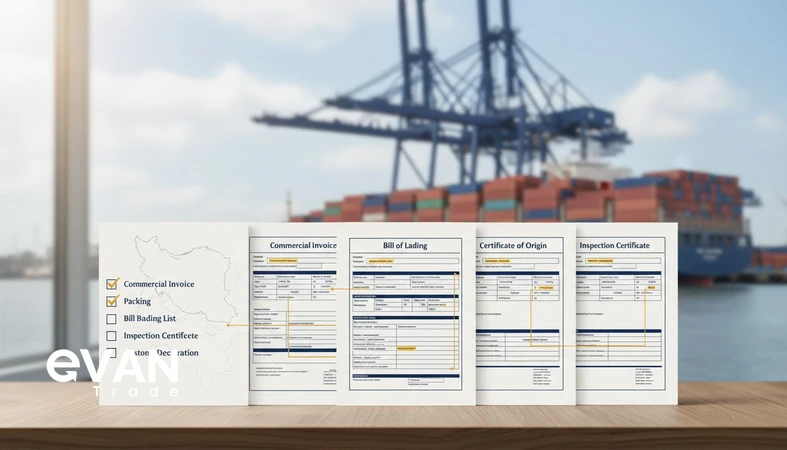
The “Core Document Pack” for importing Iranian food products
Most importers should think in two layers:
- Core commercial + transport documents (almost always required)
- Product and market-specific certificates (required depending on product type and destination)
Core documents you should expect on nearly every shipment
1) Commercial Invoice (CI)
The invoice is the anchor document: customs valuation and many compliance checks start here.
What it should include (minimum best practice):
- Seller/exporter and buyer/importer legal names + full address
- Invoice number, date, currency
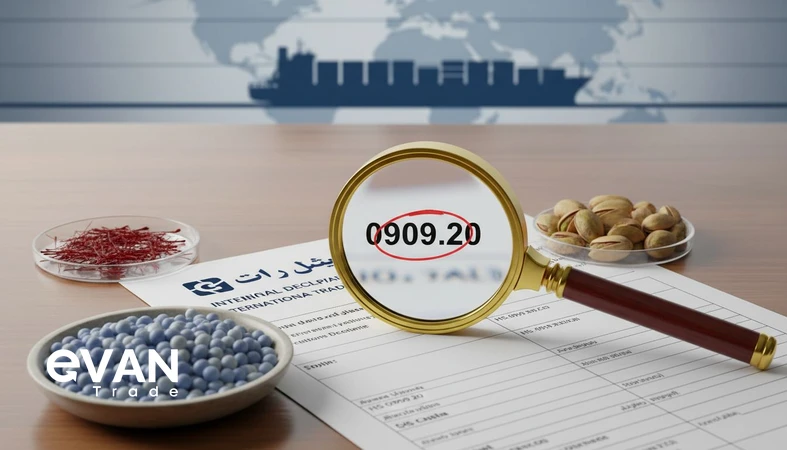
- Product description that matches HS classification language (not marketing language)
- HS code (where appropriate), country of origin statement
- Quantity, unit, net weight, gross weight
- Unit price, total value, discounts (if any)
- Incoterms (e.g., FOB, CFR, CIF) and named place/port
- Payment terms (TT, LC, CAD, etc.)
- Lot/batch references where feasible (especially for multi-lot shipments)
Common pitfall: invoice description is vague (“food product”) while certificates and labels are specific. Customs may question classification or require clarifications.
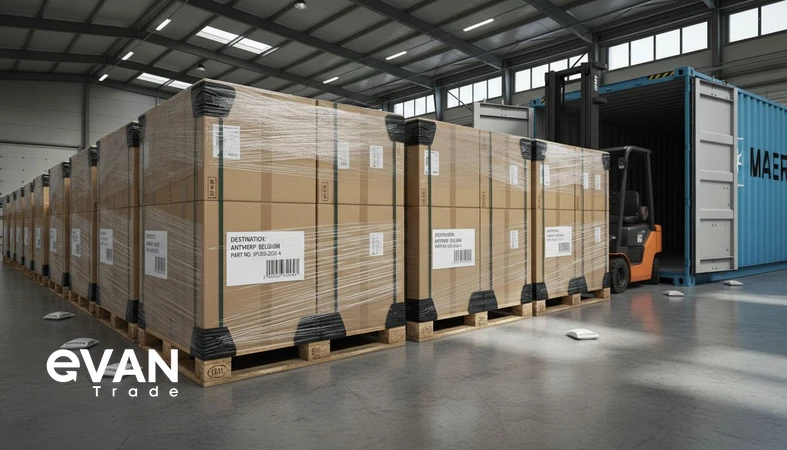
2) Packing List (PL)
The packing list should make the shipment physically “audit-able.”
Must align with: invoice totals, weights, carton counts, container numbers (if known)
Best practice details:
- Carton/pallet count, packaging type
- Net/gross weight per package and totals
- Dimensions (especially for air freight)
- Batch/lot mapping by carton/pallet (highly recommended for food)
Common pitfall: net/gross weights don’t match transport docs, causing clearance holds.
3) Bill of Lading (B/L) or Air Waybill (AWB)
This is the transport contract and proof of shipment.
Key checks:
- Shipper/consignee or notify party alignment (as per deal structure)
- Vessel/flight details, ports, container numbers, seal numbers
- Freight terms (prepaid/collect) consistent with Incoterms and invoice
Common pitfall: consignee details changed last-minute but invoice/certificates still show old data.
4) Insurance Certificate (when applicable)
Often needed under CIF/CIP or when the buyer’s bank requires it.
Common pitfall: insured value or coverage terms don’t match invoice total or contract requirements.
5) Export Declaration / Customs Export Entry (origin-side)
This is filed in the exporting country’s customs system. Importers may request a copy to support traceability, valuation, or bank files.
Common pitfall: HS code used in export entry differs from what the importer declares—raising red flags.
Certificates and proofs: what changes by product and destination
Certificates are where most delays occur—because the rules are product- and market-specific. Still, a structured approach helps: start with the product category, destination market, and buyer’s compliance needs, then build your certificate set.
Certificate of Origin (CO)
A Certificate of Origin confirms origin—often used for customs, trade statistics, or preferential treatment (when applicable).
Best practice: ensure product name and quantities match invoice and packing list.
Common pitfall: CO shows broad product wording that conflicts with a detailed invoice.
Health / Sanitary Certificate (food hygiene)
Many destinations require a competent authority-issued health document for certain food categories. The name of the certificate and issuing body varies by country and product type.
Common pitfall: certificate references do not include shipment identifiers (invoice number, container number, batch references), making it hard to link to the physical cargo.
Phytosanitary Certificate (plant-based commodities)
Often required for grains, legumes, dried fruits, nuts, and other plant-origin products—depending on destination requirements.
Common pitfall: phytosanitary certificate issued for a commodity description that doesn’t match the commercial invoice wording (or the HS code).
Veterinary / Animal Health Certificate (animal-origin products)
If the shipment includes dairy, meat derivatives, gelatin, or other animal-origin items, veterinary certification may be needed.
Common pitfall: temperature handling expectations are not supported with any cold-chain evidence (when relevant).
Halal Certificate (market-driven, sometimes mandatory)
Halal documentation may be required by law in some markets, or contractually required by buyers.
Common pitfall: certificate scope doesn’t clearly cover the exact product/batch being shipped.
Certificate of Analysis (COA) / Lab Test Reports
Especially important for higher-risk categories (e.g., spices, concentrates, dried herbs, oils, processed foods). A COA can support:
- microbiological criteria
- pesticide residue limits
- heavy metals
- aflatoxin (for certain nuts/grains)
- moisture and quality parameters
Common pitfall: COA is not batch-specific, or the lab report is too old to be credible for the shipped batch.
Fumigation Certificate (when applicable)
Often used for plant commodities or wooden packaging compliance, depending on route and buyer requirements.
Common pitfall: fumigation date occurs after stuffing/sealing, creating timeline inconsistencies.
Free Sale Certificate / Manufacturer Declarations (when required)
Some buyers request proof that the product is legally sold in the origin market, or request manufacturer declarations (ingredients, allergens, non-GMO statements, etc.). These are highly destination- and buyer-specific.
Common pitfall: declarations read like marketing, not compliance language, and lack traceable identifiers.
Internal resource idea: your editorial team can later interlink this section to EvanTrade Food Export Compliance Resources so readers can navigate labeling and safety topics without repeating content.
Documentation alignment: the 7 consistency checks that prevent most delays
Before shipment, run these checks across invoice + packing list + certificates + transport docs:
- Names & addresses: exporter, manufacturer (if shown), buyer, consignee
- Product naming: same “technical name” across all documents
- Quantities & weights: net/gross totals match everywhere
- Batch/lot mapping: certificates and COA match shipped batches
- Dates: production/expiry dates align with shelf-life claims
- HS code logic: consistent classification rationale (even if codes differ by market, document the reasoning)
- Incoterms & freight terms: invoice Incoterm fits B/L freight terms and insurance
These checks are the backbone of a reliable “document pack.” They also reduce disputes: when claims arise (shortage, damage, quality), consistent documents make resolution faster.
Essential export documents table (invoice to certificates)
| Document | Who typically issues it | Primary purpose | What customs/compliance looks for | Common mistakes |
| Commercial Invoice | Exporter/seller | Valuation + transaction basis | Accurate description, Incoterm, value | Vague product name, mismatched totals |
| Packing List | Exporter/warehouse | Physical shipment map | Carton counts, weights, batch mapping | Weights don’t match, missing pallet/carton detail |
| B/L or AWB | Carrier/freight forwarder | Transport contract + shipment proof | Consignee details, ports, container/seal | Wrong consignee, inconsistent freight terms |
| Certificate of Origin | Authorized body/chamber (varies) | Confirms origin | Alignment with invoice product & qty | Broad wording, inconsistent quantities |
| Health/Sanitary Certificate | Competent authority (varies) | Food safety compliance | Product scope, identifiers, hygiene assurances | Missing shipment identifiers, wrong scope |
| Phytosanitary Certificate | Plant health authority | Plant commodity clearance | Commodity name, treatment, origin | Commodity mismatch, timing issues |
| Veterinary Certificate | Veterinary authority | Animal-origin compliance | Product scope + health statements | Missing cold-chain evidence where relevant |
| COA / Lab Report | Lab/manufacturer | Quality & safety parameters | Batch specificity, date, method | Not batch-specific, outdated test |
| Halal Certificate | Certifying body | Market/buyer requirement | Product scope, validity, issuer credibility | Not tied to batch/shipment, unclear scope |
| Insurance Certificate | Insurer/broker | Cargo risk coverage | Coverage terms + insured value | Incorrect insured amount, missing clause needs |
| Fumigation Certificate | Licensed provider | Pest treatment evidence | Date, container/packaging references | Date mismatch, unclear identifiers |
A practical checklist to build a “Customs-ready document pack”
Step 1: Start with product and destination mapping
- Confirm product category (plant/animal/processed) and destination market
- Confirm buyer’s compliance requirements (labeling language, allergen rules, shelf-life constraints)
Step 2: Lock the commercial dataset early
Create a master sheet containing:
- product technical name(s)
- HS code proposal (and notes)
- packaging specs, net/gross weights
- batch/lot references
- Incoterm + named place
- consignee/notify party details
Everything else should be generated from this dataset to avoid mismatches.
Step 3: Plan certificates as a timeline
Certificates take time. Treat them like a schedule:
- What needs inspection or sampling?
- What needs attestation?
- What must reference the final invoice number or container number?
Step 4: Do a pre-shipment consistency audit
Run the 7 checks listed earlier. Fix mismatches before the cargo moves.
(Your team can also link this operational approach to Evan Trade Export Documentation Checklist as an internal resource for readers who want a downloadable version.)
Common scenarios and what documents typically become “critical”
If you’re importing dried fruits, nuts, herbs, or spices
- Phytosanitary (often), COA for contaminants (often buyer-driven), strict batch mapping
- Watch-outs: aflatoxin/heavy metals/pesticide residues depending on product and destination
If you’re importing processed foods (canned, packaged, concentrates)
- Ingredient declarations and allergen documentation become critical
- COA may be requested for preservatives, microbiological criteria, or shelf-life support
If you’re importing animal-origin products
- Veterinary certification (often), cold-chain integrity evidence (sometimes)
- Watch-outs: labeling, storage temperature requirements, and shipment handling documentation
If you’re using LC (Letter of Credit)
- Document format and naming become strict: even minor discrepancies can trigger bank rejection
- Best practice: align document templates with the LC conditions from day one
FAQs
1) Are these documents the same for every destination country?
No. The core commercial and transport documents are broadly consistent, but certificates vary by product category and destination market regulations. Always confirm destination requirements before finalizing your document list.
2) What causes the most common customs delays?
Mismatches across documents—especially product naming, weights, batch references, consignee details, and certificate scope. A “document alignment audit” before shipment prevents most issues.
3) Do I always need a Certificate of Origin?
Often yes, but not always as a legal requirement. Many buyers and customs regimes request it for origin verification, trade statistics, and sometimes tariff treatment. Treat it as a common best practice unless your broker confirms otherwise.
4) Is a COA mandatory for food imports?
Sometimes it’s required by authorities, but very often it’s driven by buyers, retailers, or risk management policies—especially for higher-risk products. Batch-specific COAs are more credible than generic reports.
5) How do I ensure certificates match my invoice?
Use a single “master dataset” for product naming, quantities, and identifiers. Then require every certificate to reference at least one shipment identifier (invoice number, lot/batch, container/seal where applicable).
6) What’s the best way to handle multi-product shipments?
Multi-product shipments increase mismatch risk. Use:
- a packing list with clear line-item mapping
- batch/lot mapping by carton/pallet
- certificates that clearly cover each line item (or provide separate certificates)
7) Should I legalize or attest documents?
Some destinations or buyers require attestation/legalization for certain documents (especially origin or commercial docs). This is destination-specific—confirm early because it affects timing.
8) Who should own the document process—supplier, importer, or forwarder?
A clean model is shared ownership:
- Supplier/exporter owns invoice/packing list and product certificates
- Forwarder owns transport documents
- Importer owns destination filing, broker coordination, and final clearance checks
The importer should still run the final consistency audit across the full pack.
Conclusion: treat documents as a system, not a stack
Importing Iranian food products successfully is less about collecting “more papers” and more about building one consistent story across invoice, packing list, transport documents, and certificates. When your document pack is coherent—aligned names, quantities, batches, dates, and scope—you reduce the chance of holds, shorten clearance time, and make downstream quality disputes easier to resolve.
As global buyers demand stronger traceability and compliance, the importers who win are the ones who standardize their documentation workflow—turning each shipment into a repeatable, auditable process rather than a one-off scramble.
In practice, many importers prefer working with exporters that run documentation as a standardized system—with consistent product datasets, batch mapping, and certificate planning built into the shipment workflow. Evan Trade operates in that direction by focusing on clear paperwork architecture, export-readiness, and structured coordination between suppliers, labs, logistics, and buyer-side requirements—so shipments are supported by documents that are easier to verify, not just easier to collect.