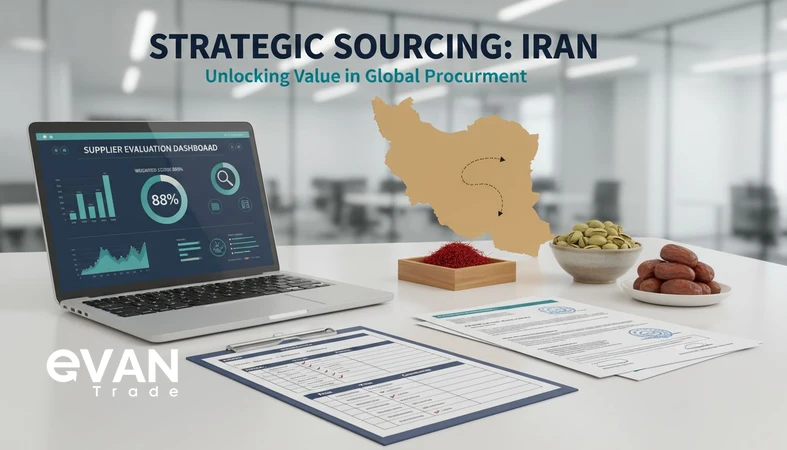


Importing from Iran can be commercially attractive—especially in categories where the country has strong production capacity and established export know-how. But for many buyers, the first serious challenge is not price or even logistics. It’s confidence: How do you know the supplier is real, export-capable, quality-consistent, and contract-reliable—before money moves and a container ships?
Supplier vetting is never “one step.” It’s a sequence of risk-reducing decisions—legal, operational, technical, and commercial—made with imperfect information. When you add cross-border payments, documentation dependencies, and (in some jurisdictions) stricter screening expectations, a casual approach can become expensive quickly.
This guide provides a repeatable supplier due diligence checklist tailored to importers evaluating Iranian suppliers. It’s designed to be practical: what to request, how to verify, what red flags matter, and how to turn findings into safer terms—without slipping into sales language or unrealistic promises.
Why Vetting Iranian Suppliers Needs a Structured Approach
Every import market has fraud risks and quality variance. The differentiator is how early small gaps become large consequences:
- A mismatched legal name can block banking or customs clearance.
- Incomplete export documentation can create demurrage and disputes.
- A weak quality system can turn “first shipment OK” into “third shipment returns.”
- Poor labeling control can trigger rework, relabeling, or border holds.
The goal of due diligence isn’t to eliminate risk; it’s to make risk visible and contract-manageable—a core principle in buyer market insights for any emerging supply market.
Step 1: Confirm the Supplier’s Legal Identity (Not Just the Brand Name)
Before evaluating quality, confirm you’re dealing with an entity that can legally contract, invoice, and export.
Verify the “three-name match”
Ask for documents that allow you to match:
- Company legal name (as registered)
- Factory/producer name (if different)
- Exporter of record name (who will appear on export docs)
If these don’t align, you may still proceed—but only if the relationship is transparent (e.g., a trading arm exporting on behalf of a producer) and contract terms reflect that structure.
What to request
- Company registration details and full legal address
- Tax ID / registration identifiers (as applicable)
- Authorized signatory evidence (board resolution or signatory letter, where relevant)
- A stamped pro forma invoice template showing the exact legal name
Practical verification tips
- Cross-check the supplier’s legal address against shipping/production claims.
- Confirm the email domain and document headers are consistent.
- Verify that the bank account beneficiary name (later) matches the contracting party name.
Step 2: Map Product Risk Early (Because Not All Products Fail the Same Way)
Supplier diligence should be proportionate to product risk. Create a quick “risk map” before you dive into certificates.
Risk questions that change your checklist
- Is this food, ingredient, or packaging? (higher safety and labeling exposure)
- Does it require cold chain, humidity control, or shelf-life sensitivity?
- Is quality judged by lab test or sensory grading?
- Are there origin claims (single-origin, organic, specialty) that must be defensible?
For many buyers, the biggest hidden risk is not the product itself—it’s spec ambiguity. If your spec is vague, every later step becomes weaker.
Step 3: Evaluate Quality Systems (Certifications Help, but Execution Matters More)
Certifications can be meaningful signals, but only when they are current, relevant to the product, and supported by operating discipline.
What to ask for (typical examples)
- ISO 9001 (quality management)
- ISO 22000 / HACCP (food safety management) where applicable
- Halal certification (if relevant to your market)
- GMP or internal hygiene protocols (food/ingredients)
- Traceability process description (lot codes, batch records)
What to verify (beyond the logo)
- Certificate validity dates and scope (site address, product categories)
- Whether the certification covers the actual producing facility
- Internal QC checkpoints: incoming materials, in-process checks, final release criteria
- How nonconformities are handled (CAPA: corrective and preventive actions)
A high-signal question: “Show me one anonymized batch record and its linked COA.”
If they can’t produce traceability documentation, their quality control may be informal—even if the product looks fine.
Step 4: Validate Documentation Before You Buy (Not After It Ships)
Documentation is often where import deals fail quietly: not because anyone is dishonest, but because the export pack doesn’t match the buyer’s clearance reality.
Core documents to review early
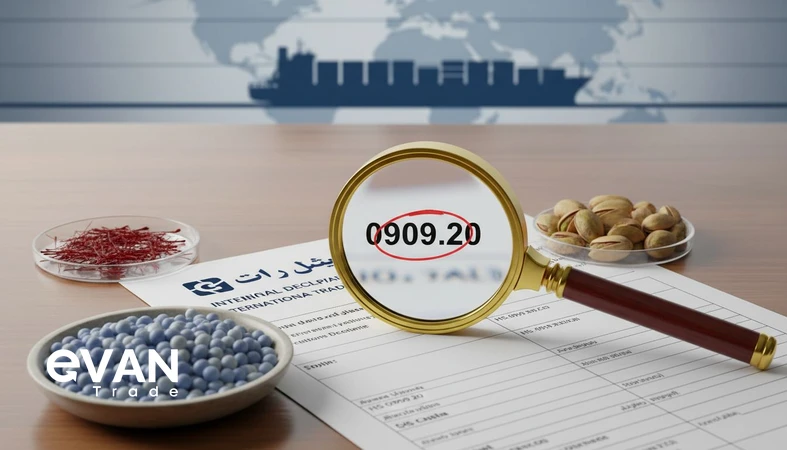
- Pro forma invoice with exact product naming and HS code assumptions (if known)
- Specification sheet (technical + sensory, where relevant)
- COA template (what gets tested, method, acceptable range)
- Packaging specs: weights, palletization, inner/outer labeling
- Shelf-life and storage conditions
If you’re importing food, add a pre-check against your market’s food labeling requirements and ingredient declarations. Many “border problems” are actually “label governance problems” that started at artwork approval.
Step 5: Commercial & Financial Health Checks (Simple, Not Intrusive)
You don’t need a forensic audit, but you do need signals that reduce the odds of disruption.
What to ask for
- 2–3 trade references (buyers in other markets if possible)
- Production capacity estimates and lead-time commitments
- A transparent explanation of whether they are producer, trader, or hybrid
- Banking details on official letterhead (later in the process)
What to watch
- Overpromising lead times without capacity evidence
- Refusal to provide trade references (“privacy” can be legitimate, but total refusal is risky)
- Multiple “aliases” for the same entity across documents
Step 6: Sampling, Testing, and Third-Party Inspection (Design It Like a System)
Sampling is not a box-tick. Done poorly, it creates false confidence.
Build a sampling protocol
- Define which attributes must match: moisture, purity, microbiology, active content, sensory grade, etc.
- Require that the sample is production-representative (not a handpicked batch)
- Decide who pays for testing (often buyer initially; later negotiated)
Use third-party inspection strategically
Options include:
- Pre-production audit (for higher risk or strategic suppliers)
- During production inspection (when variability risk is high)
- Pre-shipment inspection report (count/weight/packaging/markings)
Inspections are most valuable when tied to acceptance criteria—not vague “looks good” language.
Step 7: Contract and Incoterms: Turn Findings into Protection
A contract is where due diligence becomes operational.
Clauses that reduce disputes
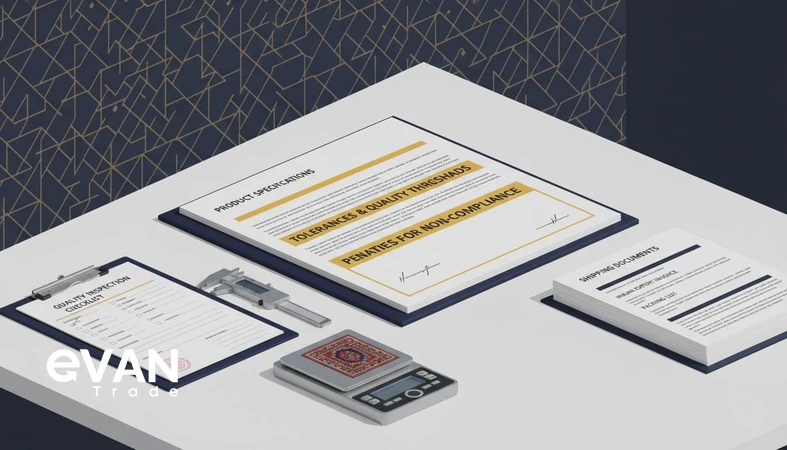
- Product specification + tolerances (what counts as a defect)
- Sampling and testing rules (methods, lab, dispute mechanism)
- Document pack obligations (exact documents, deadlines, formats)
- Delivery terms and title transfer (Incoterms aligned with your control needs)
- Remedies (replacement, credit note, partial acceptance, rework responsibilities)
If your business depends on tight timing, include a realistic but enforceable framework for delays (e.g., notification windows, revised ETAs, and responsibility for incremental costs).
Step 8: Logistics Readiness (The Overlooked Part of Supplier Vetting)
A strong supplier can still be a weak exporter if they don’t handle export readiness consistently.
Practical checks
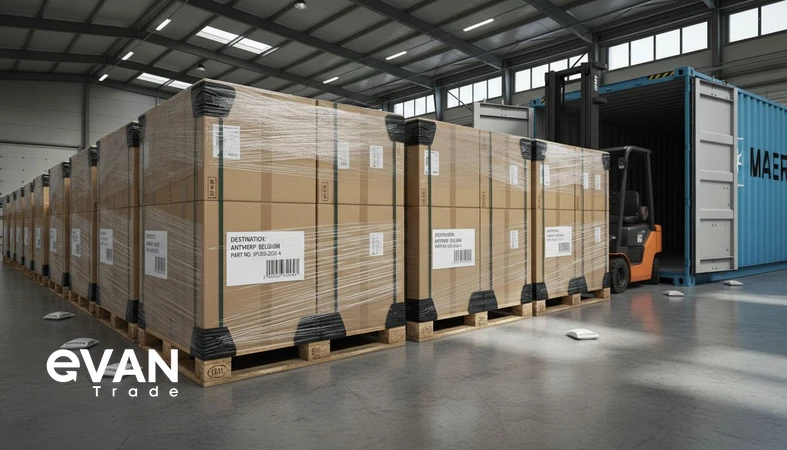
- Packaging strength, pallet stability, and container loading method
- Moisture control (desiccants, liners) where relevant
- Label consistency: carton markings, net/gross, lot codes
- Insurance expectations (especially under higher-risk routes)
Also confirm who coordinates freight and whether shipment visibility exists. When something goes wrong, clarity on roles saves weeks.
Red Flags That Should Pause the Deal
Not every red flag means “fraud,” but most mean “risk you can’t price.”
- Legal name inconsistencies across invoice, stamp, bank beneficiary, and certificates
- “Too flexible” on specs (changing numbers to match what you want)
- Refusal to share basic traceability artifacts (batch record, COA template)
- Pressure tactics: “Pay today or price doubles tomorrow” without market basis
- Unrealistically low pricing without explanation (often signals substitution or quality variance)
- Inability to explain export documentation flow clearly
A good discipline is to treat red flags as questions that must be answered in writing before advancing to payment.
Due Diligence Checklist Table (Use This as a Working Template)
| Due Diligence Area | What to Request | How to Verify | Key Red Flags | Best Timing |
| Legal identity | Registration details, legal address, authorized signatory | Name/address match across invoice + stamp + later bank info | Multiple entity names, unclear exporter-of-record | Before pricing is finalized |
| Supplier role | Producer/trader structure explanation | Factory address vs. office address; documentation owner | Evasive answers, shifting story | Early qualification |
| Product specs | Spec sheet, tolerances, shelf-life | Compare with your market requirements and use-case | Vague specs, “standard quality” wording only | Before sampling |
| Quality system | HACCP/ISO scope, QC SOP summary, traceability flow | Check scope, site address, lot-code logic | Certificates not matching site or product scope | Before pilot order |
| Sampling | Production-representative sample + COA | Use independent lab if risk warrants | Samples without lot/batch identity | Before contract signing |
| Testing | COA template, lab method references | Confirm methods and ranges are meaningful | COA missing key parameters | Before first shipment |
| Inspection | Pre-shipment inspection report | Use reputable inspection provider | Supplier rejects inspection | Before shipment release |
| Documentation pack | Draft set: invoice, packing list, origin proof, labels | Run a “document simulation” for clearance | Missing origin proof or inconsistent HS naming | Before payment milestone |
| Commercial terms | Incoterms, lead time, remedies | Align with risk map and logistics control | No remedy language, unrealistic lead time | Contract stage |
| Payments | Beneficiary details, payment schedule | Beneficiary name must match contracting party | Third-party beneficiary without explanation | Before any funds move |
Frequently Asked Questions
1) What’s the first thing to verify with an Iranian supplier?
Start with legal identity and exporter-of-record clarity. If the names don’t match across documents, later steps—banking, customs, claims—become fragile.
2) Are certifications like ISO or HACCP enough to trust quality?
They help, but they’re not sufficient alone. Ask for traceability documentation, a COA template, and evidence of consistent QC routines.
3) Should I always do a third-party inspection?
Not always—but for first shipments or higher-risk products, a pre-shipment inspection report tied to acceptance criteria is a strong risk reducer.
4) How do I prevent disputes over “quality” after arrival?
Write specs with tolerances, define test methods and labs, and include a dispute mechanism. Quality problems become manageable when they’re measurable.
5) What documents commonly cause clearance delays?
Inconsistent legal names, incomplete packing lists, unclear product naming, and weak origin documentation are frequent triggers. Build an import documentation checklist before you pay.
6) How many shipments should a “trial period” include?
A single shipment can be misleading. Many importers treat supplier qualification as a two- or three-shipment learning loop, tightening specs and processes based on observed variance.
7) What’s a reasonable approach to payment risk?
Use staged payments tied to document readiness and inspection milestones where feasible. The right structure depends on your jurisdiction, banking pathways, and counterparty profile.
Conclusion: A Repeatable Vetting Loop and Why It Matters
Vetting Iranian suppliers works best when you treat it as a system, not a one-time gate: verify identity, map product risk, validate quality execution, test documentation readiness, and convert findings into contract protection. The result is not “zero risk,” but lower surprise—and fewer expensive disputes driven by ambiguity.
In practice, importers who build a disciplined due diligence checklist also build better supplier relationships. Clear specs, predictable documentation, and defined acceptance rules reduce friction for both sides—especially as you scale beyond the first shipment.
Some importers prefer to run this process alone; others work with specialized partners who understand Iranian sourcing realities and the documentation, quality, and exporter coordination that reliable trade requires. Evan Trade operates in that middle space—helping buyers navigate supplier evaluation, export readiness, and consistency signals with a focus on standards and process clarity rather than hype.