

Export Iranian Food Products to Australia
Market Snapshot
Australia can be highly repeatable for Iranian agri-food when the importer locks the route, file structure, and labeling scope early. It becomes difficult when the shipment is booked before BICON conditions are checked, when IFIS referral expectations are assumed instead of managed, or when label/lot/weight data does not reconcile across documents and cartons.
Entry friction typically runs on two tracks that must stay aligned: (1) customs clearance through the Australian Border Force (ABF) environment and the Integrated Cargo System (ICS), and (2) biosecurity and imported food safety controls managed under DAFF pathways including BICON import conditions and IFIS inspection/testing where applicable. DAFF describes IFIS as a risk-based inspection scheme with visual/label assessment for inspected consignments, with sampling/testing depending on food type.
If your goal is a clearance-ready, audit-friendly import file, treat the quote stage as the moment to eliminate mismatch risk: HS evidence, locked specs, packing configuration, COA scope, and label version control. Send your target SKU list and intended channel (Retail/HoReCa/Industrial/Ethnic) and EvanTrade will structure an Australia-route file around a defined lot, route assumptions (category-dependent), and a broker-ready documentation pack.
What Sells in Australia (demand map + buyer use cases by channel)
Retail (major + independent): Retail buyers value consistent labeling, stable retail pack formats, and predictable QA evidence. Best-fit products are pistachios (in-shell and kernels), saffron threads, dates, raisins/dried fruits, and whole/cut spices where identity and moisture control are demonstrable. Powders and blends can sell, but they require stronger authenticity and contamination controls, plus conservative claims discipline.
HoReCa (foodservice): Restaurants and caterers often prefer bulk formats with predictable kitchen performance: pistachio kernels for desserts, dates for menu items, saffron threads for rice dishes, and whole spices for infusion and grinding. The operational priority is repeatability: each lot should behave the same, and documentation should be “broker-clean” to avoid delivery delays.
Industrial (ingredients/manufacturing): Industrial users look for locked specifications, controlled tolerances, and lot-based COA scope aligned to their hazard analysis. They typically prefer bulk cartons/bags and may request extended test panels (category-dependent) for residues, microbiology, or authenticity indicators.
Ethnic channel (specialty importers/distributors): The ethnic channel can move volume quickly for culturally linked categories (dates, saffron, pistachios, dried fruits, spice lines). Even when packaging is simpler, the import file discipline cannot be: IFIS/label checks and document reconciliation still decide how smoothly goods release.
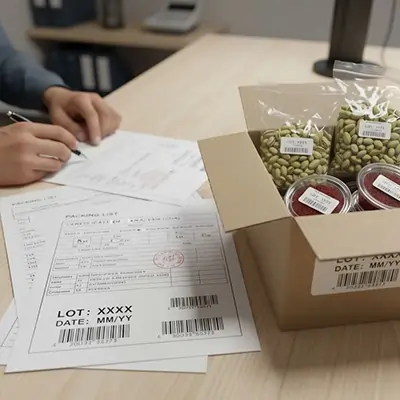
Seasonality & Demand Triggers in Australia (operational calendar)
Australia’s demand signals are often triggered by retail promotional calendars, gifting seasons, and cultural events, while operational risk is influenced by heat and humidity exposure during transport and storage. Plan procurement and packing windows to avoid last-minute substitutions that break label versions, lot lists, or weight reconciliation.
Typical triggers (category-dependent by buyer segment):
- Dates: stronger pull around Ramadan/Eid and gifting cycles; retail-ready labeling and consistent grade matter most during peaks.
- Pistachios: gifting and entertaining seasons, plus steady year-round snack demand; kernels also rise with bakery/dessert production.
- Saffron: premium gifting and restaurant cycles; authenticity confidence and tight pack security matter more than price movement.
- Raisins/dried fruits: baking seasonality and snack mixes; moisture control and sulphite/allergen declarations must be stable.
- Whole/cut spices: year-round; powders/blends often surge when private label and convenience lines expand.
Operationally, treat warm/humid legs as a risk multiplier for dried fruits, dates, and powders. Align packaging barriers and container plans to the product’s moisture sensitivity and shelf-life intent, and log temperature/humidity notes as part of the arrival evidence pack.
Best-Fit Iran-Origin Products for Australia
Below is a pragmatic “fit + friction” map for the priority basket. The aim is not to overpromise access outcomes, but to make the route explicit: the product’s physical risk profile, the likely scrutiny points (BICON/IFIS/label checks), and the controls that prevent broker queries and border delays.
Best-fit Iran-origin products for Australia
Product category | Best-fit Iranian varieties/grades/forms | Demand channels | Winning pack formats + typical net weights (ranges only) | Key compliance/QC risks + Australia controls (category-dependent) | Where buyers get stuck + EvanTrade prevention |
pistachio in-shell | Export-grade in-shell; calibrated sizing; roasted/salted or raw (as specified) | Retail, Ethnic, HoReCa | Retail 100–250 g; foodservice 1–5 kg; bulk 5–25 kg | Aflatoxin/mould risk (category-dependent testing); allergen cross-contact; packaging integrity; lot traceability; BICON/IFIS route checks as applicable | Mixed size claims vs actual; label version drift; carton net/gross mismatch → lock size spec + tolerance; run packing reconciliation; version-controlled artwork |
pistachio kernels | Kernels by size/color; raw or roasted; bakery-grade | Industrial, HoReCa, Retail | Retail 100–250 g; ingredient 5–25 kg | Aflatoxin/mould; foreign matter; allergen controls; traceability; IFIS referral risk managed by documentation discipline | Kernel grade not matching spec; COA scope too light for buyer QA → define kernel grade + defect limits; align COA scope to buyer hazards |
saffron threads | Threads, defined cut length mix; controlled moisture; sealed packs | Retail, HoReCa, Ethnic | Retail 0.5–5 g; foodservice 5–50 g; bulk 0.25–1 kg | Adulteration/authenticity concern; packaging tamper risk; label claims discipline; IFIS/label assessment expectations | “Premium” claims without evidence; inconsistent net weights → use conservative descriptors; tamper-evident packs; lot-tied COA and pack records |
dates | Selected table grades; pitted/unpitted as specified; consistent texture | Retail, Ethnic, HoReCa | Retail 250–1,000 g; foodservice 1–5 kg; bulk 5–25 kg | Moisture/mould; pest/contamination risk; storage temp discipline; labeling of ingredients/additives if used; BICON conditions checked before booking | Date coding format mismatch; moisture variability across lots → define lot by production run; moisture target range; pre-shipment visual + moisture checks |
raisins/dried fruits | Raisins and dried fruits with defined size/cleaning grade | Retail, Industrial, Ethnic | Retail 200–500 g; ingredient 5–25 kg | Moisture/mould; sulphite declaration (if applicable); foreign matter; packaging barrier integrity; IFIS/label assessment | Hidden ingredient treatments not declared; inconsistent carton counts → lock ingredient statement; carton map; lot list tied to pallet IDs |
spices/dried herbs (whole/cut) | Whole seeds, pods, leaves; cut forms with defined mesh/range | Industrial, HoReCa, Ethnic | Retail 30–200 g; foodservice 0.5–5 kg; bulk 5–25 kg | Residues/contaminants (category-dependent); foreign matter; allergen cross-contact; labeling and claim evidence; BICON/IFIS route checks | Cut size not matching buyer spec; COA doesn’t match use case → define cut/mesh; contamination control plan; buyer-aligned COA scope |
spice powders (higher risk) | Single-spice powders and blends with locked formulation (if blend) | Industrial, Retail (private label), Ethnic | Retail 30–200 g; ingredient 5–25 kg | Higher scrutiny for adulteration, contaminants, microbiology (category-dependent); allergen cross-contact; formulation control; strict label claims control; route selection via BICON/IFIS | Blend formula changes midstream; inconsistent color/strength → lock formulation + change control; retain reference sample per lot; enhanced COA panel as requested |
Market Access & Import Rules
Australia market access is operationally managed through federal-first systems: ABF for customs border clearance, DAFF for biosecurity and imported food inspection pathways, and FSANZ standards that sit behind labeling and composition expectations. DAFF’s public guidance frames imported food compliance against the Australia New Zealand Food Standards Code and monitors imports via the Imported Food Inspection Scheme (IFIS).
Two-track reality (manage both):
- Track 1 — Customs clearance: Declarations are lodged through the Integrated Cargo System (ICS) by registered industry users (typically your broker).
- Track 2 — Biosecurity + imported food safety: Import conditions are checked in BICON (Biosecurity Import Conditions) and consignments may follow IFIS inspection/testing pathways depending on category and risk classification. BICON identifies conditions and whether permits may be required (category-dependent).
Importer-of-record (buyer-controlled) responsibilities:
- Route selection: retail-ready labeled food vs bulk ingredient for repacking/processing (category-dependent).
- Broker instructions: HS evidence pack, document set, and how lots/SKUs are represented in ICS entries.
- Label ownership: final artwork approval, version control, and claim evidence retention.
- Receiving readiness: sampling plan, storage controls, and deviation handling on arrival.
Supplier-controlled responsibilities (EvanTrade-managed with suppliers):
- Manufacturing/processing discipline, packing configuration, and lot identification.
- Pre-shipment QC execution and COA generation aligned to agreed scope.
- Document accuracy (invoice/packing list/lot list consistency) and shipment data integrity.
Jurisdiction split (Australia): Not applicable (federal-first; state overlays may apply). State/territory food regulators can apply enforcement overlays at retail and foodservice, so the safest approach is to keep labels and claims defensible and consistent across channels.
Boundary sentence (mandatory):
“Requirements are shipment- and category-specific; confirm the applicable route with your customs broker and competent authority guidance in Australia.”
Pre-Quote Lock Checklist (Australia)
- HS code candidate + classification rationale (product composition, processing, form)
- Product spec sheet (grade, defects, tolerances; cut/mesh where relevant)
- Pack format + net weights (ranges) + carton count + palletization concept
- Label scope: ingredient statement, allergen approach, country-of-origin format, claims to avoid unless evidenced
- COA scope (category-dependent) mapped to buyer risk profile (mould/aflatoxin, residues, microbiology, authenticity indicators for powders)
- Incoterm + delivery point + timeline and booking window
- BICON/IFIS route assumption (category-dependent) documented as an assumption until confirmed
- Sampling plan: sealed, lot-tied samples + retention sample rules
HS Classification & Tariff Readiness
Lock HS before pricing becomes “real.” If the HS code changes after samples are approved, the entire import file can break: duties/taxes expectations, broker entry behavior, labeling descriptions, and even buyer onboarding documentation.
Use the ABF “Working Tariff” as the reference source for the Combined Australian Customs Tariff Nomenclature and Statistical Classification, and build an HS evidence pack that your broker can defend. ABF explicitly describes the online “Working Tariff” as the current Combined Australian Customs Tariff Nomenclature and Statistical Classification.
HS evidence pack (what to lock):
- Product identity: species/plant part, form (whole/cut/powder), processing steps, additives (if any)
- Commercial spec alignment: grade descriptors, moisture targets, and intended use
- Packaging description: retail vs bulk; net weights; count per carton
- Photo set: product + inner pack + carton label + pallet label format
- Consistency rule: the HS-facing description on invoice/packing list must match the spec and the label wording (no creative marketing names)
Food Safety & Compliance Expectations
Australia import success depends on aligning your QC/COA plan to how the shipment will be viewed at the border and by the buyer’s QA team. DAFF notes that IFIS-inspected consignments include visual and label assessment, with sampling/testing depending on food type, so your file should anticipate scrutiny rather than react to it.
Define the “lot” (non-negotiable):
A lot is the smallest traceable commercial unit that can be isolated if questioned. In practice, define lot by production run and packing run, with a unique lot ID that appears consistently on: inner packs (if applicable), cartons, pallet labels, packing list, lot list, and COA.
QC/COA control plan (category-dependent):
- Dried fruits/dates: moisture and mould control, foreign matter controls, packaging integrity checks
- Pistachios/kernels: mould/aflatoxin risk management (testing scope as agreed), sorting/defect thresholds, allergen cross-contact controls
- Saffron threads: authenticity confidence measures, moisture control, tamper-evident packaging, tight net weight control
- Whole/cut spices: residues/contaminants approach (as requested), foreign matter, cut/mesh validation
- Powders/blends: highest discipline—formulation lock (for blends), authenticity/adulteration risk controls, conservative claims, and enhanced COA scope where required
QC gates checklist (Australia-route)
- Incoming raw material acceptance against spec (identity + key defects)
- In-process sorting/cleaning checkpoint (foreign matter control)
- Pre-pack net weight calibration + checkweigh records (ranges and tolerances)
- Lot ID assignment rules + label printing controls (no manual drift)
- COA issuance tied to the exact lot list (no “generic COA”)
- Final pack inspection: seal integrity, carton coding, pallet label scan match
Pre-Shipment Release Gate (Australia)
- COA pass/fail rule agreed (category-dependent) and met for the shipped lots
- Label version sign-off recorded (artwork version + date + owner)
- Packing reconciliation complete: net/gross weights, carton counts, pallet map match
- Document match: invoice, packing list, lot list, COA, transport docs consistent (names, dates, units)
- Container/airwaybill data match the document set (shipper/consignee, package counts)
- Pallet/carton labels match the lot list (spot-check + photo evidence)

Labeling & Claims (label essentials; claim evidence; 7-step artwork approval workflow)
Treat labeling as a controlled technical file, not a design task. Australia requires imported foods to comply with Australian food standards, and DAFF explicitly references compliance with the Australia New Zealand Food Standards Code and country-of-origin food labelling requirements as part of imported food compliance expectations.
Label essentials (category- and channel-dependent):
- Product name that matches HS/spec identity (avoid marketing-only names)
- Ingredient statement (including processing aids/additives where applicable)
- Allergen approach aligned to facility reality (cross-contact where relevant)
- Net quantity statement and consistent unit formatting
- Storage conditions that match shelf-life intent and route risk
- Country-of-origin statement consistent across label and documents
- Importer/brand party details (as agreed with buyer)
Claims discipline:
- Do not use “free-from,” “organic,” “therapeutic,” or potency claims unless evidence and approvals are available and buyer requests them.
- Prefer factual descriptors: grade, cut form, intended use, and handling/storage.
7-step artwork approval workflow (version control)
- Spec lock: name, ingredient statement, allergens, net weights (ranges)
- Regulatory scope check (category-dependent) + buyer brand rules
- Draft artwork with version ID (V1.0) and change log
- Technical review: label text vs COA/spec vs invoice descriptors
- Print proof review: legibility, barcode/GTIN (if applicable), date/lot fields
- Final sign-off: owner + date + version ID + approved SKUs/lots rule
- Release control: only approved version can be used; archive older versions
Packaging Standards for Australia (retail vs bulk vs private label)
Packaging for Australia should be treated as a risk-control tool: it protects product integrity across long transit legs and supports traceability and inspection readiness. The packaging plan must also keep label and lot data consistent from inner pack to pallet.
Packaging choice vs control focus
Format | Typical use | Key controls |
Retail packs | Retail, Ethnic | Strong artwork version control; tamper evidence (where applicable); consistent net weights; shelf-life coding discipline |
Bulk cartons/bags | HoReCa, Industrial | Moisture barriers; inner liners; carton/pallet labeling that ties to lot list; handling instructions |
Private label | Retail, brand programs | Buyer-owned label governance; strict change control; COA scope aligned to buyer QA; SKU/GTIN mapping (if applicable) |
Logistics & Delivery Planning to Australia
Australia logistics planning is about protecting product integrity and preventing evidence gaps. Air freight can reduce time exposure (useful for high-value, low-weight items like saffron), while sea freight is often economical for bulk volumes but increases humidity/temperature risk windows.
Air vs sea decision rules (category-dependent):
- Saffron threads: often air for risk control and cash-cycle speed; ensure tamper-evident packing and precise net weights.
- Pistachios/kernels: sea is common for volume; ensure moisture/mould risk controls and robust packaging barriers.
- Dates/dried fruits: higher humidity sensitivity; packaging barrier and storage instructions become critical; consider seasonal route risk.
- Powders/blends: route choice depends on buyer urgency; regardless of mode, prioritize evidence discipline and sealed, lot-tied sampling.
Incoterms guidance (practical, not legal advice):
- Choose Incoterms that match who controls booking, insurance expectations, and evidence capture.
- Regardless of term, pre-agree the “claims evidence pack” so damage or deviation disputes are fact-based, not opinion-based.
Arrival Evidence Pack
- Seal numbers + seal photos (where applicable)
- Stuffing photos + pallet condition photos
- Pallet labels and carton labels photos (show lot IDs)
- Temperature/humidity notes (if available) + receiving conditions
- Damage notes + shortage/overage log
- Deviation log (what differed from spec/file, with timestamps)
- Broker query log (questions asked, answers, documents provided)
Documentation & Customs Checklist
Your documentation pack should be built to survive two realities: broker processing in ICS/ABF workflows and DAFF/IFIS file scrutiny where applicable. ABF describes ICS as the system that enables registered industry users to deal electronically and track cargo movement; in practice, the importer’s broker uses it to lodge declarations and manage cargo events.
Documentation & readiness checklist (Australia)
Requirement/document | When needed | Who issues | What process it supports | Typical lead-time risk + mitigation |
Importer identifier (ABN/ACN or broker/client identifier as applicable) | Always | Buyer/importer | Broker setup, declarations, invoicing identity | Late onboarding → confirm importer entity data at RFQ stage |
Customs declaration in ICS (via broker) | Each shipment | Buyer’s broker | Customs clearance track | Missing data fields → provide a broker-ready data sheet (SKUs/lots/weights) |
HS evidence (classification rationale, product spec alignment) | Pre-quote + before entry | Buyer with EvanTrade support | Defensible HS + consistent descriptions | HS drift → lock HS with spec + label text; change control on any ingredient/form change |
Commercial invoice | Each shipment | Supplier/exporter | Valuation, customs, payment | Description mismatch → use HS-aligned product names and consistent units |
Packing list (lot + weight reconciliation) | Each shipment | Supplier/exporter | Physical receipt, inspection readiness | Net/gross inconsistency → reconcile at pallet level; include carton counts and pallet IDs |
COA (category-dependent) | As required by buyer/route | Lab/supplier (as applicable) | Quality evidence, buyer QA, potential IFIS scrutiny | Generic COA → issue lot-tied COA with explicit scope and sample ID |
Health/official certificates (category-dependent; “if required by route/buyer”) | When route/buyer demands | Competent issuer (as applicable) | Route acceptance, buyer onboarding | Late issuance → identify early in BICON/route planning assumptions |
Pre-notification / import conditions outcome in BICON (category-dependent) | Pre-booking | Buyer/broker | Biosecurity route confirmation | Booking before confirmation → require BICON check as a pre-quote gate |
IFIS status / referral outcome (category-dependent) | Shipment processing | DAFF/route process | Inspection/testing pathway awareness | Unplanned inspection → prepare file and samples for quick response |
Phytosanitary (category-dependent) | If required | Competent authority (as applicable) | Biosecurity requirements | Wrong document type → confirm exact requirement per route and product form |
Label artwork approval record (version control) | Retail/private label | Buyer/brand owner | Retail compliance + auditability | Version confusion → store approval PDF with version ID and SKU mapping |
Lot list / packing configuration (SKU/GTIN if applicable; carton/pallet map) | Always | Supplier with EvanTrade structure | Traceability, receiving, query response | Missing lot map → maintain a master lot list tied to pallets and cartons |
Non-negotiable document quality rules:
- One naming standard across all docs (product name, form, grade).
- One date format standard per shipment file; never mix formats within the same pack.
- Lot IDs must be identical across COA, packing list, carton labels, and pallet labels.
- Net/gross weights must reconcile at SKU and pallet level; document the reconciliation.
- Any change after label approval triggers version change and a documented re-approval step.
Pricing, Payments & Contract Terms (dispute prevention; staged payments; change control)
Pricing disputes usually come from ambiguity, not from the number on the invoice. Prevent disputes by turning assumptions into locked inputs: HS, spec tolerances, pack configuration, label scope, COA scope, and delivery term responsibilities.
Staged payments (category-dependent) tied to gates:
- Stage 1: deposit after spec/pack/label scope lock and sample approval rules defined
- Stage 2: release after pre-shipment QC gate and document reconciliation
- Stage 3: balance against shipment handover and evidence pack completion
Change control (non-negotiable for powders/blends and private label):
- Any change to formulation, ingredient source, mesh size, or pack materials triggers: new spec revision, possible new COA scope, and label review.
RFQ Template + Sample Workflow for Australia
RFQ fields (send these to EvanTrade):
- Product category + form (in-shell/kernels; threads; whole/cut; powder; blend formula if blend)
- Intended channel (Retail/HoReCa/Industrial/Ethnic) and whether retail-ready labeling is required
- Target net weight ranges and pack style (retail, bulk, private label)
- Required grade/spec tolerances (size, moisture, defects; cut/mesh for spices)
- COA scope requirements (category-dependent) + pass/fail rules
- Destination city/port preference (example only) and shipping mode preference (air/sea)
- Incoterm preference + delivery point + timeline
- Any restricted claims to avoid and any buyer-required statements
- Broker contact (optional) for HS/route alignment
Sample workflow (evaluation to release):
- RFQ intake → pre-quote lock checklist completed (Box A)
- Route assumption documented (category-dependent) and broker-aligned
- Samples issued as sealed, lot-tied units with draft COA scope
- Buyer evaluation → spec + label scope finalization
- Production + QC gates executed; COA issued per lot
- Document reconciliation and pre-shipment release gate (Box B)
- Shipment handover with arrival evidence pack (Box C optional)
FAQs
1.Do Iranian pistachios and dried fruits always get inspected in Australia?
Inspection and testing are category- and shipment-dependent; plan your file as if label and visual checks will be scrutinized, and align route assumptions through BICON/IFIS pathways where applicable.
2.What is BICON and when should it be checked?
BICON is DAFF’s system for identifying biosecurity import conditions and whether permits may be required; check it before booking freight so the route is not guessed.
3.What is IFIS in practical terms for importers?
IFIS is a risk-based imported food inspection scheme; for inspected consignments, DAFF notes visual and label assessment and possible sampling/testing depending on food type.
4.Why should HS be locked before requesting a final quote?
Because HS affects duties, customs descriptions, and broker entry behavior; changing HS late forces document rewrites and increases query risk.
5.What causes the fastest border delays?
Data mismatch: lot IDs, weights, dates, and inconsistent descriptions across invoice/packing list/labels.
Understand global markets, choose the right Iranian agri-food products, and learn step-by-step how to source reliably from Iran.
Conclusion (EvanTrade)
Australia rewards importers who treat compliance as a controlled file, not a last-minute fix. Smooth clearance depends on locking HS classification, product specifications, packing configuration, lot definition, COA scope, and label version control, then keeping every document and carton data point fully reconciled across the customs track (ICS/ABF) and the biosecurity/food safety track (BICON/IFIS/DAFF), while staying aligned with FSANZ expectations and state/territory enforcement where relevant.
EvanTrade structures Australia-ready offers around auditable data integrity: lot-tied QC evidence, buyer-matched COA scope, version-controlled artwork, and broker-clean documentation, so the shipment that gets approved is the shipment that actually ships.
Request an Australia-Ready Quote: Share your product list, target channel, destination plan, Incoterm, packaging concept, and required COA scope with pass/fail rules.
Request Samples: Ask for sealed, lot-tied samples with the proposed packing configuration and draft COA scope to ensure repeatable approval.
- Related content
- Article category