
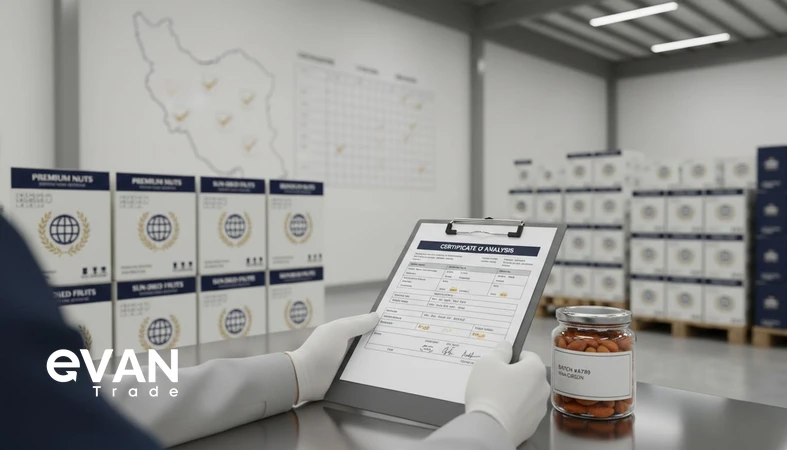
Aflatoxin & Residue Risk in Iran Sourcing: Why Buyers Get Surprised
For many B2B buyers, aflatoxin and chemical residue risk is the fastest way a promising origin turns into a costly rejection. These hazards are high-impact because they can trigger border holds, disposal, re-export, brand damage, and payment disputes—even when the product looks visually “normal.” In cross-border sourcing from Iran, the risk profile can be amplified by climatic variability, fragmented supply chains, mixed lots, and inconsistent documentation practices across intermediaries.
Aflatoxin (a mycotoxin produced by certain molds) tends to cluster: a few contaminated kernels or nuts can push a whole shipment over a limit. Residues (e.g., pesticides) are similarly sensitive to pre-harvest choices, non-compliant spraying intervals, and post-harvest handling. The consequence is a buyer problem, not only a supplier problem: if you own the import record, you own the outcome.
This article is a practical, control-focused guide for buyers sourcing Iranian products—especially food and agricultural commodities—who want to reduce rejection risk and operationalize discipline across suppliers and shipments. Requirements vary by destination market and product type, so the goal is not to quote “one limit,” but to build a repeatable buyer-side system: specifications, lot definition, sampling/testing, COA discipline, hold-and-release, traceability, packaging/storage controls, and dispute-prevention clauses.
Where Aflatoxin and Residues Enter the Supply Chain (Iran-Specific Patterns)
Iran has globally traded crops where aflatoxin and residue compliance matters: nuts (notably pistachios), dried fruits, spices, seeds, and some cereals. Risk is not uniform by province or season. Aflatoxin pressure increases with moisture, heat, delayed drying, and storage issues; residue risk increases with non-aligned pesticide programs, mixing from multiple farms, and incomplete spray records.
Typical risk entry points buyers should map
- Pre-harvest: pesticide selection, application rate, and pre-harvest intervals; field sanitation; irrigation practices.
- Harvest and drying: delays between harvest and drying; uneven drying; use of shared drying yards; weather exposure.
- Sorting/processing: inadequate removal of damaged kernels; mixing of grades; rework loops without traceability.
- Storage: humidity control, pest control chemicals, warehouse hygiene; long dwell times.
- Transport and consolidation: mixed lots from different suppliers; repacking; container loading under humid conditions.
Because many Iranian export supply chains rely on consolidation (multiple growers, collectors, and processors), the buyer’s first job is to prevent “unknown mixing.” When you cannot prove lot integrity, you cannot manage risk scientifically.
Buyer Control #1: Supplier Qualification That Goes Beyond Price and Capacity
Supplier qualification is your first control gate. For high-risk categories, treat qualification as a documented audit trail, not a casual onboarding step. Buyers often discover too late that the exporter is a trader without stable process control or without authority over upstream farms and storage.
Qualification checklist (practical, documentation-led)
- Supply chain visibility: Can the supplier identify farms/regions, harvest windows, and processing sites? Can they keep lots segregated?
- Quality system evidence: SOPs for receiving, drying, sorting, storage humidity control, pest control, and traceability. Ask for controlled document versions.
- Testing history: Prior COAs, trend charts, nonconformance records, and corrective actions (red flags: missing lot IDs, inconsistent labs, or COAs issued “after shipment”).
- Sub-supplier control: Contracts or agreements with growers/collectors; defined acceptance at intake.
- Export readiness: Ability to produce clean export documentation and consistent labeling/marking. (See discipline topics typically covered under Evan Trade content on export documentation and market access.)
Buyer tip: If you cannot visit, use a structured remote qualification package (video walkthroughs with timestamps, warehouse humidity logs, pest control records, photos of lot labels) and verify it with a third-party pre-shipment or pre-loading check.
Buyer Control #2: Pre-Contract Specs—Define the Rules Before Product Exists
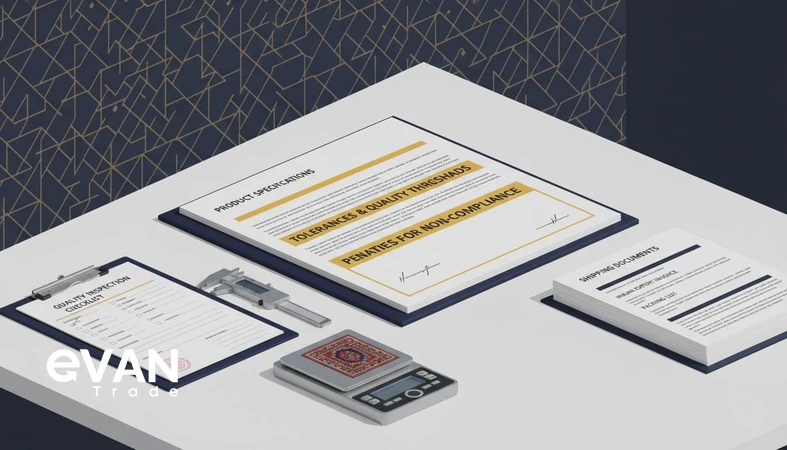
Most disputes start with vague specifications. To control aflatoxin and residues, your contract and purchase order should function like a compliance blueprint: what to test, how to test, which lot is being tested, and what happens if results differ. This is especially important when destination market limits are stricter than general international norms.
What your specification should include
- Product identity and grade: variety, size/grade, moisture limit, defect tolerances, processing method (raw/roasted), and intended use.
- Hazard limits: aflatoxin type(s) relevant to your market (e.g., total aflatoxins and/or aflatoxin B1) and maximum residue limits (MRLs) aligned to destination regulations and your customer specs.
- Lot definition: see next section—this is non-negotiable for meaningful testing.
- Sampling method: who samples, where, and under what standard (and how composite samples are formed).
- Testing method and lab requirements: method validation level, reporting format, and independence expectations.
- Hold-and-release: shipment cannot be dispatched (or cannot be paid) until results meet acceptance criteria.
When specs are silent, “COA provided” often becomes a formality. When specs are precise, the COA becomes a control instrument.
Buyer Control #3: Lot Definition and Traceability—The Foundation of Defensible COAs
Aflatoxin is heterogeneous: contamination can be localized. That makes lot definition critical. If a supplier tests “a sample from somewhere” and then ships a mixed container, the COA may be technically useless for risk management.
Practical lot rules buyers can enforce
- Define a lot by: single product type, single crop year/harvest window (where possible), single processing run or defined batch, and controlled storage location.
- Set a maximum lot size: align with your sampling plan and risk tolerance (smaller lots reduce the probability of hidden hotspots).
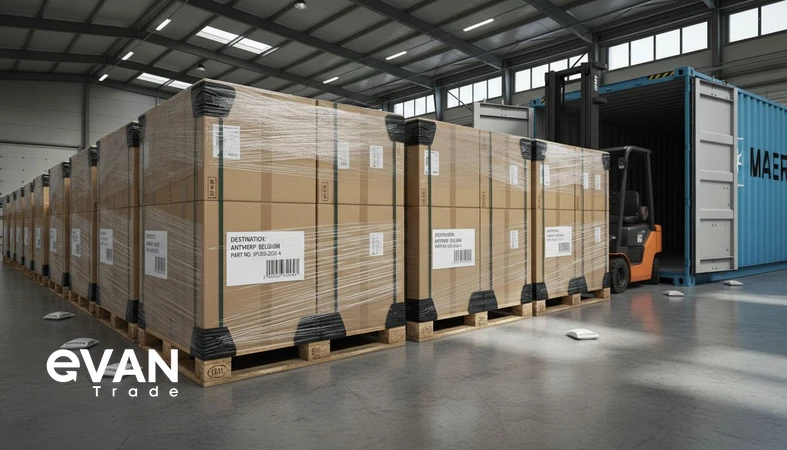
- Require physical lot identification: pallet labels, bag markings, batch codes, and warehouse maps that match documents.
- Maintain chain of custody: sampling records, tamper seals on retained samples, and clear documentation of who handled the sample.
Buyers should also require retention samples: one held by the supplier, one by the lab (or an independent party), and one available to the buyer upon request. This supports dispute resolution when results conflict.
Buyer Control #4: Sampling and Testing—Build a Plan That Matches Risk
Testing is only as reliable as the sampling. A strong buyer plan clarifies where sampling happens (warehouse vs. port vs. container), who performs it (supplier, inspector, or lab technician), and how composite samples are built from incremental samples across the lot.
Sampling/testing plan overview (buyer-oriented)
| Risk driver | What can go wrong | Buyer control | Evidence to collect |
|---|---|---|---|
| Heterogeneous contamination (aflatoxin) | “Clean” sample misses hotspots; shipment fails at destination | Increase number of incremental samples; composite sampling across pallets/bags; enforce lot size limits | Sampling report with map/locations; photo evidence; sealed retention sample IDs |
| MRL sensitivity (residues) | Wrong pesticide or PHI; lab panel incomplete for destination | Define pesticide panel by destination and crop; require spray records or upstream declarations | Residue COA with method/LOQ; supplier declarations; farm/collector records where available |
| Lab credibility gap | Unreliable results; conflicts between pre-shipment and border tests | Use accredited labs; confirm scope covers required analytes/methods; avoid conflicts of interest | Lab accreditation certificate; scope page; COA with uncertainty/LOQ where relevant |
| Post-test mixing | Lot tested is not the lot shipped | Hold-and-release; seal control; pre-loading inspection verifying lot IDs | Seal numbers; loading report; packing list aligned to lot codes |
Lab selection considerations (practical, not brand-specific)
- Accreditation and scope: ensure the lab is accredited for the relevant methods and matrices, not only “in general.”
- Method fit: aflatoxin methods and residue multi-panels vary; confirm LOQ/LOD meets your market requirements.
- Independence: avoid situations where the lab is effectively controlled by the seller; independence improves defensibility.
- Turnaround time vs. stability: faster results are valuable, but not at the cost of unreliable sampling or rushed prep.
Many buyers combine: (1) supplier in-house QC for process monitoring, (2) independent pre-shipment testing for release, and (3) destination monitoring for verification. The blend depends on category risk and your tolerance for disruption.
Buyer Control #5: Hold-and-Release Workflow to Prevent “Ship Now, Test Later”
A common operational failure in cross-border sourcing is shipping before a compliant COA is available—or shipping while “results are pending.” This shifts risk to the buyer and creates negotiation pressure if results fail after the container is already moving.
Simple hold-and-release model buyers can implement
- Pre-production or pre-procurement agreement: confirm specs, lot rules, and testing panel.
- Lot creation and segregation: supplier labels and isolates the lot; buyer receives lot summary.
- Sampling event: independent sampler/inspector collects incremental samples; composite prepared; chain-of-custody recorded.
- Testing and review: lab issues COA; buyer QA reviews for completeness (lot ID, method, units, analytes).
- Release decision: only after acceptance criteria are met; otherwise rework/segregation/resampling plan is agreed.
- Pre-loading verification: confirm released lot is what is loaded; seal control and photo evidence.
Operationally, this workflow reduces disputes because the “decision point” is before shipment. It also aligns with buyer practices such as pre-shipment inspection and documentation discipline commonly discussed in compliance and market access guidance.
Packaging, Storage, and Transport Controls That Influence Aflatoxin and Residue Outcomes
Even if a lot tests compliant, poor storage and transport can increase mold risk (especially for products sensitive to moisture). Residues generally do not increase after harvest, but cross-contamination and mislabeling can still create compliance failures. Buyers should treat packaging and logistics as part of the safety system—not only a commercial detail.
Key controls buyers should specify
- Moisture and humidity management: define maximum moisture at packing; require dry, clean warehouses; consider desiccants where appropriate.
- Packaging specs: food-grade liners, barrier properties, and palletization that reduces puncture and moisture ingress.
- Container readiness: clean, odor-free, dry container; avoid loading in rain/high humidity; document container inspection.
- Temperature exposure: route and season matter; define acceptable exposure ranges if relevant to your product.
- Traceable labeling: lot code, production date, crop year, and net weight consistency across bags, cartons, and documents.
Ask for objective evidence: warehouse photos, humidity logs when available, packing records, and loading photos showing lot codes and seal numbers. When packaging and shelf-life are critical, align packaging design and storage instructions to preserve the tested condition through delivery.
Dispute Prevention: Contracts, Documentation, and What to Do When Results Conflict
Even with controls, conflicting lab results can occur due to sampling variance, different methods, or lot mixing. Your goal is not to “avoid all conflict,” but to make outcomes predictable and resolvable.
Clauses and documentation that reduce friction
- Acceptance criteria framework: define which test result governs release (e.g., pre-shipment independent COA) and how destination failures will be handled.
- Retest rules: when retesting is permitted, who pays, which lab is used, and how samples are drawn (retention sample vs. new sampling).
- Incoterms and risk transfer clarity: align commercial risk transfer with compliance responsibilities.
- Nonconformance handling: rework, sorting, replacement, credit note, or disposal—define options and timelines.
- Document set consistency: packing list, invoice, bill of lading, lot codes, and COA must match exactly.
Practical challenge: “COA exists, but cannot be tied to the shipped goods.” Solution: require COA to include lot code, container number (when applicable), sample date, and seal number; add a pre-loading verification report that connects these elements.
FAQ: Aflatoxin and Residue Controls for Buyers Sourcing from Iran
1) Is pre-shipment testing enough to prevent border rejections?
Pre-shipment testing reduces risk, but it is not a guarantee. Aflatoxin can be highly variable within a lot, and border authorities may sample differently. The best approach is layered: strong lot definition, robust sampling with chain-of-custody, accredited labs with appropriate methods, and a hold-and-release workflow to prevent post-test mixing.
2) Which products from Iran typically need the strictest aflatoxin controls?
Risk and regulatory scrutiny often concentrate on nuts (especially pistachios), some dried fruits, spices, and seeds. However, the strictness depends on your destination market and intended use. Buyers should build a category-by-category hazard plan rather than relying on general assumptions about “safe” products.
3) How do I define a “lot” in a way that makes a COA defensible?
A defensible lot is one that is physically segregated, uniquely identified, and traceable to a defined harvest/processing context. Set rules for maximum lot size, labeling, and storage location, and ensure sampling records show where incremental samples were collected. If the lot can be mixed or swapped after testing, the COA loses practical value.
4) What should I check on a COA to avoid paperwork-driven mistakes?
Verify: product name/matrix, lot code, sample date, test method, units, analyte list (e.g., total aflatoxins vs. B1), LOQ/LOD where relevant, and lab accreditation scope. Cross-check that the lot code matches packing list and marks on bags/cartons. Missing identifiers are a common cause of disputes.
5) What if the supplier COA passes but the destination test fails?
First, preserve evidence: seal records, loading photos, and retention samples. Then compare sampling methods, lab methods, and whether the tested lot truly matches the shipped lot. Your contract should define retest rules and governing results. In many cases, the root cause is sampling variance or post-test mixing—both manageable with stronger chain-of-custody controls.
Conclusion: A Practical Buyer System Beats One-Off Testing
Aflatoxin and pesticide residue risk in Iran sourcing is manageable when buyers treat compliance as an operational system rather than a document request. The most effective controls start before purchase: qualify suppliers for traceability and process control, write precise pre-contract specifications, define lots in a way that makes testing meaningful, and implement sampling/testing with credible chain-of-custody. Add a hold-and-release workflow and pre-loading verification to prevent post-test mixing, and align packaging, storage, and transport conditions with the product’s moisture sensitivity. Finally, set dispute-ready rules—acceptance criteria, retest procedures, and document consistency—to keep issues resolvable when results conflict.
For buyers building disciplined sourcing processes, EvanTrade is positioned as a transparency-first B2B resource for Iran sourcing, emphasizing buyer education, documentation rigor, and practical guidance to support more predictable cross-border purchasing outcomes.