

Importing food rarely fails because of one dramatic problem. Most detentions, relabeling costs, and “unexpected” quality claims happen when several small compliance gaps stack up: a label that looks shelf-ready but is not border-ready, a COA that exists but doesn’t match the lot code on cartons, a product spec that never defined what “safe” means for the destination market, or a sampling method that can’t be defended when test results are challenged.
When the origin is Iran, experienced buyers tend to be even more documentation-driven,not because the products are inherently riskier, but because market access depends on clarity: safety controls you can evidence, labels aligned with the rulebook, and a proof trail that survives inspection and audit.
This guide is a practical framework built around three pillars:
- Minimum safety baseline (what you must control and verify)
- Labeling essentials (what must appear, and where requirements typically diverge)
- Proofs (the evidence pack that makes compliance real at the border and in your QA files)
This is an operational guide, not legal advice. Always validate destination requirements with your compliance counsel and local authority guidance.
What “minimum compliance” actually means in food imports
In practice, “compliance” is not a single document. It’s a system that links product reality to regulatory expectations and back to traceability.
A useful working definition of minimum compliance is:
- Safety: You have a defensible program showing the product is not unsafe/adulterated and meets key contaminant limits for the destination market.
- Labeling: The product is not misbranded,information is accurate, complete, and presented in the required language and format.
- Proof: If asked, you can show what you did,specs, batch/lot traceability, lab results, and documents that match each other.
If you’re building internal content under Compliance & Market Access, it should connect naturally to execution topics like Documentation & Customs and Quality in Practice—because compliance outcomes are usually decided in those handoffs, not in marketing descriptions.
Minimum safety baseline: the importer’s non-negotiables
“Minimum safety” does not mean “premium quality.” It means your product meets non-negotiable safety and legal thresholds for the destination market and you can demonstrate that with evidence.
Start with the destination market’s compliance logic (EU vs US vs GCC)
Most importing regions share the same backbone concepts—risk-based controls, traceability, and official checks,but they implement them differently:
- EU/UK approach (typical): Strong emphasis on official controls at the border, clear contaminant limits for certain categories (e.g., mycotoxins), and detailed labeling rules for consumer-facing products.
- US approach (typical): Strong emphasis on importer responsibility and verification of foreign suppliers (risk-based programs and documentation), plus labeling requirements enforced through federal rules and guidance.
- GCC approach (typical): Strong labeling standardization (often including Arabic language) and strict border enforcement that can vary by country and product category.
Importer takeaway: Minimum compliance is not “one global checklist.” It’s a baseline SOP that you then adapt to each destination market.
A buyer-first hazard map (what you should test and why)
Importers reduce risk fastest when they build a hazard map by product category. Below are the most common hazard buckets buyers should consider in Iranian-origin food imports (and most other origins).
1) Mycotoxins (nuts, dried fruits, grains, some spices)
Mycotoxins,especially aflatoxins,are one of the most frequent reasons for intensified scrutiny in nuts and certain dried products.
Minimum importer controls
- Define the toxin limits you must meet (by destination market and product form).
- Specify a defensible sampling plan (lot definition, number of increments, composite sample method).
- Require lab testing from a competent lab using recognized methods.
- Keep retention samples sealed and traceable.
This is where Quality in Practice becomes a strategic advantage: the same product can pass or fail depending on how sampling and lot integrity are handled.
2) Pesticide residues (fresh and processed agricultural products)
Residue compliance is less about “one pesticide test” and more about matching your test panel to your product and market expectations.
Minimum importer controls
- Maintain a residue testing plan appropriate to the product and season.
- Verify that the lab report references the same lot code as the packing list and cartons.
- Make sure your supplier understands destination priorities (some markets focus on different active substances).
3) Microbiological safety (ready-to-eat, spices, some processed foods)
If your product is ready-to-eat or high-risk for contamination, microbiological criteria become decisive,especially if the supply chain includes long dwell times or warm corridors.
Minimum importer controls
- Define micro requirements appropriate to product form and intended use.
- Link shelf-life and storage instructions to reality (this ties directly into Packaging & Shelf Life decisions).
- Ensure sanitation, handling, and packaging controls are documented.
4) Allergens (and allergen claims)
Allergens create compliance risk in three ways: ingredient truth, label declaration, and cross-contact control.
Minimum importer controls
- Treat allergen status as part of the product spec (not an afterthought).
- Verify the ingredient statement against label artwork.
- For shared processing lines, document changeover/cleaning logic and supplier controls.
5) Authenticity and food fraud (high-value commodities)
For saffron, honey, oils, and some specialty products, authenticity issues can drive detentions and brand risk.
Minimum importer controls
- Decide what authenticity checks are essential for your category (identity tests, purity markers, etc.).
- Require traceability details and keep documentation consistent across shipments.
Minimum safety baseline: a practical checklist you can adopt
Here’s a minimum safety baseline importers often standardize in an internal SOP:
Pre-contract (before you sign)
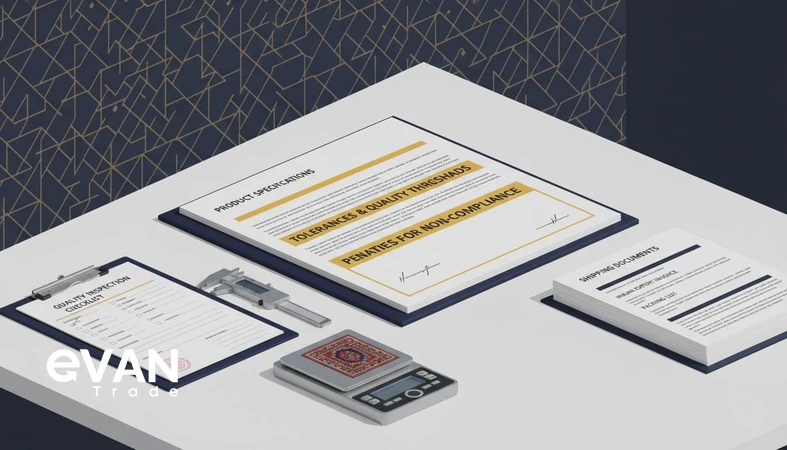
- Define product spec (composition, processing, intended use).
- Identify destination-specific “must-pass” hazards (e.g., mycotoxins for nuts).
- Set acceptance criteria and claim windows in the contract (tie to Pricing, Payments & Contracts policies internally).
Pre-shipment (before the container is sealed)
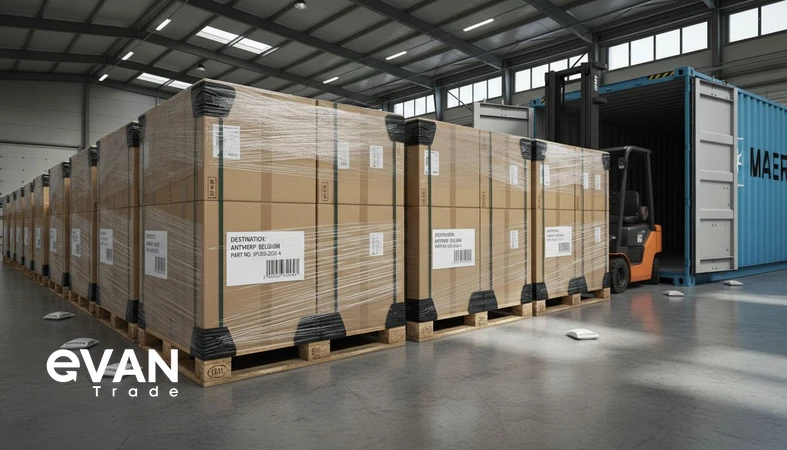
- Confirm lot coding scheme and carton markings.
- Perform third-party or controlled in-house inspection (size/defects for certain commodities).
- Draw samples under an agreed sampling plan.
- Run essential lab tests and file reports.
Arrival (before release to market)
- Verify seal numbers, packaging integrity, and lot codes.
- Confirm documentation matches (invoice, packing list, COA, lab reports).
- If your program requires it, run arrival verification tests or retain samples for complaint investigation.
Operationally, this links to Documentation & Customs and Logistics & Incoterms because many “compliance failures” are really mismatches across those handoffs.
Labeling essentials: border-ready + shelf-ready
A label can look perfect and still fail compliance. Treat labeling as a controlled, versioned document tied to your product specification.
Core label elements most markets require (in some form)
Even though details vary by destination, many systems converge on these essentials:
- Product name (legal/customary name)
- Ingredients list (order and format rules can vary)
- Allergen declaration (format differs by market)
- Net quantity
- Date marking (best before / use by) and lot/batch code
- Storage conditions and usage instructions (where needed)
- Name/address of responsible operator (manufacturer/packer/importer depending on market)
- Country of origin (commonly required or strongly expected)
- Nutrition declaration (mandatory in many markets; exemptions exist)
Where labeling differences usually create problems
1) Language requirements (especially Arabic)
If your destination requires Arabic on-pack (common in GCC markets), treat it as a design and compliance workflow—not as a last-minute sticker problem.
Practical rule: If you plan GCC distribution, lock Arabic label elements early, and ensure translation is reviewed for compliance terms, allergens, and storage language.
2) Nutrition panel rules
Nutrition formats vary significantly by market (units, mandatory nutrients, serving concepts). Importers often stumble when they reuse one market’s panel in another.
Minimum approach: Maintain market-specific label templates and prohibit “creative mixing.”
3) Ingredient and additive naming conventions
Markets differ on how additives, flavors, and compound ingredients must be declared.
Minimum approach: Keep an “ingredient truth table” aligned with your spec sheet and label copy.
4) Claims (organic, “no sugar,” “natural,” health claims)
Claims can trigger additional compliance obligations or restrictions.
Minimum approach: Treat claims as regulated content—require evidence and pre-approval.
A compliance matrix importers can use
Use this matrix as a working tool. Confirm specifics for your product and market.
| Compliance Area | EU/UK (typical emphasis) | US (typical emphasis) | GCC (typical emphasis) | Minimum Proof Importers Should Keep |
| Safety program | Official controls + category limits | Importer verification program | National border enforcement | Written hazard map + supplier approval logic |
| Mycotoxins (nuts/dried) | Often strict & frequently checked | Risk-based verification | Common scrutiny for nuts/dried | COA + lab report + sampling record + retention sample |
| Pesticide residues | Category-dependent enforcement | Risk-based verification | Country-dependent | Residue panel report + lot mapping |
| Allergen management | Strong labeling rules | Major allergen focus + enforcement | Label compliance + consumer safety | Approved label + allergen statement + cross-contact notes |
| Label language | Local language requirements | English | Arabic commonly required | Final artwork + translation approval + version control |
| Traceability | Strong expectations | Required for recalls & verification | Increasing expectations | Lot code scheme + packing list mapping + supplier traceability letter |
| Claims | Regulated claims framework | Claims enforcement | Claims may be restricted | Claim evidence pack + legal review record |
Scatter your internal link targets (if you’re building a knowledge architecture) across related clusters like Buyer Market Insights, Packaging & Shelf Life, and Documentation & Customs—because buyers often need those context pages to interpret what compliance “means” operationally.
Proofs: the “evidence pack” that prevents detentions and disputes
In real inspections, failures often happen because documents do not match each other—not because a document is missing.
The minimum proof pack (what serious importers keep)
-
A) Product technical dossier
- Product specification sheet (ingredients, allergens, processing, intended use)
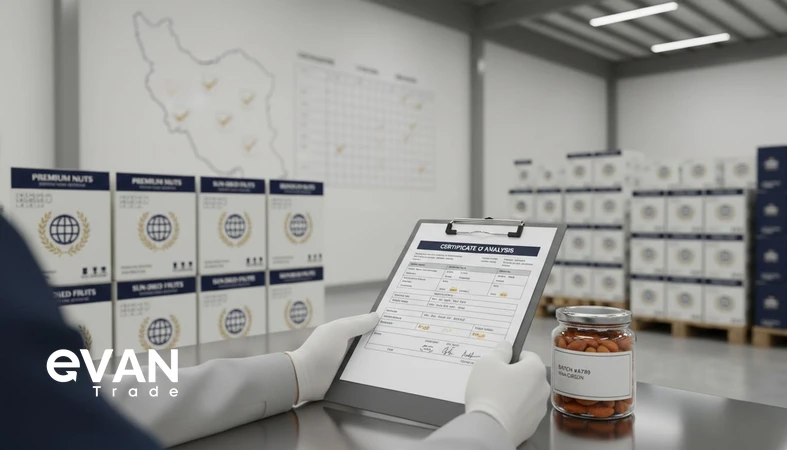
- COA for the shipped lot (must reference the same lot code found on cartons)
- Lab reports for key hazards (category-dependent)
- Packaging specification (food-contact materials, barrier properties if relevant)
- Shelf-life rationale (how the date was set; storage requirements)
-
B) Traceability & batch integrity pack
- Lot code policy (how codes are assigned and where they appear)
- Packing list that maps pallets/cartons to lot code(s)
- Photos of carton markings and pallets (simple but powerful evidence)
- Retention sample protocol (who keeps, where stored, seal system)
-
C) Shipment & customs documentation pack
- Commercial invoice and packing list (aligned values, weights, product names)
- Bill of lading / airway bill (aligned consignee and shipment references)
- Certificate of origin (when needed)
- Any destination-specific certificates (if required for category/market)
This is why Documentation & Customs should not be treated as “admin.” It’s part of your compliance defense.
The “top 10” compliance failure patterns (and how to prevent them)
- Lot code mismatch between cartons, COA, and lab report
→ Fix: enforce lot-code mapping before shipment; no exceptions. - Undefined sampling plan
→ Fix: write the sampling plan into the purchase spec and inspection SOP. - “Grade” language with no measurable defect limits
→ Fix: convert grade into measurable caps (defect categories and max %). - Labels produced before final spec lock
→ Fix: label approval must follow final ingredient/allergen confirmation. - Arabic labeling handled too late
→ Fix: lock translations early; maintain market-specific artwork. - Claims used without proof
→ Fix: claims require evidence pack and pre-approval. - Packaging not aligned with climate and transit time
→ Fix: integrate Packaging & Shelf Life logic into procurement decisions. - Arrival inspection windows not defined
→ Fix: define claim windows and acceptance points in Pricing, Payments & Contracts terms. - Overreliance on a single COA
→ Fix: define when third-party inspections or additional tests are required. - Documents that don’t match product reality
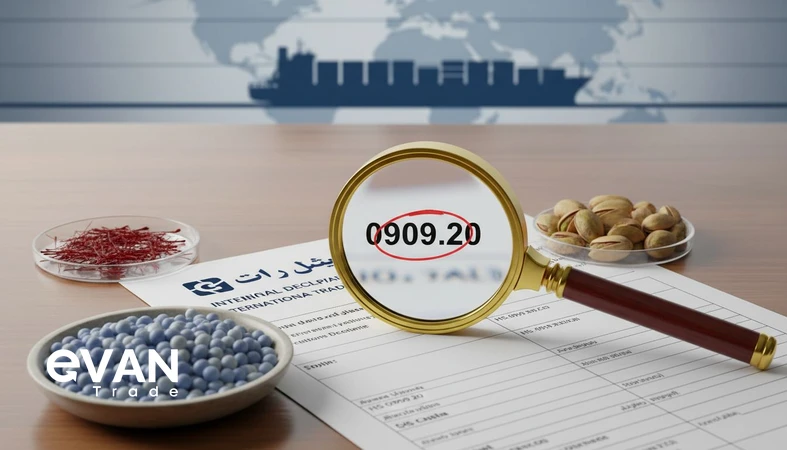
→ Fix: one source of truth for product description and HS-related descriptions across docs.
A practical importer workflow (step-by-step)
Step 1 — Build a destination compliance profile
- Identify destination market(s) and channel (retail, industrial, foodservice).
- Define “must-pass” hazards and label rules for each market.
- Decide what you’ll verify pre-shipment vs on arrival.
Step 2 — Convert compliance into a product specification
- Write measurable acceptance criteria (not marketing terms).
- Include lot coding, sampling plan, and testing plan.
- Align packaging and shelf-life assumptions.
Step 3 — Execute inspection + sampling like a repeatable process
- Use a standardized inspection checklist.
- Seal samples, document chain of custody, retain references.
Step 4 — Align documents and lock the proof pack
- Cross-check product name, lot code, weights, and entity names across all documents.
- Store everything under one shipment folder structure for audit readiness.
Step 5 — Manage exceptions without breaking the system
- If a deviation occurs, log it, evaluate risk, and document corrective action.
- Avoid “informal fixes” that create bigger audit problems later.
FAQ
1) What is the minimum compliance baseline I should demand from a supplier?
A measurable product spec, lot coding, an agreed sampling plan, and lab testing for key hazards relevant to your category and destination market—plus consistent documentation that matches the shipment.
2) What documents are most likely to be checked or challenged?
Those that prove identity and traceability: packing list, invoice, lot codes, COA, lab reports, and label artwork approvals. Mismatches are more damaging than missing optional documents.
3) How do I reduce detention risk at the border?
Standardize your proof pack, enforce lot-code integrity, and ensure labels are destination-ready (language, allergens, nutrition, responsible operator). Treat compliance as a system, not paperwork.
4) Do I always need third-party inspection?
Not always. But for higher-risk categories or new suppliers, third-party inspection and documented sampling often pay for themselves by preventing disputes and repeated failures.
5) Can I fix labeling problems with stickers after shipment?
Sometimes, but it’s risky and market-dependent. Sticker fixes can create secondary issues (durability, legibility, translation accuracy, placement rules). For GCC markets, Arabic labeling should be planned early.
6) What’s the most common “hidden” compliance failure?
A lot code mismatch between cartons, COA, and lab reports—or a sampling plan that isn’t defensible. These trigger disputes even when product quality is acceptable.
7) How should I handle claims and acceptance terms?
Define acceptance points (pre-shipment vs arrival), claim windows, and dispute mechanisms in your contracts. Link payments to inspection milestones when appropriate.
8) Where do shelf-life and packaging fit into compliance?
They’re part of compliance because they affect safety and label accuracy. If storage conditions aren’t realistic, your best-before date becomes a risk.
Conclusion
Food import compliance from Iran becomes manageable when you treat it as a structured workflow: define a minimum safety baseline by destination market, build compliant labels from a locked specification, and maintain an evidence pack where every document matches the same shipment reality. In most cases, compliance success is not about doing “more paperwork,” but about eliminating ambiguity,especially around sampling, lot integrity, allergens, and label language.
Evan Trade’s content and product presentation approach is built around the same principle buyers rely on in real imports: clarity that reduces risk. That means structuring product information, compliance considerations, and documentation logic in a way procurement teams can evaluate—before purchase decisions turn into costly border surprises.